 The Adventures of Young Indiana Jones: Tales of Innocence
Starring: Sean Patrick Flanery, Jay Underwood, Veronica Logan, Pernilla August, Renato Scarpa, Anna Lelio, Selina Giles, Clare Higgins, Evan Richards, David Haig, and Roshan Seth
Release Date: July 14th, 1999
Rating: ★★★★
To Buy
Indy is stationed in Northern Italy. While his work has him arranging the dangerous defection of German troops to the allied forces, he spends all his time thinking of getting back to Guiletta. Guiletta, the girl of his dreams. Sure, her parents don't approve, but what does that have to do with love? All is well until he realizes he has a mysterious rival for the affections of Guiletta. He spills his guts out to a fellow American who drives an ambulance that night in the local cantena. Ernest Hemingway seems full of great ideas to one-up this upstart, that is until Indy realizes that Ernest is his rival! The two friends quickly become bitter enemies trying to win the heart of Guiletta while still doing their duty in the war. And war being war, anything could happen. Ernest and Indy are both injured in an air raid. While Indy is recuperating in Venice, his body and his heart start to heal. Though once healed he will be back in action, stealing hearts and saving the world. He only wishes his new assignment were more exciting. Trying to find out the culprits behind the transferring of arms in Morocco seems dull compared to fighting on the front lines. Yet his companion, the novelist Edith Wharton, turns what would be a boring mission into the journey of a lifetime.
Right before I started high school The Young Indiana Jones Chronicles premiered. Despite being such a short lived series it will forever hold a place in my heart. In fact, starting high school it was a good way to weed out prospective friends, if they watched the show and loved Sean Patrick Flanery as much as I did, well, friends for life. Literally. I fell hard for Young Indy and Sean Patrick Flanery, River Phoenix in Indiana Jones and the Last Crusade was long forgotten. I even have the premiere issue of The Young Indiana Jones Chronicles Magazine that I ordered through Scholastic signed by Sean Patrick Flanery, who was the nicest person you could hope to meet and I had so much fun talking about the show with him at Wizard World Chicago. Yes, I fully admit to fangirling all over this series and Sean but luckily not to his face. I was so caught up in the stories and the romance and the action, and let's not omit the Sean angle, that I didn't realize how sneaky George Lucas was being. George Lucas was making me learn history! Designed as an educational program for children and teenagers, historical figures and important events were showcased through these prequels to the films.
I learned much of my history through the life of Indiana Jones. While I was more into the romantic travails of Indy fending off a young Ernest Hemingway, the Easter Rebellion wormed it's way into my brain. Pancho Villa worked his way in while I was admiring Indy's horsemanship. Damn that boy can ride! George Lucas had secretly succeeded in teaching me where my teachers failed. To be fair though, in grade school, it was the fault of the teachers not of history. The film franchise with Harrison Ford was very much centered on the Nazis and World War II. Therefore, due to Indy's age, it only made sense for "Young" Indy to be involved in World War I. From enlisting in the Belgian Army because of his young age, to fighting at the Somme and Verdun, to transporting weaponry across German East Africa and the Congo, to escaping from a prisoner of war camp, to escorting Austrian Princes, to even being seduced by Mata Hari, Henry Jones Junior encapsulated all of the Great War in his escapades in a way that was memorable and entertaining. I can't help but think that if my high school English teacher had combined A Farewell to Arms with Indy's adventures in Northern Italy in June of 1918 I might not have taken such a strong dislike to Hemingway.
Watching the first half of this episode twenty-three years after it first aired I'm amazed that it still holds up. It's not just for the Sean Patrick Flanery devotees, there's a good solid plot, lots of zany and goofy humor, in particular one scene involving the mass consumption of pasta, as well as some nice jabs at Hemingway. And yes, I still don't like Hemingway all these years later, so I take great amusement in his suffering. But what really struck me this time around was the influence of E.M. Forster on the look and feel of the Italian storyline. Yes, there's probably a part of me nostalgic for all his books and movies I devoured just last fall, yet there's this lovely innocence to Indy and Hemingway vying for the love of Guiletta, even if they get a little debauched at the bar after wooing hours... this story does have Hemingway in it so it was inevitable. I also think the fact that Howard's End coming out a year before this episode aired isn't a coincidence, even though this story is more reminiscent of A Room with a View in my opinion. When Indy goes on a walk with Guiletta with Granny as guardian, the beauty of the countryside is almost overwhelming. The show might have ended because it cost so much to make, but just watching it again, they did it right, and isn't that what matters?
What I love though about this storyline is that it shows that the Great War wasn't just in trenches in France with Germany bombarding them. This was the smallest section of the "European Theater" yet the war effected quite literally the entire world. With Indy traveling around we see how the war was fought from North Africa to Russia. Here we get a glimpse of the work being done in Northern Italy, with German forces successfully defecting, as well as the importance of non-active troops, such as ambulance drivers, which is how Hemingway served during the war. We also see that not every second of every day was devoted to battle. They have down time to drink, to think of the future, to love. Just because there is a war doesn't mean that we stop being human. I think that is what comes across most with the adventures of Indy, these famous people were actually people. Sometimes we look on celebrities as a different breed, people apart. But in the end they're just like us. They have hopes and dreams, like Hemingway wanting to be a writer, even if Indy shuns his idea of a love letter, which is hilariously literal. Humanizing history is what this show does, and perhaps that's why I became a lover of historical fiction.
Though while the first half is forever one of my favorite sections, the second section with Edith Wharton, which was never aired, I think is the most eye opening. To me Edith Wharton is so of a different time that I have never really connected her to the fact that she was around during World War I. She seems somehow of the past yet unmoored from historical events. Yet she tirelessly helped the war effort in France throughout the conflict. All that she did is amazing if you read about it, heck she even wrote several books on it herself. She was even appointed to the Legion of Honour for her work! And while the continuity doesn't quite work with her actual travels in Morocco, it's interesting to see Indy, not just solving a mystery, but having a relationship with a woman that is more about conversation and mutual understanding than about infatuation or seduction. Indy is, after all, a ladies' man, but Wharton here has the power. In an obvious mirroring of Wharton's own work, I mean just look to the title of this episode, Indy is relegated to the weaker role, that of Newland Archer, where Wharton holds all the cards of a intelligent and irresistible Countess Olenska. It's great fun to see Indy wrong-footed, but also to appreciate a woman for something more than just her looks. Which is why I knew he always HAD to end up with Marion Ravenwood. Always.






























 The first time I ever heard of The 39 Steps was when my mom got her complete set of The Franklin Library of Mystery Masterpieces. I spent hours pouring over the covers of the books. The one that fascinated and intrigued me the most was The 39 Steps. It was a pen and ink drawing of what appeared to be a giant black cloud or rock hovering over a staircase going down the side of a cliff. It was unnerving and strange so it should come as no surprise that it was done by Edward Gorey. At the time I was not yet an avid reader so books were all about their outward aesthetic and this one has always stayed with me. Which is why when I started to get into film, and in particular Alfred Hitchcock, I was really excited to watch his adaptation of The 39 Steps. Hitchcock, especially in his early films, is very hit or miss. I feel like 1940 and Rebecca was his turning point. Therefore The 39 Steps, made five years earlier, suffers. It doesn't help that a lot of outdoor scenes were filmed on sound stages. This is something that is a personal pet peeve of mine, primarily because of Hitchock's Suspicion. Therefore when it was announced that there was a new version of The 39 Steps coming out staring Rupert Penry-Jones I was more than a little excited. He is Captain Wentworth in my favorite version of Persuasion, so I was all in, even if he wouldn't reach the pinnacle of his career until a year after The 39 Steps with Whitechapel. When creating this adaption they wanted to go all in on the Bond meets Bourne vibes, but I think of it more as Lord Peter Wimsey meets Indiana Jones. There's an elegance to Penry-Jones as Hannay that is more upper class English gentleman than Bond ever was. He's also just reacting to situations he's thrust into, much like Bourne, but oh so British. Bond was almost always in control and too cool a customer. This was just a thrilling adventure with some of the best of British television stars where sadly David Haig was playing against type as the baddie. Which is why I feel it's more in the territory of Indiana Jones. This could be an exciting serial at the cinema back in the day. And much like Professor Jones, I objected to some of Hannay's more sexist attitudes towards women. But by the end his partner in crime, Victoria Sinclair, had more than corrected all of his attitudes with her competence and cunning. The fact that a woman with eidetic memory saves the day really warmed my cold embittered heart. Yet the highlight for me, and for Rupert Penry-Jones according to interviews, is that they totally did the crop duster scene from North by Northwest. Now you might think they just added this as a little nod to Hitchcock's film but that isn't the only reason why. In the book when he arrives in Scotland Hannay's pursuers use a plane to find him. So maybe Hitchcock liked the scene from the book so much that instead of using it in his adaptation he kept it to use on a later film? I'm just saying it's a possibility. But the biggest possibility I wished for this movie hasn't come to pass, and that's a sequel. As I mentioned before it has that vibe of adventure serials which inspired Indiana Jones, and it's not like John Buchan wrote only one Richard Hannay adventure. He appears in eight books! Why can't we just have more fun shows like this? Well, probably because of all the people bitching about the wrong make and model of cars in this and not just taking it as it is.... But I can't blame them too much, I'm a pedant too depending on the topic.
 The Cloisters by Katy Hays
 There are some people out there who would say that as a show Lovecraft Country is too all over the place, never settling on one style or even one genre, to them I say, that's the point! It is so fun and invigorating to have so many pulp genres in one show. We have haunted houses, epic adventures, ghost stories, space odysseys, and curses, with homages to everything from The Goonies to Indiana Jones to The Evil Dead! The Evil Dead one being a fabulous deep dive because the franchise deals with the Necronomicon, a book create by the writer H.P. Lovecraft, and what with the name of the show, when Leti is running through the woods in the first episode and takes shelter in the exact cabin from the franchise, my geeky heart did sing! Lovecraft Country also does an epic job of giving you unforgettable scenes that are simple but you know will stick with you forever for how haunting they are. The malevolent spirits Topsy and Bopsy who haunt Diana will forever haunt you. How can simple choreography be that terrifying!?! Though the first episode chase scene will now forever after be for me the most gut-wrenching I've ever witnessed. It's not the speed, it's not the action, it's what's at stake. Tic, George, and Leti have to get out of a sundown county with the police on their tales. If they fail to escape, they are surely dead. But if they speed, they will be pulled over. They are fighting the setting sun while crawling along the highway in the most nail-biting scene ever. That something so simple could be so compelling just shows what this show was capable of. But what makes this show work on a higher level is that despite being a period piece set in the 1950s that even had an episode all in Korean about a kumiho, a nine-tailed fox creature, it felt so relevant. The inability to get a job not because you lack the qualifications but because of the color of your skin. The constant police brutality and intimidation. The death of poor Emmett Till. This show encapsulated the Black Lives Matter movement in the most unique way possible. We need more shows out there willing to tell the truth, willing to take the risks, and willing to break the rules.
 Star Wars: Doctor Aphra, Vol. 1: Aphra by Kieron Gillen
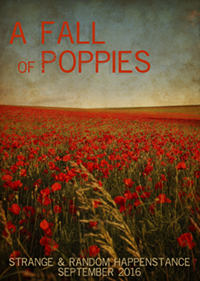
  Sometime last year I realized that two of my most favorite authors, Mary Robinette Kowal and Lauren Willig, were coming out with books this year set during The Great War. This couldn't be a coincidence I could just dismiss. Oh no. Both these authors have been a part of theme months in the past, so it only made sense to fashion a new theme month out of this random happenstance! And thus A Fall of Poppies was born! Taken from the time of year and the title of the short story collection Lauren was a part of I had the seed of inspiration. But what else could I do? Because while I am fascinated by World War I, I feel that often World War II overshadows it and takes the bulk of the narratives. I felt it was my duty to not only shine the spotlight on an event that forever changed the shape of history, but that in doing so affected every form of medium, from books to films to television to photography to poetry to art. The Great War, in all it's horror, gave inspiration to so many. And I'm not talking about how it inspired the Germans to start another World War and try to get it right this time.
 The 13th Warrior
 The Reincarnationist by M.J. Rose


