 The Last Word by Elly Griffiths
Published by: Mariner Books
Publication Date: April 23rd, 2024
Format: Hardcover, 352 Pages
To Buy
The official patter:
"Words turn deadly with an unlikely detective duo on the case of a murdered obituary writer in this literary mystery from the internationally bestselling author of the Ruth Galloway series. Perfect for fans of Richard Osman and Anthony Horowitz.
Natalka and Edwin are perfect if improbable partners in a detective agency. At eighty-four, Edwin regularly claims that he's the oldest detective in England. He is a master at surveillance, deploying his age as a cloak of invisibility. Natalka, Ukrainian-born and more than fifty years his junior, is a math whizz, who takes any cases concerning fraud or deception. Despite a steady stream of minor cases, Natalka is frustrated. She loves a murder, as she's fond of saying, and none have come the agency's way. That is until local writer Melody Chambers dies.
Melody's daughters are convinced that their mother was murdered. Edwin thinks that Melody's death is linked to that of an obituary writer who predeceased many of his subjects. Edwin and Benedict go undercover to investigate and are on a creative writing weekend at isolated Battle House when another murder occurs. Are the cases linked and what is the role of a distinctly sinister book group attended by many of writers involved? By the time Edwin has infiltrated the group, he is in serious danger..."
I have been a little obsessed with Elly Griffiths since I read all her Brighton Mysteries. I think it's time to try some of her other books. And yes, probably because I've read all the Brighton Mysteries currently available, even the one I had to special order from England.
 Next of Kin by Samantha Jayne Allen
Published by: Minotaur Books
Publication Date: April 23rd, 2024
Format: Hardcover, 336 Pages
To Buy
The official patter:
"From Tony Hillerman Prize-winning author Samantha Jayne Allen comes Next of Kin, a mesmerizing novel set in a hardscrabble Texas town, where the past is never far away.
At a gathering for her cousin's wedding party, newly-licensed PI Annie McIntyre gets asked an age-old question: what really makes us who we are, nature or nurture? Clint Marshall, an up-and-coming musician and an adoptee at a personal crossroads, wants to hire Annie to find his biological parents, and that question is on his mind. Annie accepts his case, not knowing then that she, too, must decide if she really believes what she tells him that night - in essence, that people are in charge of their destinies. That people can change.
When Annie discovers her client's father is a bank robber who her granddad, Leroy, arrested back when he was sheriff, reverberations sound between the past and the present, igniting old flames and rivalries. When the brother of her client dies suddenly, his death ruled a suicide, Annie questions whether or not it was in fact homicide - and who in this family of outlaws would rather some secrets stay buried.
As Annie sets out to find who killed the brother - and stays out of sight lest she be next - she finds herself searching abandoned, overgrown fields, scouring pool halls and roadside motels, wondering if she will ever escape the sense that her world in Garnett, TX expands and contracts in off-kilter ways, growing smaller and yet still more confounding. Fearing that in a place where everyone knows everyone, your enemy is always closer than you think."
Wait, is the brother that's killed his adopted brother or a newly found brother? Read to find out!
 Lost Birds by Anne Hillerman
Published by: Harper
Publication Date: April 23rd, 2024
Format: Hardcover, 304 Pages
To Buy
The official patter:
"From New York Times bestselling author Anne Hillerman, a thrilling and moving chapter in the Leaphorn, Chee & Manuelito series involving several emotionally complex cases that will test the detectives in different ways.
Joe Leaphorn may be long retired from the Navajo Tribal Police, but his detective skills are still sharp, honed by his work as a private detective. His experience will be essential to solve a compelling new case: finding the birth parents of a woman who was raised by a bilagáana family but believes she is Diné based on one solid clue, an old photograph with a classic Navajo child's blanket. Leaphorn discovers that his client's adoption was questionable, and her adoptive family not what they seem. His quest for answers takes him to an old trading post and leads him to a deadly cache of long-buried family secrets.
As that case grows more complicated, Leaphorn receives an unexpected call from a person he met decades earlier. Cecil Bowleg's desperation is clear in his voice, but just as he begins to explain, the call is cut off by an explosion and Cecil disappears. True to his nature, Leaphorn is determined to find the truth even as the situation grows dangerous. Investigation of the explosion falls in part to Officer Bernadette Manuelito, who discovers an unexpected link to Cecil's missing wife.
Bernie also is involved in a troubling investigation of her own: an elderly weaver whose prize-winning sheep have been ruthlessly killed by feral dogs.
Exploring the emotionally complex issues of adoption of Indigenous children by non-native parents, Anne Hillerman delivers another thought-provoking, gripping mystery that brings to life the vivid terrain of the American Southwest, its people, and the lore and traditions that make it distinct."
Because if you've read all the Tony Hillerman books in anticipation of the new season of Dark Winds and still need more, read Anne Hillerman!
 Hobtown Mystery Stories Vol. 1: The Case of the Missing Men by Kris Bertin
Published by: Oni Press
Publication Date: April 23rd, 2024
Format: Paperback, 312 Pages
To Buy
The official patter:
"Perfect for fans of Twin Peaks, Blue Velvet and Hardy Boys mysteries, The Hobtown Mystery Stories take the teen investigator genre to new levels as they explore small town identity and the surreal.
Welcome to Hobtown, a charmingly bleak village (Population: 2,006) and an easy place to get bored if you don't make your own fun.
Hobtown Regional High's top girl, Dana Nance, runs the Teen Detective Club - a registered after-school program that makes it their business to investigate each and every one of their town's bizarre occurrences including pagan secret societies, psychic assaults, and possible "wee man" sightings. Their small world of missing pets and shed fires is turned upside down when real-life kid adventurer and globetrotter Sam Finch comes to town and enlists them in their first real case: the search for his missing father. Something strange is going on, and no one in Hobtown will talk about it. It turns out Sam's dad is the sixth man to go missing this year. The rot runs deep in Hobtown, and it's up to the teen detectives and associates to stay alive long enough to crack the Case of the Missing Men!
Childhood friends Kris Bertin and Alexander Forbes have built a truly unique and discrete universe in Hobtown - an exploration of small town identity drawing from the world of pulp, filtered through a lens of esoteric spirituality, skewed genre tropes, deft character work, and an incredible eye for detail."
I still think they could have just namechecked David Lynch instead of listing so many of his works...
 A Murder Most French by Colleen Cambridge
Published by: Kensington Publishing Corporation
Publication Date: April 23rd, 2024
Format: Hardcover, 272 Pages
To Buy
The official patter:
"The City of Light is surging back to life in the wake of war, and its citizens are seizing every opportunity to raise a glass or share a delicious meal. But as American ex-pat Tabitha Knight and chef-in-training Julia Child discover, celebrations can quickly go awry when someone has murder in mind...
Set in midcentury Paris and starring Julia Child's fictional best friend, this magnifique reimagining of the iconic chef's years at Le Cordon Bleu blends a delicious murder mystery with a unique culinary twist.
The graceful domes of Sacré Coeur, the imposing cathedral of Notre Dame, the breathtaking Tour Eiffel...Paris is overflowing with stunning architecture. Yet for Tabitha Knight, the humble building that houses the Cordon Bleu cooking school, where her friend Julia studies, is just as notable. Tabitha is always happy to sample Julia's latest creation and try to recreate dishes for her Grand-père and Oncle Rafe.
The legendary school also holds open demonstrations, where the public can see its master chefs at work. It's a treat for any aspiring cook - until one of the chefs pours himself a glass of wine from a rare vintage bottle - and promptly drops dead in front of Julia, Tabitha, and other assembled guests. It's the first in a frightening string of poisonings that turns grimly personal when cyanide-laced wine is sent to someone very close to Tabitha.
What kind of killer chooses such a means of murder, and why? Tabitha and Julia hope to find answers in order to save innocent lives - not to mention a few exquisite vintages - even as their investigation takes them through some of the darkest corners of France's wartime past..."
I've been a fan of Colleen's under many different names for years I'm so glad so many people are embracing this new series of hers!
 Kill Her Twice by Stacey Lee
Published by: G.P. Putnam's Sons Books for Young Readers
Publication Date: April 23rd, 2024
Format: Hardcover, 400 Pages
To Buy
The official patter:
"From the New York Times bestselling author of The Downstairs Girl comes a YA murder mystery noir set in 1930s Los Angeles's Chinatown.
LOS ANGELES, 1932: Lulu Wong, star of the silver screen and the pride of Chinatown, has a face known to practically everyone, especially the Chow sisters - May, Gemma, and Peony - Lulu's former classmates and neighbors. So the girls instantly know it's Lulu when they discover a body one morning in an out-of-the-way stable, far from the Beverly Hills home where she lived after her fame skyrocketed.
The sisters suspect Lulu's death is the result of foul play, but the police don't seem motivated to investigate. Even worse, there are signs that point to a cover-up, and powerful forces in the city want to frame the killing as evidence that Chinatown is a den of iniquity and crime, even more reason it should be demolished to make room for the construction of a new railway depot, Union Station.
Worried that neither the police nor the papers will treat Lulu fairly - no matter her fame and wealth - the sisters set out to solve their friend's murder themselves, and maybe save their neighborhood in the bargain. But with Lulu's killer still on the loose, the girls' investigation just might put them square in the crosshairs of a cold-blooded murderer."
Old Hollywood glamor meets a killer! Oh, I can't wait!
 The Flower Sisters by Michelle Collins Anderson
Published by: John Scognamiglio Book
Publication Date: April 23rd, 2024
Format: Paperback, 368 Pages
To Buy
The official patter:
"Drawing on the little-known true story of one tragic night at an Ozarks dance hall in the author's Missouri hometown, this beautifully written, endearingly nostalgic novel picks up 50 years later for a folksy, character-driven portrayal of small-town life, split second decisions, and the ways family secrets reverberate through generations.
Daisy Flowers is fifteen in 1978 when her free-spirited mother dumps her in Possum Flats, Missouri. It's a town that sounds like roadkill and, in Daisy's eyes, is every bit as dead. Sentenced to spend the summer living with her grandmother, the wry and irreverent town mortician, Daisy draws the line at working for the family business, Flowers Funeral Home. Instead, she maneuvers her way into an internship at the local newspaper where, sorting through the basement archives, she learns of a mysterious tragedy from fifty years earlier...
On a sweltering, terrible night in 1928, an explosion at the local dance hall left dozens of young people dead, shocking and scarring a town that still doesn't know how or why it happened. Listed among the victims is a name that's surprisingly familiar to Daisy, revealing an irresistible family connection to this long-ago accident.
Obsessed with investigating the horrors and heroes of that night, Daisy soon discovers Possum Flats holds a multitude of secrets for a small town. And hardly anyone who remembers the tragedy is happy to have some teenaged hippie asking questions about it - not the fire-and-brimstone preacher who found his calling that tragic night; not the fed-up police chief; not the mayor's widow or his mistress; not even Daisy's own grandmother, a woman who's never been afraid to raise eyebrows in the past, whether it's for something she's worn, sworn, or done for a living.
Some secrets are guarded by the living, while others are kept by the dead, but as buried truths gradually come into the light, they'll force a reckoning at last.
Inspired by the true story of the Bond Dance Hall explosion, a tragedy that took place in the author's hometown of West Plains, Missouri on April 13, 1928.
The cause of the blast has never been determined."
True Crime merged with fiction, how did they know what I wanted to read?
 Death and Glory by Will Thomas
Published by: Minotaur Books
Publication Date: April 23rd, 2024
Format: Hardcover, 304 Pages
To Buy
The official patter:
"In 1894, Cyrus Barker, London's premier enquiry agent, is entangled in a conspiracy to revive the American Civil War by prominent figures, long believed deceased.
Private Enquiry agent Cyrus Barker, along with his partner Thomas Llewelyn, has a long, accomplished history - he's taken on cases for Scotland Yard, the Foreign Office, and even the crown itself, fulfilling them all with great skill and discretion. None of those cases, however, are as delicate and complicated as the one laid before him by a delegation of men who, thirty years before, fought for the Confederacy during the American Civil War. These men want to revive the Confederacy with a warship promised to the Rebels from the British Government in 1865. To get it now, they're threatening to reveal the long-secret treaty with the Confederacy. Barker is hired to use his connections to discreetly bring their threats to the Prime Minister.
With a web of prominent, if secret, supporters throughout England ready to through their support to their efforts to wage war anew on the United States, the delegates are just waiting for the warship to begin their plans. But some of the men are not who they claim to be, and the American government has their own team watching, and waiting, for the right moment to take action.
As this fuse on this powder keg of a situation grows ever shorter, it's up to Barker and Llewelyn to uncover the real identities and plans of these dangerous men."
I'm always here for the new Will Thomas book!
 Dark Parts of the Universe by Samuel Miller
Published by: Katherine Tegen Books
Publication Date: April 23rd, 2024
Format: Hardcover, 432 Pages
To Buy
The official patter:
"Outer Banks meets Bone Gap in New York Times bestselling author Samuel Miller's propulsive and genre-bending YA mystery, following a group of teenagers who discover a dead body while playing an app-based adventure game that sends players to "random" locations, unlocking a much deeper mystery about their small town.
In Calico Springs, Willie's life has been defined by two powerful forces: God and the river. The "miracle boy" died for five minutes as a young child, and ever since, Willie is certain he survived for a reason, but that purpose didn't become clear until he found the Game.
The Game is called Manifest Atlas, and the concept is simple: enter an intention and the Game provides a target - a blinking blue dot on the map. Willie's second time playing Manifest Atlas, his intention takes him to an ominous target: three empty graves. Willie is sure the Game is telling him he's going to die.
Willie's older brother, Bones, doesn't believe him, but their friends are intrigued. Sarai, a girl from across the river, sets the next intention: something bloody. The group follows the Game's coordinates and they discover something even more unsettling than the graves: a dead body. Sarai's stepfather's body. The Game is suddenly personal.
Willie is dedicated to proving the Game works while Sarai is set on finding out what happened to her stepdad. Bones just wants to enjoy his last summer before real life begins. As the group digs deeper into Manifest Atlas, stranger and wilder things begin to appear, unlocking a much deeper mystery running like an undercurrent through the small town."
I mean, maybe run as soon as an app sends you to a crime scene?
 Blood Justice by Terry J. Benton-Walker
Published by: Tom Doherty Associates/Tor Publishing Group
Publication Date: April 23rd, 2024
Format: Hardcover, 480 Pages
To Buy
The official patter:
"Blood Justice is the hotly anticipated sequel to Terry J. Benton-Walker's Most Anticipated debut Blood Debts.
Cristina and Clement Trudeau have conjured the impossible: justice.
They took back their family's stolen throne to lead New Orleans' magical community into the brighter future they all deserve.
But when Cris and Clem restored their family power, Valentina Savant lost everything. Her beloved grandparents are gone and her sovereignty has been revoked - she will never be Queen. Unless, of course, someone dethrones the Trudeaus again. And lucky for her, she's not the only one trying to take them down.
Cris and Clem have enemies coming at them from all directions: Hateful anti-magic protesters sabotage their reign at every turn. A ruthless detective with a personal vendetta against magical crime is hot on their tail just as Cris has discovered her thirst for revenge. And a brutal god, hunting from the shadows, is summoned by the very power Clem needs to protect the boy he loves.
Cris's hunger for vengeance and Clem's desire for love could prove to be their family's downfall, all while new murders, shocking disappearances, and impossible alliances are changing the game forever.
Welcome back to New Orleans, where gods walk among us and justice isn't served, it's taken."
Power is always so hard to maintain.
 The Garden Girls by Jessica R. Patch
Published by: Love Inspired Trade
Publication Date: April 23rd, 2024
Format: Paperback, 368 Pages
To Buy
The official patter:
"On a remote Outer Banks island, a serial killer collects his prized specimens. And to stop him, an FBI agent must confront his own twisted past.
FBI agent Tiberius Granger has seen his share of darkness. But a new case sets him on edge. It's not just the macabre way both victims - found posed in front of lighthouses - are tattooed with flowers that match their names. There's also the unsettling connection to the woman Ty once loved and to the shadowy cult they both risked everything to escape.
Bexley Hemmingway's sister has gone missing, and she'll do anything to find her - including teaming up with Ty. That may prove a mistake, and not just because Ty doesn't know he's the father of her teenaged son. It seems the killer is taunting Ty, drawing everyone close to him into deeper danger.
As the slashing winds and rain of a deadly hurricane approach the coast of North Carolina, the search leads Ty and Bex to an island that hides a grisly secret. But in his quest for the truth, Ty has ignored the fact that this time, he's not just the hunter. Every move has been orchestrated by a killer into a perfect storm of terror, and they will need all their skills to survive..."
How did he get into the FBI with a past in a shadowy cult?
 A Letter to the Luminous Deep by Sylvie Cathrall
Published by: Orbit
Publication Date: April 23rd, 2024
Format: Paperback, 400 Pages
To Buy
The official patter:
"A charming fantasy set in an underwater world with magical academia and a heartwarming penpal romance, perfect for fans of A Marvellous Light, Emily Wilde's Encylopaedia of Faeries and The House in the Cerulean Sea.
A beautiful discovery outside the window of her underwater home prompts the reclusive E. to begin a correspondence with renowned scholar Henerey Clel. The letters they share are filled with passion, at first for their mutual interests, and then, inevitably, for each other.
Together, they uncover a mystery from the unknown depths, destined to transform the underwater world they both equally fear and love. But by no mere coincidence, a seaquake destroys E.'s home, and she and Henerey vanish.
A year later, E.'s sister Sophy, and Henerey's brother Vyerin, are left to solve the mystery, piecing together the letters, sketches and field notes left behind - and learn what their siblings' disappearance might mean for life as they know it.
Inspired, immersive, and full of heart, this charming epistolary tale is an adventure into the depths of a magical sea and the limits of the imagination from a marvelous debut voice."
I mean, I can't be the only one who's dreamed of living under the sea?
 The Stranger I Wed by Harper St. George
Published by: Berkley Books
Publication Date: April 23rd, 2024
Format: Paperback, 368 Pages
To Buy
The official patter:
"New to wealth and to London high society, American heiress Cora Dove discovers that with the right man, marriage might not be such an inconvenience after all....
Cora Dove and her sisters' questionable legitimacy has been the lifelong subject of New York's gossipmongers and a continual stain on their father's reputation. So when the girls each receive a generous, guilt-induced dowry from their dying grandmother, the sly Mr. Hathaway vows to release their funds only if Cora and her sisters can procure suitable husbands - far from New York. For Cora, England is a fresh start. She has no delusions of love, but a husband who will respect her independence? That's an earl worth fighting for.
Enter: Leopold Brendon, Earl of Devonworth, a no-nonsense member of Parliament whose plan to pass a Public Health bill that would provide clean water to the working class requires the backing of a wealthy wife. He just never expected to crave Cora's touch or yearn to hear her thoughts on his campaign - or to discover that his seemingly perfect bride protects so many secrets....
But secrets have a way of bubbling to the surface, and Devonworth has a few of his own. With their pasts laid bare and Cora's budding passion for women's rights taking a dangerous turn, they'll learn the true cost of losing their heart to a stranger - and that love is worth any price."
To fill that void until the new season of The Buccaneers drops!
 A Duke of One's Own by Emma Orchard
Published by: Boldwood Books
Publication Date: April 23rd, 2024
Format: Kindle, 304 Pages
To Buy
The official patter:
"Summer, 1816. A notorious rebel is about to meet her match...
Lady Georgiana Pendlebury is no stranger to breaking the rules of polite society. But when a so-called 'friend' invites her to a clandestine party, Georgiana is shocked to discover the event is more scandalous than even she could have imagined. So when a mysterious stranger offers help, she accepts, not realising their encounter will turn her life upside down.
Later that summer, Georgiana is invited to attend a house party at an infamous castle in Yorkshire. The gathering is a loosely veiled effort to arrange a marriage for the Duke of Northriding, who desperately needs an heir. Duke Gabriel Mauleverer has a terrible reputation as a rake, and Georgiana is happy to be a guest purely for the entertainment, but upon arrival, she is shocked to discover that the Duke is none other than the stranger who rescued her weeks earlier.
As the other ladies vie for the Duke's attention, Georgiana is desperate to avoid their shocking secret getting out. But she finds herself caught, unable to avoid Gabriel's gaze. Are they a threat to each other? Or could they be the answer to each other’s greatest desires?"
I love the title and cover so very very much.
 Earl's Trip by Jenny Holiday
Published by: Kensington Publishing Corporation
Publication Date: April 23rd, 2024
Format: Paperback, 336 Pages
To Buy
The official patter:
"Ted Lasso meets Bridgerton for a 19th century spin on The Hangover in USA Today bestselling author Jenny Holiday's laugh-out-loud bromantic comedy featuring three Regency-era Earls on their annual trip - ride-or-die buddies offering one another unconditional support in everything from Lady problems to family woes.
The perfect romp for fans of Evie Dunmore, India Holton, Virginia Heath, Manda Collins, and Suzanne Allain!
Even an earl needs his ride-or-dies, and Archibald Fielding-Burton, the Earl of Harcourt, counts himself lucky to have two. The annual trip that Archie takes with his BFFs Simon and Effie holds a sacred spot in their calendars. This year Archie is especially eager to get away until an urgent letter arrives from an old family friend, begging him to help prevent a ruinous scandal. Suddenly the trip has become earls-plus-girls, as Archie's childhood pals, Clementine and Olive Morgan, are rescued en route to Gretna Green.
This...complicates matters. The fully grown Clementine, while as frank and refreshing as he remembers, is also different to the wild, windswept girl he knew. This Clem is complex and surprising - and adamantly opposed to marriage. Which, for reasons Archie dare not examine too closely, he finds increasingly vexing.
Then Clem makes him an indecent and quite delightful proposal, asking him to show her the pleasures of the marriage bed before she settles into spinsterhood. And what kind of gentleman would he be to refuse a lady?"
I'd say this book exudes some Kenergy!
 Shakespeare: The Man Who Pays the Rent by Judi Dench
Published by: St. Martin's Press
Publication Date: April 23rd, 2024
Format: Hardcover, 400 Pages
To Buy
The official patter:
"Discover the work of the greatest writer in the English language as you've never encountered it before by pre-ordering internationally renowned actor Dame Judi Dench's Shakespeare: The Man Who Pays The Rent - a witty, insightful journey through the plays and tales of our beloved Shakespeare.
Taking a curtain call with a live snake in her wig...
Cavorting naked through the Warwickshire countryside painted green...
Acting opposite a child with a pumpkin on his head...
These are just a few of the things Dame Judi Dench has done in the name of Shakespeare.
For the very first time, Judi opens up about every Shakespearean role she has played throughout her seven-decade career, from Lady Macbeth and Titania to Ophelia and Cleopatra. In a series of intimate conversations with actor and director Brendan O'Hea, she guides us through Shakespeare's plays with incisive clarity, revealing the secrets of her rehearsal process and inviting us to share in her triumphs, disasters, and backstage shenanigans.
Interspersed with vignettes on audiences, critics, company spirit and rehearsal room etiquette, she serves up priceless revelations on everything from the craft of speaking in verse to her personal interpretations of some of Shakespeare's most famous scenes, all brightened by her mischievous sense of humour, striking level of honesty and a peppering of hilarious anecdotes, many of which have remained under lock and key until now.
Instructive and witty, provocative and inspiring, this is ultimately Judi's love letter to Shakespeare, or rather, The Man Who Pays The Rent."
It's Judi Dench, it's Shakespeare. What more needs to be said? Go. Buy.






























 Project Hail Mary by Andy Weir
  Murder at Teal's Pond: Hazel Drew and the Mystery That Inspired Twin Peaks by David Bushman and Mark T. Givens
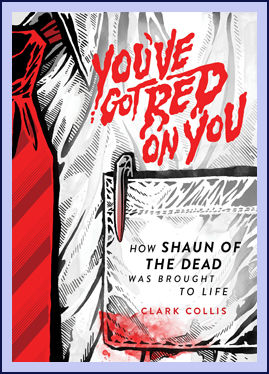 You've Got Red on You: How Shaun of the Dead Was Brought to Life by Clark Collis
 Oxford by Matthew Rice
 The Broken Afternoon by Simon Mason
 What Cannot Be Said by C.S. Harris
 The Montford Maniac by M.R.C. Kasasian
 Close to Death by Anthony Horowitz
 You Know What You Did by K.T. Nguyen
 Wicche Hunt by Seana Kelly
 Merciless Saviors by H.E. Edgmon
 Indian Burial Ground by Nick Medina
 My Beloved Monster by Caleb Carr
 Scribbles, Vol. 3 by Kaoru Mori
 The Dispossessed by Ursula K. Le Guin
 The Essex Serpent by Sarah Perry


