Showing posts with label The Other Daughter. Show all posts

Wednesday, August 22, 2018

WORD Bookstores

Bookstore: WORD Bookstores

Location: Brooklyn, New York

The Official Patter: "WORD has two bookstores: one in Greenpoint, the northernmost neighborhood of Brooklyn, that opened in March of 2007, and one in Jersey City, which opened in December 2013. Our primary goal is to be whatever our communities need us to be! In Brooklyn, that means carrying a lot of paperback fiction (especially classics), cookbooks, board books, and absurdly cute cards and stationery. In addition, we're fiends for a good event, from the classic author reading and Q and A to potlucks and a basketball league (and anything set in a bar). We're a small operation, just 1000 square feet, but we read too much, so it all works out."

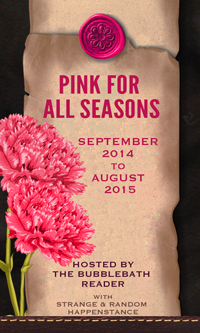
Why I Love Them: For me 2015 was the year of Lauren Willig. I do not joke. My friend Ashley who did the blog The Bubble Bath Reader hosted Pink for All Seasons that year, a re-read of the entire Pink Carnation series by Lauren Willig before the release of the final book, The Lure of the Moonflower. I provided monthly casting posts as well as hosting one and a half of the books and providing all the graphics. But the best part of this was just spending that year re-reading all Lauren's books on top of promoting her stand alone, The Other Daughter, with Jazzy July, which you should remember if you read my Friday post... if you haven't, well, it's your loss. Lauren's book launch was going to be at WORD in Brooklyn. Ah, how I wish I could have been there, but thankfully, Ashley was.

Best Buy: So it therefore should come as no surprise to you that The Lure of the Moonflower is my best buy. This was the culmination of the entire Pink Carnation series! This was the end of a series I had spent years enjoying and the last year re-reading. And thanks to WORD I had my dream edition. Though in truth I would have liked it if the last three books in the series had also been released in hardcover, but what can you do? Publishers, am I right? And right now you're probably thinking, damn, her dream editions as this month go on seem to focus more and more on just a few authors... well, you wouldn't be wrong in thinking that. Three times Lauren Willig is my best buy, and Leigh Bardugo comes in a close second. The reason this is is because I reach out to these stores when my favorite authors go on tour and I can't see them, so my best buys are obviously my favorite authors. You might think that this means I only ever interact with these stores the once and move on, but you'd be wrong. If they do a good job I make sure to check out who they have visiting for other books I can buy in the future. What's more is I usually subscribe to their mailing lists and study them carefully wishing I lived closer. And if my "favorite" author visits that store again? You can be sure I'll be purchasing whatever book they are selling. In fact, sometimes I wish I could just buy copies of my favorite books from all the independent bookstores the author visits to support them and the stores... but there is sadly only so much money in my bank account and there are only so many bookshelves in my house, and yes, most of them are filled beyond capacity.  

Friday, August 17, 2018

The Mysterious Bookshop

Bookstore: The Mysterious Bookshop

Location: New York, New York

The Official Patter: "The Mysterious Bookshop is an independent bookstore and publisher specializing in mystery fiction. It is one of the oldest mystery bookstores in the Unites States. In addition to housing its own imprint, the shop contains the offices of both the Mysterious Press, and MysteriousPress.com, an e-book imprint. The store and its various publishing enterprises are owned and operated by editor and publisher Otto Penzler; its inventory consists of new and rare titles in detective fiction, crime fiction, spy fiction, thrillers, and various other mystery fiction subgenres. The store also features the largest collection of Sherlock Holmes titles and Sherlockiana in the world, as well as a considerable Bibliomystery collection."

Why I Love Them: What's interesting about all the times I've visited New York is the number of times I ask people what their favorite bookstore is and most people just comment that there aren't really many bookstores about. How can they be this ignorant!?! There are so many independent bookstores full of goodness that you could spend your entire vacation going from one to another! Which makes me now wonder about the trustworthiness of my friends... perhaps they know me too well and know that this is what would happen and have therefore been deceiving me "for my own good." Little do they know that being surrounded by books is the best thing for me! In fact the weekly newsletter that drops in my inbox every Friday from The Mysterious Bookshop makes me wonder if I could get my doctor to recommend a trip to the store for my well being...

Best Buy: As I'm sure ALL of you know, I'm an addict of Lauren Willig's books. I don't actually know how many times I've written features for my and other blogs about how much I love her books, or even how many theme months I've done by this point, but one of my favorite theme months was Jazzy July. Jazzy July was to celebrate the release of her 2015 stand alone The Other Daughter. I got to spend that summer reading about Evelyn Waugh and other "bright young things" not to mention how much I love The Other Daughter which I devoured twice! So obviously I was sad that she wasn't going anywhere near me on her book tour, but such is life, and such is me, I will always find a way. That way was The Mysterious Bookshop. Nothing could have been easier than contacting them for a copy of The Other Daughter, signed, to me, Miss Eliza, aka my handle should Mr. Darcy ever bother showing up. The lovely surprise once I got the book was that Lauren mentioned Jazzy July in her inscription. That's what I love about forging relationships with authors and independent bookstores, there's this whole symbiotic relationship. I like their books, I buy their books, I buy their books from an independent store and everyone gets something out of it, the store gets money and a chance for the author to visit again, the author gets money and the chance to write another book, and while I am the one losing money, I get a new book. It's the circle of life! A circle that is made possible by reaching out to stores online. If there's anything I hope this final month of Support Your Brick and Mortar does is to show you that there are resources, there are stores out there to help you get signed copies of books that you will always treasure. All it takes is a little research and a call or an email.  

Friday, December 29, 2017

Book Review - Lauren Willig's The English Wife

The English Wife by Lauren Willig
Published by: St. Martin's Press
Publication Date: January 9th, 2018
Format: Hardcover, 384 Pages
Rating: ★★★★★
To Buy

Bayard Van Duyvil has the perfect life. The sole male heir of an old Knickerbocker family he has a beautiful English wife, for whom he's recreated her ancestral home on the banks of the Hudson, and two beautiful children, three-year-old fraternal twins Viola and Sebastian. But there are rumors that everything isn't as perfect as it seems. Why would Bayard and his wife Annabelle hide themselves away in Cold Springs? A beautiful house is no excuse to being a recluse when New York society thirsts for your lifeblood. Soon New York society will get exactly what it craves when during a lavish ball to celebrate Twelfth Night Bayard is found with a knife in his chest and the name Georgie on his lips while his wife has disappeared. Everyone believes that the rumors about Annabelle and the house's architect at true. She has murdered her husband and absconded with her lover! The only one who doesn't believe the salacious lies all the newspapers are printing is Bay's younger sister, Janie. She is expected to keep calm and wait for the scandal to die down. But it pains her to see Annabelle's name dragged through the mud, they didn't know her like she did. A chance encounter with a reporter from The News of the World, a Mr. Burke, leads Janie to form a tenuous alliance with a man who represents the scandal rags that are pulling her world apart. Before too long Janie realizes that perhaps she didn't know Annabelle or even Bay. But with the tenacious and increasingly devoted Mr. Burke helping her she will get to the bottom of her brother's death and perhaps solve the mysteries of his life.

Having first read Lauren back in 2007 a short time after her third Pink Carnation book, The Deception of the Emerald Ring, had hit bookshelves I don't want to claim I'm an expert on her writing, but I have been along for the ride for a decade now. She's even one of the reasons I decided to start my blog! While I have loved reading every single one of her books, finding characters to love and to hate, ones to root for and ones that I long to see fall flat on their faces, the greatest joy was seeing her mature as a writer. When she wrote her first standalone, The Ashford Affair, back in 2013 she tapped into something new. Her writing started to move beyond the dual timeline narrative where despite troubles everyone gets a happily ever after. While I am a fan of this wish fulfillment in writing sometimes I feel that it's unsatisfying. That it doesn't actually reflect the world around us. Sometimes I don't want everyone to get a happy ending. This was very much showcased with That Summer, Lauren's 2014 standalone which might just be my favorite book she's written. Here Lauren had matured to a point that she was willing to kill off characters that we, the readers, had very much fallen in love with. Thankfully after going a little darker Lauren didn't reign it in. She continued this exploration of the underbelly of humanity in The Other Daughter and now in The English Wife. Sometimes good intentions lead to death. Sometimes love can't conquer all. Sometimes there are secrets that will out no matter what. As for me, I loved every second of the seedier side, it's like Gossip Girl 1800s.   

If there is one linking thread through Lauren's work it would be her love of Shakespeare. Of course, seeing as he helped forge the very language we all use he could be considered important to every book ever written, but with Lauren it's special. I dare you to count the number of times her characters have had their mouth's stopped with a kiss as Benedick does to Beatrice in Much Ado About Nothing. Here though we've reached a whole new level wherein Shakespeare seems another character in the story. Annabelle and Bay meet in London where she is working on stage in a musical evisceration of Twelfth Night at the Ali Baba Theater. If the play's the thing, Twelfth Night is the thing in The English Wife. Bay meets his death on Twelfth Night, their palatial recreation of Lacey Hall is renamed Illyria, and Bay and Annabelle's children are named after the hero and heroine of the play. But the references aren't just about infusing The English Wife with a bit of Annabelle's homeland via Shakespeare. The play itself is filled with confusion, merriment, love, gender, orientation, romance, and thankfully not a random lion like in As You Like It. These are themes that are all seen in Annabelle and Bay's story. Lauren has mined Shakespeare to help not only create a mirror to her story but to show the universality of it. I could quote Shakespeare here, but instead I feel like quoting Battlestar Galactica, "All of this has happened before and will happen again." Humanity has a basic universality to it. The building blocks are all the same. Shakespeare knew this and so does Lauren. Sure, everything is a tale as old as time, but it's how you go about telling it that makes it unique.

While Shakespeare is classic, there's another author to whom this moniker belongs that The English Wife shares some DNA with and that's Daphne Du Maurier. I'm going to say this right out, there is no one like Daphne Du Maurier. Therefore when any book that is mildly Gothic and has a house starts throwing around comparisons to this unparalleled author I just want them to shut it. Because whatever they have written will be a disappointment because comparisons are nothing more than a marketing ploy. The book won't deliver and you'll spend all your time wondering why you're just not re-reading Rebecca. When I read The English Wife back in August there were obviously no reviews yet. No one proclaiming that The English Wife is in the least like Du Maurier. Nothing to taint or sully my initial impressions. Therefore I was wonderfully surprised that the denouement of the book set during the inquest and a subsequent blizzard trapping our cast of characters at Illyria felt like a modern interpretation of Du Maurier. I'm not sure if Lauren purposefully set out to do this, because most attempts fail in the execution, and yet, here she is, bucking the odds. What I think helped is that instead of going for the big similarities, she started small, with Giles Lacey, Annabelle's cousin from England, who happens to share a name with Maxim de Winter's brother-in-law. Though THIS Giles would be mortified that I called him small! Instead of reminding me of Rebecca's former in-law, he reminded me of Rebecca's cousin Jack Favell, and in particular George Sanders's portrayal of him in the Hitchcock film. From there it snowballed into other similarities to the book and Hitchcock's adaptation, but always still being Lauren's voice. How Lauren has mastered this, I do not know, but she gets a tip of my hat.

Yet that isn't the only doffing of my hat that I must do in reviewing The English Wife! Now this isn't a brag, or even a faux humble brag, the fact is I'm just really good at figuring out plot lines. Be it a procedural show or a whodunit, I will solve it so fast that you won't know what hit you. A recent example of my weird "gift" was when I was watching Big Little Lies. Now I hadn't read the book but in a seven episode miniseries I was able to put ALL the pieces together and proclaim them as fact before the end credits rolled on the first episode. Six more wasted hours later and I was proven right. Sometimes to try to make things harder on myself I'll tune into a show halfway through and see if I can figure out what's going on without any exposition. Ironically Elementary has proven to be the easiest to crack. Now I think you can see why I like character driven stories that are quirky. Humor goes a long way to fill plot holes. So why am I going on about this bizarre quirk of my analytical brain? Because when someone actually pulls one over on me I feel this need to give them a standing ovation. In The English Wife I was so involved in two of the reveals that it's like Lauren smacked me upside the head with the biggest one and I didn't see it coming. At all. Bravo Lauren! It's like there were these shining motes of dust alighting on Bay and his wife and their marital woes and I was linking a to b to c and going ah yes, I see how it is, and yet I didn't see! It was there, looming right around the corner, and it pounced and got me. If Lauren were a lion I would be a goner.

Friday, December 1, 2017

Willig Winter

The second time I went to New York it was more than just a rushed trip tacked onto a family vacation to Washington. The second time was magical, going to all the museums and looking at all the art I'd spent years reading about. During that trip I discovered The Frick Collection, which is located right on fifth avenue and was the home of Henry Clay Frick. It's not just the art that is amazing, though seriously you will be shocked by the number of pieces you recognize from Ingres to Renoir to Vermeer to Rembrandt, but the house itself is a work of art preserved in time. It's like really cheap time travel! You feel as if Edith Wharton were about to hold court over high tea in the luxurious indoor garden. Years later when I went back to New York I discovered the Cooper Hewitt, Smithsonian Design Museum, which is located in the Andrew Carnegie Mansion. Again I was walking in another era. These homes were built by the New York upper crust as they slowly started moving to the Upper East Side. I was so pleasantly surprised when I picked up Lauren Willig's latest book, The English Wife, to slip back into this world again. A world of excess and elegance, fortunes lost and gained, and secrets, but all contained within this other time. So whether you knew about Lauren Willig's new book yet or not, I think you can feel the theme month coming on right? The English Wife is Lauren's fourth stand-alone and therefore a fourth theme month was not just necessary but vital. It's in another time and another world, but one I hope you've been wanting to explore as much as I have over the years. 

But enough from me, let's hear from Lauren as we welcome in Willig Winter!

"When Miss Eliza asked me if I would recommend six or seven books I’d used in writing The English Wife for a companion read, I thought, easy peasy!

Then I looked at my bookshelf.

I’d forgotten just how much went into The English Wife. My research pile included book-length accounts of infamous murder cases in turn of the century New York (of which there were more than you would expect), oversized coffee table books with pictures of mansions and marquetry and jewels and gowns, extensive histories of Dutch New York, biographies of robber barons, sociological studies of nineteenth century women’s charitable organizations, memoirs of nineteenth century authors and socialites, unpublished dissertations about specific towns in the Hudson Valley in the mid to late nineteenth century, and books on topics that I can’t go into without giving plot twists away.

And that’s just the New York end of things. We won’t even get into all the Newport research, the gossipy accounts of past residents and glossy pictures of “cottages”. A chunk of the book takes place in England and a smaller chunk in France, so I also have shelves and shelves of books on topics like theatre in Victorian England, monographs about Paris in the Belle Epoque, and biographies of Proust. I may have gotten just a little carried away while reading up for this book....

So, in the interest of brevity, I’m sticking to the New York-centric books for this particular list and keeping it to non-fiction. With one exception at the end. You’ll see why.

At some point, I’ll try to put up a more comprehensive list on my website. If I don’t get crushed beneath a giant pile of research books along the way." - Lauren Willig

Literally the seven books Lauren has selected look beyond tempting, but in the interest of full disclosure, unlike Ashford April (The Asford Affair), This Summer (That Summer), and Jazzy July (The Other Daughter), I have been unable to read them all and write reviews because this year has been a personal as well as a global dumpster fire. But my guilt is your reward, because this means I feel obliged to do a giveaway!  

Giveaway Prize:
A copy of The English Wife personalized TO YOU from Lauren's tour stop at Murder by the Book in Houston on January 17th, 2018

The Rules:
1. Open to EVERYONE (for clarification, this means international too).

2. Please make sure I have a way to contact you if your name is drawn, either your blogger profile or a link to your website/blog or you could even include your email address with your comment(s) or email me.

3. Giveaway ends Sunday, December 31st at 11:59PM CST (Yes, that's New Year's Eve folks!)

4. How to enter: Just comment on this post for a chance to win!

5. And for those addicted to getting extra entries:

  • +1 for answering the question: What is your favorite house turned museum?
  • +2 for becoming a follower
  • +10 if you are already a follower
  • +10 for each time you advertise this contest - blog post, instagram (@miss.eliza), twitter (@eliza_lefebvre), etc. (but you only get credit for the first post in each platform, so tweet all you like, and I thank you for it, but you'll only get the +10 once from twitter). Also please leave a link! 
  • +10 for each comment you leave on other Willig Winter posts with something other than "I hope I win!" 
Good luck!

Monday, July 11, 2016

Tuesday Tomorrow

Max Gate by Damien Wilkins
Published by: Aardvark Bureau
Publication Date: July 12th, 2016
Format: Paperback, 272 Pages
To Buy

The official patter:
"1928: Thomas Hardy is dying in the upstairs room of Max Gate, the house he built in his beloved Dorset. Downstairs, his literary friends are locked in a bitter fight with local supporters. Who owns Hardy’s remains? Who knew him best? What are the secrets of Max Gate?

Housemaid Nellie Titterington narrates this earthy and emotionally-charged novel about ambition, duty, belonging, and love. "

Upstairs, Downstairs but with the death of a famous writer? And Thomas Hardy at that! Yes please!

The Other Daughter by Lauren Willig
Published by: St. Martin's Griffin
Publication Date: July 12th, 2016
Format: Paperback, 320 Pages
To Buy

The official patter:
"Raised in a poor yet genteel household, Rachel Woodley is working in France as a governess when she receives news that her mother has died, suddenly. Grief-stricken, she returns to the small town in England where she was raised to clear out the cottage...and finds a cutting from a London society magazine, with a photograph of her supposedly deceased father dated all of three month before. He's an earl, respected and influential, and he is standing with another daughter -- his legitimate daughter. Which makes Rachel...not legitimate. Everything she thought she knew about herself and her past -- even her very name -- is a lie.

Still reeling from the death of her mother, and furious at this betrayal, Rachel sets herself up in London under a new identity. There she insinuates herself into the party-going crowd of Bright Young Things, with a steely determination to unveil her father's perfidy and bring his -- and her half-sister's -- charmed world crashing down. Very soon, however, Rachel faces two unexpected snags: she finds that she genuinely likes her half-sister, Olivia, whose situation isn't as simple it appears; and that she might just be falling for her sister's fiancé...

From Lauren Willig, author of the New York Times Best Selling novel The Ashford Affair, comes The Other Daughter, a page-turner full of deceit, passion, and revenge."

Seriously, one of the best books I read last year. So, if you don't have it yet, get ye to a bookstore! Or just follow the handy link to Amazon. 

A Curious Beginning by Deanna Raybourn
Published by: Berkley
Publication Date: July 12th, 2016
Format: Paperback, 368 Pages
To Buy

The official patter:
"In her thrilling new series, Deanna Raybourn, the New York Times bestselling author of the Lady Julia Grey mysteries, returns once more to Victorian England...and introduces intrepid adventuress Veronica Speedwell.
 
London, 1887. After burying her spinster aunt, orphaned Veronica Speedwell is free to resume her world travels in pursuit of scientific inquiry—and the occasional romantic dalliance. As familiar with hunting butterflies as with fending off admirers, Veronica intends to embark upon the journey of a lifetime.

But fate has other plans when Veronica thwarts her own attempted abduction with the help of an enigmatic German baron, who offers her sanctuary in the care of his friend Stoker, a reclusive and bad-tempered natural historian. But before the baron can reveal what he knows of the plot against her, he is found murdered—leaving Veronica and Stoker on the run from an elusive assailant as wary partners in search of the villainous truth."

Interesting thing about Deanna Raybourn... her series tend to be repacked almost as soon as they're out. Here's the new cover for A Curious Beginning. I'm not sure if I like this more... I guess it's more graphic and elegant but it's also in a style that's starting to be overused. But then again, wait five minutes we'll get another cover.

Sorcerer to the Crown by Zen Cho
Published by: Ace
Publication Date: July 12th, 2016
Format: Paperback, 384 Pages
To Buy

The official patter:
"Magic and mayhem clash with the British elite in this whimsical and sparkling debut.

The Royal Society of Unnatural Philosophers maintains the magic within His Majesty’s lands. But lately, the once proper institute has fallen into disgrace, naming an altogether unsuitable gentleman as their Sorcerer Royal and allowing England’s stores of magic to bleed dry. At least they haven’t stooped so low as to allow women to practice what is obviously a man’s profession…

At his wit’s end, Zacharias Wythe, Sorcerer Royal of the Unnatural Philosophers, ventures to the border of Fairyland to discover why England’s magical stocks are drying up, an adventure that brings him in contact with Prunella Gentlewoman, a woman with immense power and an unfathomable gift, and sets him on a path which will alter the nature of sorcery in all of Britain—and the world at large…"

One of THE BEST books I've read so far THIS year. Now in paperback!

Friday, January 22, 2016

Book Review 2015 #3 - Lauren Willig's The Other Daughter

The Other Daughter by Lauren Willig
ARC Provided by the Publisher
Published by: St. Martin's Press
Publication Date: July 21st, 2015
Format: Hardcover, 352 Pages
Rating: ★★★★★
To Buy

Rachael Woodley has spent seven long years on the continent away from her beloved mother working as a governess. Rachael wanted to take a typing course and work as a secretary but her mother thought that was too modern. Perhaps if Rachael had been a secretary she would have gotten to her mother's sickbed in time to be there when she died. Rachael is unmoored by her mother's passing. They had a poor if peaceful life after Rachael's father died and they moved to the little village of Netherwell. But now that life is forever shut to her. The landlord wants Rachael gone, yet where is she to go? In her mother's sickroom she finds something perplexing. It's a clipping from a recent newspaper showing her father. But not her father as she remembers him, but her father as he would be now if he had never died. That isn't possible! Her father died, he's not Lord Ardmore, the man escorting his daughter Olivia, but a botanist who died an ocean away. But it looks like him... and she can't let it drop. Going to her only relative, her cousin David, she learns that it is indeed her father in the clipping. He has another life and she is nothing more than a by-blow. David asks his friend, the gossip columnist Simon Montfort, to escort the by now distraught Rachael to her train. Instead Rachael and Simon concoct an elaborate plan wherein Rachael will infiltrate the ranks of the Bright Young Things as a Vera Merton in order to accost her wayward father. But things rarely go as planned and soon the glittering world Rachael has been thrust into is a welcome distraction from the truth of her life which she would sooner forget.

Having spent the better part of the last year re-reading Lauren's oeuvre, I think I'm uniquely qualified to praise her third stand-alone. While I won't say it's my favorite of her books, that would be too hard to choose, I will unreservedly say that I think The Other Daughter is Lauren's most accomplished book to date. While I was one of Lauren's readers championing her use of a modern framing device in her Pink Carnation series, I think that carrying this device into her non-Pink books had made the these new books feel too much like the rest of her writing. While there are many authors who have never broken free of this convention, Kate Morton comes to mind, I feel that this framing had become a crutch for Lauren and was holding her back. By getting ride of this prop she has freed herself to concentrate all her energy on the one story. This made her narrative stronger and gave her the ability to have more depth, insight, and heart. I'm not trying to denigrate her other books, which I love, but sometimes a story is best served by just living in the moment and not thinking about what the future holds. Often a modern narrator limits the ability of the storytelling by being the definitive end point. The story must end in such and such a way because we've seen the future. Sometimes not knowing, sometimes having the happily ever after be a ship sailing off into the sunset is what a story needs, instead of ancestors picking over the past.

The 1920s have always fascinated me, but as for the literature of the time and the people who characterized this bright, young, and lost generation, my wheelhouse was limited to those in the Mitford circle, thus including Evelyn Waugh and his cronies. Having spent "Jazzy July" reading the books that sparked Lauren's imagination I now have this new insight into the 1920s and its trailblazers. What is wonderful about Lauren is she knows her history and knows when to tweak it. But she also knows how to artfully drop in a cameo or two without having it overpower the narrative. Brian Howard, Evelyn Waugh, even Tallulah Bankhead make amusing appearances, but they are limited to fully realized furniture. They add to the experience but never take over the plot. But more than that, they also don't feel gratuitous. Sometimes a historical cameo can feel trite. Here's Tesla just because I wanted Tesla to wander in. Lauren over the years has developed a knack for just how the historical cameo should work in her writing, and I can think of no better example than here. The pinnacle of her achievement is at the famous Impersonation Party of 1927, where people all came as each other. Not only do we get the cameos, but the swirling whirling world that Rachel has been moving in is captured perfectly in this one scene that while historically accurate could also be straight out of Alice in Wonderland. 

Reading so many books of this period makes you realize the flaw in this generation. They burned bright and fast and if someone was left by the wayside, well, they burned out and were forgotten. There was a pain that was masked and glossed over. The majority of these people were too young for the Great War, but they lived ever in it's shadows. Instead of acknowledging this pain, instead of self-analysis, they just partied harder and louder. I can think of no better example then the two startling deaths that happen in Evelyn Waugh's Vile Bodies. Two characters die, rather horrifically, one by his own hand, and never once do the characters mourn. They just party on. This, more than anything, made it hard for me to connect to some of the books. I am not callous. If someone dies, even in fiction, they should make an impact. And not to put too fine a point on it, Evelyn's work was nothing more then writing what he saw, so those deaths did happen, that callousness did exist. And that's what makes The Other Daughter so much more. Comparing Lauren's book to the literature of the day you see the depth and insight, you see that Lauren isn't masking the pain, she is exploring it. Simon suffered horribly during the war and his unburdening himself to Rachel is such a real and true connection in a time of shallow characters that you connect to these characters and this book in a way you never could to other books of that period. Lauren has taken a shallow world and made it lush and dimensional.

Looking to the zeitgeist of the 20s I can think of no better way to sum up this generation then by saying these are people who have never grown up. They haven't and won't take on responsibility and therefore live in a suspended childhood. Waugh chose a quote from Through the Looking-Glass, and What Alice Found There to begin Vile Bodies. Though Waugh's reason for choosing it had more to do with the logic of the set he found himself it. The nonsensical parties, the backward logic, that is what Waugh saw in this book. But I dearly hope that he was aware of the other implications this quote gives, that of people forever trapped in childhood. Lauren expands on this other aspect of this generation not just by quoting Carroll, but by bringing in other fairy tales and children's stories. "Hansel and Gretel" is the fairy tale that is most alluded to. This story is not only appropriate for the Bright Young People, but for Rachel as well. Hansel and Gretel were set loose in the wilderness by their father and wicked stepmother because of the poverty they found themselves in. Before Rachel has all the facts of her situation this is exactly how she views her life as she now knows it. She was abandoned for money. Her father unceremoniously tossed her aside to get the better wife with the rich coffers and the two perfect heirs. You can see the appeal to Rachel to go back to a time when she didn't know the truth, back to a childhood of happiness. That is why she is able to slip in among the Bright Young People so well, she has the same desires, but in the end knows she must grow up.

Much like Lauren's previous stand-alone, That Summer, The Other Daughter is about finding your place in the world, a place to belong. Your family isn't necessarily the one you are born with but the one you find. Rachel's childhood, while missing a father, wasn't sad, she made a family in her small town with the Vicar and his daughter Alice. But on discovering what she knew to be a lie Rachael needs to build a new life for herself. She needs to find her new family, and much of that is tied up with Simon. Simon is a refreshing hero. For once I was very happy not to have access to his inner workings. I didn't want to know what he thought, I liked him as a little bit of an enigma. He has a past that must be uncovered so that he can grow and be willing to return to his family. Because the truth about families are they are messy. No one is perfect, as we see with Rachel, she wants revenge, she wants to hurt her father, even though she knows it's wrong. As we work through this with her we see that she is building the future she will inhabit. She inspires Simon to fix his life and then there's a place for her there. I don't think it's so much the shock of her father being alive that jars Rachael, it's that she had her place in the world and this knowledge changes that. She must struggle through this new information to find the place where she now belongs. We all struggle to find that place. The greatest thing fiction can do is show us that this is possible.

Thursday, January 14, 2016

Book Review 2015 #6 - Angela Thirkell's High Rising

High Rising by Angela Thirkell
Published by: Virago Modern Classics
Publication Date: 1933
Format: Paperback, 276 Pages
Rating: ★★★★★
To Buy

Laura Moreland is off to her cottage in High Rising with her son Tony for the winter holidays. Her three other boys are all grown up and flung to the far reaches of the earth after she ably raised them alone as a widowed author. In fact she ended up with quite a following for her fun and frivolous tales told in the world of high fashion staring Madame Koska. In fact many of her fans are right on her doorstep, with her assistant Anne Todd being a neighbor who nurses her ailing mother but has a penchant for couture. Fellow author, though of a historical and biographical bent, George Knox lives in nearby Low Rising with his daughter Sibyl. In fact the holiday season is bound to be interesting by a new arrival at the Knox's house, because it's sure not going to be enlivened by Tony's litany of train facts. George Knox has a new secretary, a Miss Una Grey. Miss Grey, while competent, seems to have her eye on her employer for a precipitous rise in her station. The locals aren't having any of this and soon the gossip over this "Incubus" has both High and Low Rising talking. But George Knox is an honorable man and he can't send a poor, defenseless orphan out into the world, no matter how ambitious and amorous her attentions. Though perhaps Miss Grey isn't as she has presented herself and that might just turn the tables and perhaps give Laura an idea for a new book.

How would it feel to write all your books in a world created by another person? I guess a good author to ask would be Gregory Maguire whose "Wicked Years" are set in the world created by L. Frank Baum in The Wonderful Wizard of Oz. Though Maguire expanded and parodied the world that Baum created making it very much his own. The reason I bring this up is that most of Angela Thirkell's books are set in the fictional English county of Barsetshire created by Anthony Trollope in his six book series that make up The Chronicles of Barsetshire. I'm of two minds with this. One is that it's an interesting experiment freeing the author in this case from onerous worldbuilding. The other mind is going: lazy, plagiaristic hack, and seeing as she often quoted from other authors without attribution, leaning towards plagiarist. But I knew I'd have to come to a conclusion on my own by reading the books, despite the enthusiastic recommendations of my many friends. And seeing as they are set in a world created by Trollope, I felt I'd have to read those first. It's not like I have anything against Trollope, in fact I quite love him, I just wasn't enamoured of his first Barsetshire book The Warden. But having at least nominally dipped my toe into the world created by Trollope I felt I could take a plunge into this world that Thirkell expanded on.

What struck me most about this book is why did she bother to set it in Barsetshire? This could have been any little small British town anywhere, so why did she frame it within someone else's work? Was it her desperate need for a map? Maps are easy to come by, you pick them up anywhere. Get them while you get your gas! It's not like there was a wicked witch with green skin that needed to be her antihero, so why do it? Because, in all seriousness, by co-opting the world of another author she is doing a great disservice to herself and her work. Going into the book I had prejudices against it's originality because of this. Yet it is so original, minus the county. There's a freshness to it, a world weary snark that spoke to me so deeply that I just wanted to be a part of this story. High Rising has an honesty that makes the misanthrope in me happy while at the same time creating a cast of characters that are in a happy place; which makes me wonder if it was maybe love versus laziness that made Angela Thirkell set her books in Barsetshire. Maybe she loved the world so much that deep down in her bones she didn't want to leave and set out to spend her life there? If this is the case then perhaps her books are some of the very first fan fic there is. Now that would be an interesting topic for a dissertation, "Angela Thirkell, the Origins of Fan Fiction."

The character of Laura Morland is now my literary heroine. I seriously adore her. In a time when parents are always PC in books and television shows like The Slap make headlines it's so refreshing to have a heroine who loves her children but knows that they are annoying brats. Laura will willingly hate on her child, but not vindictively. She points out that which aggravates one in the young but never is mean spirited about it. Ah, to have children in a book that aren't precious or precocious! Laura is just honest. She knows herself, she knows the world, she just seems to know everything, including the perfect put-down for an ill-advised yet ardent suitor and seriously, can I be her when I grow up? She is not deluded, she knows she's not the best writer in the world, she knows where she belongs. To read about a person who knows their place in the world so well is interesting. Because so often the world doesn't make the least sense and we can never quite fit, always feeling like the last puzzle piece that obviously doesn't go where it is supposed to. Yet here comes Laura, self assured, self deprecating, self reliant, and true to that self. So many books are about characters finding their place, trying to fit in, the struggle is all, to read a story with a heroine who is past all that is a luxury. To me, this is the ultimate comfort read. I, like Laura, will chose my bed and a gruesome book over King Lear any day.

Another aspect of Laura that I love that extends outwards to the whole of High Rising is this love of the literary, books within books. We have a handful of authors as our main characters and they run the gamut from poets to scholars to cozy mystery writers. I love how Thirkell is able to convey their personalities through their chosen mediums. Adrian Coates was a published teenage poet, and has therefore the right level of demureness coupled with a desire to forget his opus that you would expect of a languishing poetic soul. George Knox is verbose and preachy, which you would expect of a historian. Laura, well, Laura I think is the author in disguise, all honest about her work being their to pay the bills. Laura in fact shares a kindred spirit with another of my favorite literary character, Ariadne Oliver, who, as anyone knows, is Agatha Christie in disguise in her own Poirot mysteries. Perhaps there's just something about authors "secreting" themselves into their own stories that lends something extra, something jovial to the story that is addictive. The ability for anyone to laugh at themselves is key to a good personality, in my mind, so therefore an author who can do the same and then incorporate that into their work, well, that just tickles me. It is rare to find a book that so tailors with what I value in life and in literature, and High Rising is definitely a book written for me.

The most interesting fact of this entire book is even the character I hated, aka Miss Una Grey, aka the Incubus, I loved to hate, and rarely have I hated a character more. I totally disagree with Alexander McCall Smith's statement in the introduction that Miss Grey should have our sympathy. Doesn't he see that she is a total sociopath? She's not a poor lonely girl who is misunderstood, she is a lying, manipulative, she-devil. Yes, sure, occasionally working with someone you might develop feelings, but she takes it to stalker levels. In fact she takes everything too far. She does her job flawlessly, but this is balanced by her doing her crazy flawlessly too. Everything is done to the perfect extreme. When I tried to think of other characters that you are meant to love to hate, Caroline Bingley, Blanche Ingram, Loki, yes, I had to work Tom Hiddleston in somehow, never have I had such a visceral reaction where I longed for the moment everyone would have the definitive proof of her wrong doing and she would be sent packing. This was up there with the childish glee I got when watching The Parent Trap for the first time and the upstart Vicky was sent packing, bear cubs and all! I almost want to re-read the whole book again just to see Miss Grey get what's coming to her.

Friday, July 31, 2015

Book Review - Lauren Willig's The Other Daughter

The Other Daughter by Lauren Willig
ARC Provided by the Publisher
Published by: St. Martin's Press
Publication Date: July 21st, 2015
Format: Hardcover, 352 Pages
Rating: ★★★★★
To Buy

Rachael Woodley has spent seven long years on the continent away from her beloved mother working as a governess. Rachael wanted to take a typing course and work as a secretary but her mother thought that was too modern. Perhaps if Rachael had been a secretary she would have gotten to her mother's sickbed in time to be there when she died. Rachael is unmoored by her mother's passing. They had a poor if peaceful life after Rachael's father died and they moved to the little village of Netherwell. But now that life is forever shut to her. The landlord wants Rachael gone, yet where is she to go? In her mother's sickroom she finds something perplexing. It's a clipping from a recent newspaper showing her father. But not her father as she remembers him, but her father as he would be now if he had never died. That isn't possible! Her father died, he's not Lord Ardmore, the man escorting his daughter Olivia, but a botanist who died an ocean away. But it looks like him... and she can't let it drop. Going to her only relative, her cousin David, she learns that it is indeed her father in the clipping. He has another life and she is nothing more than a by-blow. David asks his friend, the gossip columnist Simon Montfort, to escort the by now distraught Rachael to her train. Instead Rachael and Simon concoct an elaborate plan wherein Rachael will infiltrate the ranks of the Bright Young Things as a Vera Merton in order to accost her wayward father. But things rarely go as planned and soon the glittering world Rachael has been thrust into is a welcome distraction from the truth of her life which she would sooner forget.  

Having spent the better part of the last year re-reading Lauren's oeuvre, I think I'm uniquely qualified to praise her third stand-alone. While I won't say it's my favorite of her books, that would be too hard to choose, I will unreservedly say that I think The Other Daughter is Lauren's most accomplished book to date. While I was one of Lauren's readers championing her use of a modern framing device in her Pink Carnation series, I think that carrying this device into her non-Pink books had made the these new books feel too much like the rest of her writing. While there are many authors who have never broken free of this convention, Kate Morton comes to mind, I feel that this framing had become a crutch for Lauren and was holding her back. By getting ride of this prop she has freed herself to concentrate all her energy on the one story. This made her narrative stronger and gave her the ability to have more depth, insight, and heart. I'm not trying to denigrate her other books, which I love, but sometimes a story is best served by just living in the moment and not thinking about what the future holds. Often a modern narrator limits the ability of the storytelling by being the definitive end point. The story must end in such and such a way because we've seen the future. Sometimes not knowing, sometimes having the happily ever after be a ship sailing off into the sunset is what a story needs, instead of ancestors picking over the past.

The 1920s have always fascinated me, but as for the literature of the time and the people who characterized this bright, young, and lost generation, my wheelhouse was limited to those in the Mitford circle, thus including Evelyn Waugh and his cronies. Having spent "Jazzy July" reading the books that sparked Lauren's imagination I now have this new insight into the 1920s and its trailblazers. What is wonderful about Lauren is she knows her history and knows when to tweak it. But she also knows how to artfully drop in a cameo or two without having it overpower the narrative. Brian Howard, Evelyn Waugh, even Tallulah Bankhead make amusing appearances, but they are limited to fully realized furniture. They add to the experience but never take over the plot. But more than that, they also don't feel gratuitous. Sometimes a historical cameo can feel trite. Here's Tesla just because I wanted Tesla to wander in. Lauren over the years has developed a knack for just how the historical cameo should work in her writing, and I can think of no better example than here. The pinnacle of her achievement is at the famous Impersonation Party of 1927, where people all came as each other. Not only do we get the cameos, but the swirling whirling world that Rachel has been moving in is captured perfectly in this one scene that while historically accurate could also be straight out of Alice in Wonderland.

Reading so many books of this period makes you realize the flaw in this generation. They burned bright and fast and if someone was left by the wayside, well, they burned out and were forgotten. There was a pain that was masked and glossed over. The majority of these people were too young for the Great War, but they lived ever in it's shadows. Instead of acknowledging this pain, instead of self-analysis, they just partied harder and louder. I can think of no better example then the two startling deaths that happen in Evelyn Waugh's Vile Bodies. Two characters die, rather horrifically, one by his own hand, and never once do the characters mourn. They just party on. This, more than anything, made it hard for me to connect to some of the books. I am not callous. If someone dies, even in fiction, they should make an impact. And not to put too fine a point on it, Evelyn's work was nothing more then writing what he saw, so those deaths did happen, that callousness did exist. And that's what makes The Other Daughter so much more. Comparing Lauren's book to the literature of the day you see the depth and insight, you see that Lauren isn't masking the pain, she is exploring it. Simon suffered horribly during the war and his unburdening himself to Rachel is such a real and true connection in a time of shallow characters that you connect to these characters and this book in a way you never could to other books of that period. Lauren has taken a shallow world and made it lush and dimensional.

Looking to the zeitgeist of the 20s I can think of no better way to sum up this generation then by saying these are people who have never grown up. They haven't and won't take on responsibility and therefore live in a suspended childhood. Waugh chose a quote from Through the Looking-Glass, and What Alice Found There to begin Vile Bodies. Though Waugh's reason for choosing it had more to do with the logic of the set he found himself it. The nonsensical parties, the backward logic, that is what Waugh saw in this book. But I dearly hope that he was aware of the other implications this quote gives, that of people forever trapped in childhood. Lauren expands on this other aspect of this generation not just by quoting Carroll, but by bringing in other fairy tales and children's stories. "Hansel and Gretel" is the fairy tale that is most alluded to. This story is not only appropriate for the Bright Young People, but for Rachel as well. Hansel and Gretel were set loose in the wilderness by their father and wicked stepmother because of the poverty they found themselves in. Before Rachel has all the facts of her situation this is exactly how she views her life as she now knows it. She was abandoned for money. Her father unceremoniously tossed her aside to get the better wife with the rich coffers and the two perfect heirs. You can see the appeal to Rachel to go back to a time when she didn't know the truth, back to a childhood of happiness. That is why she is able to slip in among the Bright Young People so well, she has the same desires, but in the end knows she must grow up.

Much like Lauren's previous stand-alone, That Summer, The Other Daughter is about finding your place in the world, a place to belong. Your family isn't necessarily the one you are born with but the one you find. Rachel's childhood, while missing a father, wasn't sad, she made a family in her small town with the Vicar and his daughter Alice. But on discovering what she knew to be a lie Rachael needs to build a new life for herself. She needs to find her new family, and much of that is tied up with Simon. Simon is a refreshing hero. For once I was very happy not to have access to his inner workings. I didn't want to know what he thought, I liked him as a little bit of an enigma. He has a past that must be uncovered so that he can grow and be willing to return to his family. Because the truth about families are they are messy. No one is perfect, as we see with Rachel, she wants revenge, she wants to hurt her father, even though she knows it's wrong. As we work through this with her we see that she is building the future she will inhabit. She inspires Simon to fix his life and then there's a place for her there. I don't think it's so much the shock of her father being alive that jars Rachael, it's that she had her place in the world and this knowledge changes that. She must struggle through this new information to find the place where she now belongs. We all struggle to find that place. The greatest thing fiction can do is show us that this is possible.

Wednesday, July 29, 2015

Book Review - Paula Byrne's Mad World

Mad World by Paula Byrne
Published by: Harper
Publication Date: 2009
Format: Paperback, 384 Pages
Rating: ★
To Buy

"Does anyone else have the Tears for Fears song stuck in her head?

Whether or not the Lygons and their home, Madresfield Court, truly served as Waugh’s model for Brideshead Revisited, this book is a lucid and highly entertaining window into the same small segment of society I needed to understand in order to write The Other Daughter.

Since novelists are inveterate borrowers, it seemed only right to borrow elements of Madresfield (“Madders”) for Rachel’s father’s estate, Carrisford (“Caffers”). Any similarities are more than coincidental." - Lauren Willig

Evelyn Waugh was one of the writers who immortalized the 20s generation of "Bright Young People" through his books. But his book, Brideshead Revisited, more then any of his other work, was a touchstone for a generation and one of the greatest books of the 20th century. Yet the story didn't emerge fully formed from his conscious, it was inspired by his relationship with the Lygon family. They lived in a great old pile, Madresfield, where the three sons and four daughters grew up in bucolic bliss till their family was rocked by scandal. The Lygon patriarch, Lord Beauchamp, was exiled from England upon divorce proceedings initiated by his wife for his homosexual tendencies. The children blamed their mother for this rend in the family and started to live a life devoid of parental control. Into this world Evelyn Waugh appeared. Bringing his signature wit and style he befriended the family and came to fall in love with them all, rumors had it that back at Oxford he was more then a little in love with the second son, Hugh. Hugh would become the basis for Sebastian Flyte, and the entire Lygon family and their life was to be immortalized in Waugh's magnum opus. But did they have any say in the matter?

If you want to keep your well held belief that Evelyn Waugh is a genius and Brideshead Revisited is one of the most original masterpieces of the last century, I urge you not to read this book. If, on the other hand, you always suspected that Waugh wasn't that nice or that Brideshead Revisited was a boring plotless book, well, you probably won't read Mad World, but know that your opinion is validated a thousand fold. While I always suspected that Evelyn Waugh wasn't that nice, never did I think that he would so carelessly use his friends and family as fodder for his books. Yes, I did know that he satirized those around him, much as Nancy Mitford did, but this book brought it home as something more. Waugh was a user. He lived an itinerant life travelling from one friend's home to another and then using what he saw there to create his books. He lambasted friends who couldn't use the world around them as fodder for their books and needed to do research, yet he used the lives him around in a cruel and flippant ways in his work. He was a leech, and not a very likable one. The thing that mystifies me is that Byrne claims that Waugh's friends didn't blame him for capitalizing on their pain, that mockery was part and parcel or being Waugh's friend and that he was easy to forgive. Yet Byrne says this, she doesn't show this. How am I to believe this? Because it sounds like Waugh hurt a lot of people to get to where he got in the literary world and that the wounds struck his friends deep but they just put on a brave face for him.

Mad World boils down all Waugh's books, his entire literary cannon, to thinly disguised roman à clefs. Byrne, while obviously a fan of Waugh, did a disservice to him in writing this book because it takes away the magic of that lost generation captured in Brideshead Revisited. Why is the magic gone? Because Waugh just used the Lygon family and transferred their lives into another medium. While the book still captures this lost generation of halcyon Oxford days, it narrows down the universality of the book. It makes it one family's history, not an archetypal history. It also shows that Waugh, while able to spin a wonderful phrase, didn't have an original bone in his body. He was more historian than writer. All his books, not just Brideshead Revisited, are rooted in reality, almost painfully so. Each character has a real life counterpart, each adventure is centered on a story in his life. While writers do take inspiration from the world around them, it feels like Waugh was a hack. He could ONLY write the world around him transmuted into a book. And while Brideshead Revisited was a loving portrayal of the Lygons, unlike some of his vicious parodies hidden in such characters as Anthony Blanche, did Waugh's friendship with them give him carte blanche to write this story? No it didn't. He used them and moved on.

But what disturbed me most about this book was that while the book was cleverly supposed to be a dual history of Waugh and the Lygons, which is why I was interested in this book, it became more and more a single-sided story where we were just given Waugh's POV. We read his copious letters to the Lygon sisters, and how they were transmuted into the Flytes, down to even phrases excised from Waugh's letters to them and then used in the book, but we never hear their voices. We never get a feeling as to who these sisters were. Was their relationship reciprocal? Did they actually write to Evelyn as much as he wrote to them? Why don't we have any of their letters? Was Waugh perhaps a venal man who carried on single-sided correspondence with the great and the good making more out of a friendship then it really was? I'd say this is quite possible and without any evidence or letters to the contrary, this is the only conclusion I can reach. The Lygon sisters where barely more than props to Evelyn who used his connection to them to puff up his ego and used his experiences with them to make a name for himself with his writing. And while Byrne states that after the sisters left Madresfield forever Waugh kept up a correspondence with them that lasted the rest of his life, but that isn't what it looks like. It looks like he wrote Brideshead Revisited, made a true masterpiece and dropped them. He'd occasionally look in but he had no use for them and his old itinerant lifestyle so, much like the props they appear to be, they were placed in storage only to be occasionally let out into the light.

The subject matter and how it's handled wasn't the biggest downfall of the book. The biggest downfall was the haphazard way that Byrne decided to keep some facts and omit others. By redacting parts of Evelyn's life, how can I actually believe anything this authors says in her stilted and amateurish writing style? She skips over things that I think are rather important, like Evelyn working as a gossip columnist. Not only did this feed into his writing style but it was a common experience with his friends and contemporaries. Why omit this? Because if it was to show him as a superior writer, well, everything about this book portrays him as a hack, so why not a hack journalist? Then Byrne's lack of adherence to naming conventions drove me batty. In a time when everyone had three nicknames, just choose one please? I seriously don't know which is which Lygon sister due to Byrne randomly choosing a different nickname or occasionally their real name. Just stop. But worst of all was the repetitive nature of the book, the reliance on only a handful of quotes used over and over again. Did Byrne have any editor at all? My guess is no as in the way she's string quotes from different sources with clunky "and this" "and then" "and now." This kind of sloppy writing was beaten out of me in high school and here is a published author trying to write a discourse on Brideshead Revisited that wouldn't pass muster with the most generous of teachers.

As for the most disgusting aspect of this book? The general acceptance of pederast culture. Wherein any pretty young man was viewed as fair game, even if they were underage. Teacher's quite literally using their students, in particular a nasty story about one of Evelyn's friends having a student sodomize him with his foot, and Lord Beauchamp using every able bodied and attractive male as a possible sexual conquest. I'm not saying this shouldn't be addressed or omitted. This happened and a discourse needs to be had. What I am saying is that it shouldn't be treated with such a laissez-faire attitude. Using a position of power for sex is something that should NEVER be acceptable. Yes it happens, but it's this acceptance by people like Byrne that allow it to continue. That this happened should incite a revolt! It shouldn't be a joke in one of Waugh's letters. Some talk about the culture of the time would have been considerate. But making a point that this is unacceptable needed to be said, and Byrne didn't. She even seemed to find it all a little piquant, especially when discussing Beauchamp and his servants. It's not piquant, it's repulsive.

Friday, July 24, 2015

Book Review - Dorothy L. Sayers's Unnatural Death

Unnatural Death (Lord Peter Wimsey Book 3) by Dorothy L. Sayers
Published by: Harper Torch
Publication Date: 1927
Format: Paperback, 264 Pages
Rating: ★★
To Buy

"Any excuse to read Dorothy L. Sayers!

If I’m being honest, though, before Other Daughter, Unnatural Death was never a re-read for me. I tended to skim over Whose Body, Unnatural Death, and so on and skip straight to Strong Poison and the introduction of Harriet Vane.

But Unnatural Death had been written at exactly the right time and set in the right place—the London of summer 1927. There could be no better guide for daily life, slang, customs, places. It’s all what a professor of mine used to call “accidental evidence”. So I read it. And I read it again. (And I borrowed a block of flats while I was at it.) Sayers is a wonderful mystery novelist, but she’s also a great chronicler of the manners and mores of her time and I’m so very grateful to her for it.

Unnatural Death is now one of my favorite Wimsey mysteries. If you’ve never read Sayers before, it’s an excellent place to start. (And keep an eye out for that block of flats. You’ll know the one I mean.)" - Lauren Willig

One night at dinner Lord Peter and Detective-Inspector Parker are talking and a man at a nearby table overhears them and tells them his sad life story. He was a well placed Doctor, but after the death of an elderly patient with cancer his insistence that it was murder, not natural causes, resulted in his ostracization and his having to leave the small town where he had set up his practice, attempting to reestablish himself in London. The Doctor gives no names, but Lord Peter is so intrigued that he sets off to solve this "crime." Because Lord Peter is sure there is a crime. The only problem is means and motive... but he's sure once he starts poking around he'll find something.

The problem is, that while there were indeed odd goings on in Leahampton, the deceased, Miss Agatha Dawson, died quite awhile back and will or no will, the only person who would inherit was a great-niece, Miss Mary Whittaker. So why would she kill her "Auntie" if she was guaranteed to inherit? Once Lord Peter starts to intervene, secreting an old lady, Miss Climpson, in Leahampton as his agent on the ground, the bodies start to pile up. If the murderer of Miss Dawson had left well enough alone they would have gotten away with it because their was no proof. The ever growing stack of bodies is all the proof Lord Peter and Detective-Inspector Parker needed to know that their suppositions were right. Can they catch a killer before Lord Peter's conscience gets the better of him?

Two summers ago was my "Golden Summer" which I "created" solely with the intent to read all the great Golden Age mysteries which I had been remiss in not reading. I devoured Christie and Sayers, Allingham and Milne, Tey and Berkeley, getting lost in plot twists and dallying with dangerous killers. Some of the books I loved without question, others, others I had problems with. Sayers was one of those authors that was problematical. While reading only three of her books so far is more a sampling then an in-depth analysis, I'm not the biggest fan. Whether the books are parroting her own beliefs or just a product of the times, some of her views are quite racist and that doesn't sit very well with me. Interestingly enough my mother who was a big Sayers fan back in the day re-read the books with me and felt that they didn't retain the magic they had once possessed and that they are rather offensive.

So how do I justify so many people I know who love and admire Sayers? Well, actually it's quite easy. I mentioned in book club the other day that I had just finished a massive re-read of all Michael Crichton's books, to which a resounding why was asked. Because they are special to me because of the time I read them and how they made me love reading. Yes others might look down on them but to me they are sacred, along with the Star Wars novelizations of Timothy Zahn. That's what Sayers is to certain of my friends. A touchstone to a certain time, a certain way of life that they go back to again and again, remembering and loving what is best but glossing over that which might be objectionable to someone reading it for the first time. Certain books are in our DNA, Sayers will never be in mine.

I have to say that my first reaction to Unnatural Death was holy time jump Batman! This book starts out with an odd little biographical note that brought confusion galore to me and I had to go look up online to see if I was really reading book three. The thing is the note is written from the future date of 1935 by a Paul Austin Delagardie, a relative of Lord Peter's we've never met... yet. In actuality the book was written in 1927 and takes place in that year. So why was I forced to read all this weird spoilerish information about who Lord Peter marries (though I have always known that) and has a child with and that Parker would eventually succeed in wooing Peter's sister Mary? Gathering from some reviews online, this might be an addition to the book... again, I ask why? As one review I read said "I can't imagine why Sayers would include it in this book since it makes reference to any number of events in the lives of Lord Peter and his friends and family that haven't happened yet." So shame on you Dorothy L. Sayers, I shall now send River Song to beat the shit out of you for trying to mess with the linear narrative of Lord Peter's life.

Now I will get to the actual plot, not the preface of the book. Spinster Sleuths. Or spinsters that are sleuths and occasionally murderers. Apparently this book was originally titled The Singular Case of the Three Spinsters which I think captures the themes in the book far better then Unnatural Death. The question is... who came up with the first spinster who decided to put aside the knitting and start asking some rather pointed questions. I was going back and forth between Sayers and Christie, I mean, this book came prior to Miss Marple, but Miss Marple was based on another character of Chirstie's that came out prior to this book... looking into it, apparently it's neither! Apparently it was an American author named Mary Roberts Rinehart with her book The Circular Staircase. So there goes my theory of rivalling writers. But it's nice to give the spinsters some love. Or at least writers giving the spinsters some love because they aren't getting it elsewhere. Though Sayers seems to kind of hold them in contempt and uses them as a punching bag while viewing their lifestyle as a little too "outre," dropping one too many hints of lesbianism. Which I'm guessing she's against. Sayers has pretty well established her racist card in earlier volumes, so her being a homophobe wouldn't really surprise me.

As for the method of death. Anyone who is anyone will figure out that an undetectable injection that kills has to be an air embolism. I mean, they use this constantly as a trope in fiction, be it television, film, or book. Apparently this was Sayers idea, at least my googling hasn't proved otherwise. Yet critics weren't too kind about this new method of murder. "In Unnatural Death, she had invented a murder method that is appropriately dramatic and cunningly ingenious, the injection of an air-bubble with a hypodermic, but not only, in fact, would it require the use of an instrument so large as to be farcical, but Miss Sayers has her bubble put into an artery not a vein. No wonder afterwards she pledged herself 'strictly in future to seeing I never write a book which I know to be careless'." So, the question is, if this was so unpopular with critics then (and with me now) how did it ever become a trope? Sigh... sometimes I will never understand books.

Yet the nail in the coffin for this book is the fact that everything hinges on obscure British law... didn't I say I hate this? Didn't Dorothy get my memo I sent back with The Doctor? So what that the Law of Property Act of 1925 changed certain inheritances? I DON'T CARE! Yes, it's interesting, mildly, that some law passed by the government would spur a murderer to act, but... really, is it really that interesting? No! But then again, apparently I'm just having many issues with Dorothy L. Sayers that will never be resolved. Why have stupid quotes from books that no one has ever or will ever read at the beginning of each chapter? They don't even relate to the subject material at all! Also, writing it as three parts? Was this supposed to be that "epic" of a story that parts were needed? Still, there's a little bit of irony I love. Lord Peter says, "it isn't really difficult to write books. Especially if you either write a rotten story in good English or a good story in rotten English, which is as far as most people seem to get nowadays." The thing is, Dorothy L. Sayers... neither can be said of you. It's a rotten story in rotten English, I guess it is more difficult to write books then you think. Well, I guess that's pretty obvious by now.

Wednesday, July 22, 2015

Book Review - Angela Thirkell's High Rising

High Rising by Angela Thirkell
Published by: Virago Modern Classics
Publication Date: 1933
Format: Paperback, 276 Pages
Rating: ★★★★★
To Buy

"If you haven’t read Angela Thirkell yet, you’re in for a treat! I’ve always described her books as a cross between Waugh and Wodehouse. They have the kindly good humor of Wodehouse and the satirical eye of Waugh. What they really do brilliantly, though, is showcase a timeless (and idealized) image of village life, in which vicars are always daydreaming over their pipes and muddling over the annual fete, the bossy grande dame of the village throws amateur theatricals, young men just down from Oxford go into sulks, and everyone, in the end, goes merrily on their appointed ways.

There are aristocrats in Thirkell’s Barsetshire books (Lord Pomfret, for one, or Lady Emily, for another), but it isn’t primarily an aristocratic world. This is the province of the gentry, of gentlemen farmers, lady novelists, schoolmasters in tweed jackets, and rising young barristers. It’s a very restful and charming sort of world and provided the foundation for my image of my heroine, Rachel’s, childhood in just such a small village." - Lauren Willig

Laura Moreland is off to her cottage in High Rising with her son Tony for the winter holidays. Her three other boys are all grown up and flung to the far reaches of the earth after she ably raised them alone as a widowed author. In fact she ended up with quite a following for her fun and frivolous tales told in the world of high fashion staring Madame Koska. In fact many of her fans are right on her doorstep, with her assistant Anne Todd being a neighbor who nurses her ailing mother but has a penchant for couture. Fellow author, though of a historical and biographical bent, George Knox lives in nearby Low Rising with his daughter Sibyl. In fact the holiday season is bound to be interesting by a new arrival at the Knox's house, because it's sure not going to be enlivened by Tony's litany of train facts. George Knox has a new secretary, a Miss Una Grey. Miss Grey, while competent, seems to have her eye on her employer for a precipitous rise in her station. The locals aren't having any of this and soon the gossip over this "Incubus" has both High and Low Rising talking. But George Knox is an honorable man and he can't send a poor, defenseless orphan out into the world, no matter how ambitious and amorous her attentions. Though perhaps Miss Grey isn't as she has presented herself and that might just turn the tables and perhaps give Laura an idea for a new book.

How would it feel to write all your books in a world created by another person? I guess a good author to ask would be Gregory Maguire whose "Wicked Years" are set in the world created by L. Frank Baum in The Wonderful Wizard of Oz. Though Maguire expanded and parodied the world that Baum created making it very much his own. The reason I bring this up is that most of Angela Thirkell's books are set in the fictional English county of Barsetshire created by Anthony Trollope in his six book series that make up The Chronicles of Barsetshire. I'm of two minds with this. One is that it's an interesting experiment freeing the author in this case from onerous worldbuilding. The other mind is going: lazy, plagiaristic hack, and seeing as she often quoted from other authors without attribution, leaning towards plagiarist. But I knew I'd have to come to a conclusion on my own by reading the books, despite the enthusiastic recommendations of my many friends. And seeing as they are set in a world created by Trollope, I felt I'd have to read those first. It's not like I have anything against Trollope, in fact I quite love him, I just wasn't enamoured of his first Barsetshire book The Warden. But having at least nominally dipped my toe into the world created by Trollope I felt I could take a plunge into this world that Thirkell expanded on.

What struck me most about this book is why did she bother to set it in Barsetshire? This could have been any little small British town anywhere, so why did she frame it within someone else's work? Was it her desperate need for a map? Maps are easy to come by, you pick them up anywhere. Get them while you get your gas! It's not like there was a wicked witch with green skin that needed to be her antihero, so why do it? Because, in all seriousness, by co-opting the world of another author she is doing a great disservice to herself and her work. Going into the book I had prejudices against it's originality because of this. Yet it is so original, minus the county. There's a freshness to it, a world weary snark that spoke to me so deeply that I just wanted to be a part of this story. High Rising has an honesty that makes the misanthrope in me happy while at the same time creating a cast of characters that are in a happy place; which makes me wonder if it was maybe love versus laziness that made Angela Thirkell set her books in Barsetshire. Maybe she loved the world so much that deep down in her bones she didn't want to leave and set out to spend her life there? If this is the case then perhaps her books are some of the very first fan fic there is. Now that would be an interesting topic for a dissertation, "Angela Thirkell, the Origins of Fan Fiction."

The character of Laura Morland is now my literary heroine. I seriously adore her. In a time when parents are always PC in books and television shows like The Slap make headlines it's so refreshing to have a heroine who loves her children but knows that they are annoying brats. Laura will willingly hate on her child, but not vindictively. She points out that which aggravates one in the young but never is mean spirited about it. Ah, to have children in a book that aren't precious or precocious! Laura is just honest. She knows herself, she knows the world, she just seems to know everything, including the perfect put-down for an ill-advised yet ardent suitor and seriously, can I be her when I grow up? She is not deluded, she knows she's not the best writer in the world, she knows where she belongs. To read about a person who knows their place in the world so well is interesting. Because so often the world doesn't make the least sense and we can never quite fit, always feeling like the last puzzle piece that obviously doesn't go where it is supposed to. Yet here comes Laura, self assured, self deprecating, self reliant, and true to that self. So many books are about characters finding their place, trying to fit in, the struggle is all, to read a story with a heroine who is past all that is a luxury. To me, this is the ultimate comfort read. I, like Laura, will chose my bed and a gruesome book over King Lear any day.

Another aspect of Laura that I love that extends outwards to the whole of High Rising is this love of the literary, books within books. We have a handful of authors as our main characters and they run the gamut from poets to scholars to cozy mystery writers. I love how Thirkell is able to convey their personalities through their chosen mediums. Adrian Coates was a published teenage poet, and has therefore the right level of demureness coupled with a desire to forget his opus that you would expect of a languishing poetic soul. George Knox is verbose and preachy, which you would expect of a historian. Laura, well, Laura I think is the author in disguise, all honest about her work being their to pay the bills. Laura in fact shares a kindred spirit with another of my favorite literary character, Ariadne Oliver, who, as anyone knows, is Agatha Christie in disguise in her own Poirot mysteries. Perhaps there's just something about authors "secreting" themselves into their own stories that lends something extra, something jovial to the story that is addictive. The ability for anyone to laugh at themselves is key to a good personality, in my mind, so therefore an author who can do the same and then incorporate that into their work, well, that just tickles me. It is rare to find a book that so tailors with what I value in life and in literature, and High Rising is definitely a book written for me.

The most interesting fact of this entire book is even the character I hated, aka Miss Una Grey, aka the Incubus, I loved to hate, and rarely have I hated a character more. I totally disagree with Alexander McCall Smith's statement in the introduction that Miss Grey should have our sympathy. Doesn't he see that she is a total sociopath? She's not a poor lonely girl who is misunderstood, she is a lying, manipulative, she-devil. Yes, sure, occasionally working with someone you might develop feelings, but she takes it to stalker levels. In fact she takes everything too far. She does her job flawlessly, but this is balanced by her doing her crazy flawlessly too. Everything is done to the perfect extreme. When I tried to think of other characters that you are meant to love to hate, Caroline Bingley, Blanche Ingram, Loki, yes, I had to work Tom Hiddleston in somehow, never have I had such a visceral reaction where I longed for the moment everyone would have the definitive proof of her wrong doing and she would be sent packing. This was up there with the childish glee I got when watching The Parent Trap for the first time and the upstart Vicky was sent packing, bear cubs and all! I almost want to re-read the whole book again just to see Miss Grey get what's coming to her.

Monday, July 20, 2015

Tuesday Tomorrow

The Other Daughter by Lauren Willig
Published by: St. Martin's Press
Publication Date: July 21st, 2015
Format: Hardcover, 304 Pages
To Buy

The official patter:
"Raised in a poor yet genteel household, Rachel Woodley is working in France as a governess when she receives news that her mother has died, suddenly. Grief-stricken, she returns to the small town in England where she was raised to clear out the cottage...and finds a cutting from a London society magazine, with a photograph of her supposedly deceased father dated all of three month before. He's an earl, respected and influential, and he is standing with another daughter-his legitimate daughter. Which makes Rachel...not legitimate. Everything she thought she knew about herself and her past-even her very name-is a lie.

Still reeling from the death of her mother, and furious at this betrayal, Rachel sets herself up in London under a new identity. There she insinuates herself into the party-going crowd of Bright Young Things, with a steely determination to unveil her father's perfidy and bring his-and her half-sister's-charmed world crashing down. Very soon, however, Rachel faces two unexpected snags: she finds she genuinely likes her half-sister, Olivia, whose situation isn't as simple it appears; and she might just be falling for her sister's fiancé...

From Lauren Willig, author of the New York Times bestselling novel The Ashford Affair, comes The Other Daughter, a page-turner full of deceit, passion, and revenge."

Seriously, you better be picking up this book! I might not talk to you otherwise.

The Novel Habits of Happiness by Alexander McCall Smith
Published by: Pantheon
Publication Date: July 21st, 2015
Format: Hardcover, 272 Pages
To Buy

The official patter:
"The insatiably curious Edinburgh philosopher and amateur sleuth Isabel Dalhousie returns, taking on a case unlike any she’s had before—this one with paranormal implications—in the eagerly anticipated new installment of Alexander McCall Smith’s beloved and best-selling series.

Through a mutual acquaintance, Isabel is introduced to a six-year-old boy who has been experiencing vivid recollections of a past life, which include a perfect description of an island off the coast of Scotland and a house on the island where he claims to have lived. When the boy’s mother asks Isabel to investigate, Isabel naturally feels inclined to help, and so she, her husband, Jamie, and their son, Charlie, set off for the island. To their great surprise, they actually locate the house that the boy described, which leads to more complicated questions, as Isabel’s desire to find rational explanations comes up against the uncanny mystery unfolding before her. It’s an extraordinarily delicate situation that will require all of her skills, as both sleuth and philosopher, to solve.

Back home, as she begins to prepare the next issue of the Review of Applied Ethics, Isabel confronts a threat to her professional well-being in the form of two visiting academics—Lettuce and Dove—who she fears will be a destabilizing influence on her cozy perch in enlightened Edinburgh.

But no matter the trials she faces, Isabel is blissfully content in her personal life, which is centered on her young son and devoted husband. Readers will be filled with happiness as they once again spend time with their beloved heroine and the people she holds dear."

And some Isabel Dalhousie for you as well.

The School for Good and Evil: The Last Ever After by Soman Chainani
Published by: HarperCollins
Publication Date: July 21st, 2015
Format: Hardcover, 672 Pages
To Buy

The official patter:
"In the stunning conclusion to the New York Times bestselling School for Good and Evil trilogy, everything old is new again, as Sophie and Agatha fight the past as well as the present to find the perfect end to their fairy tale.

Former best friends Sophie and Agatha thought their ending was sealed when they went their separate ways, but their storybook is about to be rewritten—and this time theirs isn't the only one. With the girls apart, Evil has taken over and the forces of Good are in deathly peril. Will Agatha and Sophie be able to work together to save them? Will they find their way to being friends again? And will their new ending be the last Ever After they've been searching for?

Soman Chainani delivers action, adventure, laughter, romance, and more twists than ever before in this extraordinary end to his epic series."

This one is for my friend and fellow book clubber Flavia who has been telling me to read this series for what seems like forever. Perhaps I was just waiting till the final book came out? I say innocently.
Older Posts Home