 Timeline
Based on the book by Michael Crichton
Starring: Paul Walker, Frances O'Connor, Gerard Butler, Anna Friel, Billy Connolly, David Thewlis, Neal McDonough, Matt Craven, Ethan Embry, Michael Sheen, Lambert Wilsone, Marton Csokasr, Rossif Sutherland, Patrick Sabongui, and Steve Kahan
Release Date: November 26th, 2003
Rating: ★
To Buy
Professor Edward Johnston is teaching at Castlegard in France while excavating the site. The tech company ITC is funding the excavation and this has Johnston wary. ITC keeps suggesting places to dig and they are a little too spot on. Suspicious of their involvement and accuracy he decides to head to New Mexico and confront Robert Doniger, ITC's president, leaving the site in the capable hands of his assistants, André Marek, Kate Ericson, and Josh Stern. A few days after the professor's departure there is a cave in at the monastery site which leads to the discovering of a note from the Professor saying that he is in 1357 and needs help. The carbon dating proves the legitimacy of the note and Johnston's son Chris calls ITC and confronts them about the disappearance of his father. They promise a full explanation if they come to their headquarters in New Mexico.
Arriving in New Mexico the team is told that ITC's interest in their work and in Castlegard is because while trying to figure out how to transport three dimensional objects ITC discovered a wormhole to Castlegard in 1357. The Professor went back to 1357 and is now trapped there. ITC plans to send his team to bring him back because they are the most knowledgeable about the time and place and have a higher chance of success then they do. Of course ITC doesn't bother to warn them of the dangers of the time period they are entering or even the dangers of the technology used to get there. ITC has one goal, protect their ass and assets. If that means stranding people in 1357, so be it. But the Professor and his rag tag crew have more heart and determination then ITC gives them credit for and they're not going down without a fight.
Despite my continual disappointment with Michael Crichton adaptations I was willing to give the Timeline movie a shot. I mean, I didn't really like the book to begin with so how could they make it worse? Oh how naive I was. I should have realized that a mediocre book made into a movie with one of my most hated actresses ever, hello Frances O'Connor, would be nothing but a failed attempt at a blockbuster. Riddled with cliches, hello new character François, you shall be playing our Redshirt today, the movie actually dumbs down a fairly dumbed down book. The plot was streamlined, the women were sidelined, if it wasn't for the the pure visual appeal of trebuchets in action there is nothing worth remembering in this movie. The only joy I got out of re-watching Timeline all these years later was realizing that the despot Lord Oliver was played by a then unknown Michael Sheen, who obviously got that he was in the movie equivalent of Medieval Times and camped it up accordingly.
What shocked me most about this adaptation was the dumbing down, the softening of everything across the board, from plot to characters to hearts to women. Taking each aspect in turn, the plot was striped bare of anything redeemable. Instead of having ITC actually creating this interesting technology, it's just something they stumbled upon. There's a wormhole, we don't know how we found it, we don't know why it works, we don't know what we'll use it for, we don't know if there's a purpose to it, and we won't give you an answer after two hours, just go with it OK? So you have taken the sole interesting aspect of the book, technology that as time goes on looks actually plausible with the research being done at CERN and made it a MacGuffin. Thanks a lot. That's sarcasm. I'm sure the people behind this movie surely aren't able to grasp this, hence me spelling it out. Wormholes creating love stories and two hour battles and chances since 2003!
If dumbing down the plot wasn't enough, all the characters were made into idiots! They are literally stupider, as if their minds have been softened into jelly. Firstly, Paul Walker as Chris isn't even an archaeologist, just Professor Johnston's drifter son trying to get into Kate's pants. As for Kate, she's just a general archaeologist, who doesn't have an eidetic memory for architecture and a passion for climbing. Marek isn't the Medieval scholar who has mastered all past languages, that's what we now need Redshirt François for, instead André can wield a sword and shoot an arrow and rescue fair maidens. And the newly renamed Josh as played by Ethan Embry? He's just there for his frosted tips, his 90s goatee, and to try to get his friends home gosh darnit! Plus, by having Doniger stumble on the wormhole our one guaranteed smart person has been replaced by a bumbling David Thewlis, the go-to bumbler.
As their minds all melted into no existence apparently their hearts took on new properties, much like a certain character from Seuss, "Well, in Whoville they say – that the Grinch’s small heart grew three sizes that day." Because the characters don't have the mental capacity anymore to understand the harsh realities of France during the Hundred Years' War, well obviously they're going to cry at every freaking death. In the book they personally lay waste to a lot of French and English troops, because it was a fact of life, a fact that scholars would understand, especially Marek. Instead all the characters are weepy. Understandably they'd get upset over the loss of their friends, but to go into full convulsive shock on killing someone? If it's you or them, I think survival instinct should be kicking in, not the instinct to cry. They seriously have red rimmed eyes for the whole movie! And then they even soften the heart of De Kere. Instead of being a complete and total psychopath who loves to kill, here he's totally not evil or a danger at all really, he'll even kindly tell you his tale of being misused by ITC instead of killing everything in sight like an enraged kitten.
But nothing pissed me off more then the softening of the women. I know a lot people go on and on about how books and movies don't give us strong female role models, and while I'm aware of this fact, well, I've never been that bothered by it. If it doesn't have something for me, obviously I won't read or watch it so it's not like I'm supporting this trope. Re-watching Timeline so close upon re-reading the book I was struck by how they had stripped out the female empowerment and made it almost painful to watch if you are in any way a feminist. The objectification was extreme, they were literally objects for the manly men to protect! Firstly two of the strong female roles, that of Gomez and Kramer, well, they became guys! While I had my issues with Kate in the book, she at least wasn't a helpless woman and a weepy mess. But the true kicker is Claire. Lady Claire isn't a pawn in the book, someone for Marek to rescue, she would be insulted. In fact Marek loves her in the book because she is playing every single angle, she's scheming, manipulative, and always looking out for herself! She's not a banner flown from the highest tower as a rallying point! She's looking out for herself any way she can!
Though this softening of females and hearts is a two edged sword because the result of this mushiness is that instead of being pragmatic the film is able to add a little romantic love, a little chivalry. But chivalry as we see and as was depicted by the Pre-Raphaelites, not chivalry as it existed then, which was about honor and protection, not giving your life for true love. And this romanticism of the past leads to the only redeeming feature of the entire movie, and that is Gerard Butler. He brings so much passion to the role of Marek that the romance of living and dying in another time for true love just makes the tear ducts a little moist. Earlier in the movie when he is describing the unique love depicted in a sarcophagus they found on the site and later when he realizes it's himself, you see the one true thing in this film, the everlasting quality of true love. It might not have been what Crichton wanted, but it raised the film out of the trope-tastic mire it had bogged itself down in for a minute and made me watch a few too many Gerard Butler films... hint, avoid Shooters, even with Ioan Gruffudd it's unbearably bad, and check out Dracula 2000 instead.
















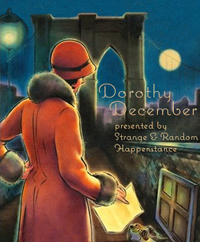

 If you are looking for something to fill the gaping hole left between seasons of The Gilded Age this isn't where you should be looking. And yes, a lot of it just falls on the scope scale. The Gilded Age has a budget of roughly $15 million an episode and this, this did not. The average Hallmark movie has a budget around $2 million. So you can see there's a steep divide. And I went into this with an open mind. I knew to lower my expectations. That this was just the first movie adapting Alyssa Maxwell's Newport books and I should enjoy this delightful series getting exposure, but so many WTF moments kept pulling me out of the narrative. Which means let's talk letterpress. Our heroine, Emma Vanderbilt-Cross, works at a newspaper. Newspapers in 1895 means letterpress. But just slapping a press in a room with a cabinet does not a proper newspaper make. The entire newspaper seems to be run out of one office with an old guy in the corner with a small platen press... Which is actually impossible given the printed newspaper we are shown. Also don't get me started on how slow he sets the type. Did the writers of this know there used to be competitions among newspapers to see who had the fastest typesetters? Because our friend here would come in last. But the vagaries and lack of knowledge regarding printing is, in my experience, quite common. Don't get me started on the Heidelberg Windmill fiasco in Without a Clue! So let's tackle those issues that other people might actually notice. Just look to the inferior fabrics that the dresses are made of. Seriously, is that poor girl wearing a repurposed eighties prom dress for her coming out? And I mean 1980s not 1880s. It's sure pink and shiny enough. Molly Ringwald would approve. Also the costumes are all so ill-fitting and could they just stop randomly adding lace to cover up imperfections. I'd rather see the imperfections than that much lace. But the biggest sin of all is that this was filmed in Canada. "The Breakers" was previously home to Charles Xavier's School for Gifted Youngsters. And yes, that at least means it's opulent enough, but it's not Newport enough. The thing is we're dealing with two different coasts and therefore two very different architectural styles. Newport is very gilded, as the title of it's most famous show indicates. The rooms in the homes look like they belong in museums with all that gilt. Whereas Vancouver Island, home to Hatley Castle, is all western lumber and oil barron wealth, so the look leans more towards wood with an occasional node to the arts and crafts movement when not just showcasing the lumber. In other words, nothing like the actual homes in Newport. And I just could not suspend my disbelief. You're probably saying, yes, we get it, the production quality annoyed you, what about the plot? Well, our heroine is too dumb to live. She never stays around to listen to people's answers and just hares off. She spent days looking for the servant Mason and she finds him and just wanders off without getting a single answer!?! Um, if you want to write for a newspaper perhaps actually follow through? At least her half brother looks enough like a young Michael Sheen that when she inevitably dies from doing something stupid he can take over the show and I'll be "content" with that.
 Any fan of Good Omens or it's two authors will know the turbulent history of trying to get an adaptation of it made. Years and years of trouble and strife all for it to finally come together only because of Terry's death. His death hit me hard, it was one of the only times I've cried for an author and not because of something they've written. And Neil promised Terry that Good Omens would happen. Almost two year's after Terry's death it was announced that Neil himself was adapting the book to be a six part miniseries for Amazon that would be released in 2019. Later that year Michael Sheen and David Tennant (listed alphabetically using David's stage name) joined as the two leads. The show is jammed with the cream of the crop of British guest stars, so much so some people didn't notice a few recognizable Americans snuck in there as well. The show, like the book, is uneven. And don't get me started on France McDormand's narration as God. Never has someone so talented phoned in their performance so epicly. The show would be almost 100% better if they just edited her out. A lesson they took to heart in season two. Yet for me, and for most fans, the heart of the show is the relationship between Aziraphale and Crowley. Season one's best episode is "Hard Times" and all it is is their relationship through the ages. And it is priceless. Because the friendship and love isn't just between the two characters but between the two actors. Michael and David have become the best of friends, so much so that during lockdown they created and starred in the award winning Staged, which is a fictionalized look at their lives. Therefore the second season of Good Omens had high expectations, because now EVERYONE knew that not only where the leads best friends but they shipped their characters. This show is unapologetically gay and fan service to the max, but that's why there is a second season, because of the fans. Season two works better than season one because it's on a smaller, more intimate scale. The main cast is just a handful of characters and it's all about finding love. Which makes all the Jane Austen references so perfect, even if she was secretly a criminal and to Crowley's shock, an author. But the show still has pacing problems. We spent way too much time with Job, but thankfully Aziraphale having the meat sweats distracted me a bit there, and I could have used even more Jon Hamm. Seriously, I hated his character in season one, but an amnesiac angel let him lean into his comedic abilities which he should seriously do more often. Has everyone seen A Young Doctor's Notebook? Because if not you should get on that right away. And for some reason, no matter how much I do love her, Miranda Richardson just didn't work. But all my problems fell away with the final two episodes. The whole show is about how people in power don't want you to ask questions. They don't want you to think that something they are against is a possibility, so an angel and a demon falling in love? It's the greatest protest you could stage. And stage it they did. So damn beautifully. That HEA was well earned. Sadly it wasn't for Aziraphale and Crowley. Which means if we don't get a season three someone will be hurt. It will probably be me.
 Vile Bodies by Evelyn Waugh


