









Showing posts with label Les Liaisons Dangereuses. Show all posts

Friday, January 19, 2024

Book Review 2023 #4 - C.C. Aune's The Ill-Kept Oath

The Ill-Kept Oath by C.C. Aune
Published by: Wise Ink Creative Publishing
Publication Date: September 27th, 2016
Format: Paperback, 416 Pages
Rating: ★★★★★
To Buy

Prudence and Josephine are the very best of friends as well as family. Therefore when Prudence heads off to London with their maiden aunt Amelia for her debut season it's no surprise that the letters fly back and forth between the cousins from the metropolis to Wiltshire. Josephine feels left behind and Prudence just wishes she were home. But Prudence knows the realities, unlike her cousin, she is penniless and therefore must make a great match. Which is complicated by what she and Josephine are about to uncover. The start of the season also coincides with Prudence's eighteenth birthday. Eighteen is a milestone birthday and she is surprised by her aunt with a box. Aunt Amelia claims it's full off nothing but rubbish but has been keeping it for Prudence as a bequest from her parents. Prudence knows next to nothing about her parents, she and her brother were orphaned at a young age, and to get a mysterious box and to be told they had a rare set of talents called the Inheritance, well, it makes her question everything she's ever known. But the box appears to be rubbish indeed, relics that are better off in the trash; an Elizabethan velvet overgown, a pair of elbow-length gauntlets missing a couple of digets, a stained wool cloak, a sword with a broken blade and a dented cross-guard, and a shining gold ring which needs repair. Despite their decrepitude Prudence keeps being drawn to them and even gets the ring repaired and takes to wearing it. She's wearing the ring in fact when her aunt agrees to accept an invitation from a Baroness Revelle. It turns out that Aunt Amelia and Lady Revelle have a history, as did Lady Revelle and Prudence's mother. Which might explain why Aunt Amelia wants to keep them apart. Lady Revelle claims to know about the ring Prudence wears as well as other things. Could Lady Revelle be the answer to the cousins' questions? Because Josephine has been dealing with magical artifacts of her own discovered in the attics of Greenbank Manor; a man's costume cut for a woman that must have belonged to her own mother as well as a pair of pistols. She's woken up more than once sporting the clothes and welding the weapons somewhere on the grounds of Greenbank. Plus, not that she likes to eavesdrop, but there's an encampment of troops in Wiltshire and she could have sworn that she heard Lieutenant Quimby talking about trolls to her father. Could all of this be related? Could magic really exist? And if so, Prudence and Josephine have been lied to by those whom they love the most and they need to know why.

Many lovers of Regency Magic were first introduced to this historical fantasy subgenre through Caroline Stevermer and Patricia C. Wrede's Sorcery and Cecelia or The Enchanted Chocolate Pot. Released in the late eighties this epistolary novel is really the go-to recommendation for this subgenre. I see why historically, but there are so many better books out there that whenever I see the recommendation to read it I instantly want to horn in on the conversation and be like, "but have you read..." and start just listing books. I can actually do it for quite awhile. But now I specifically want to say "but have you read The Ill-Kept Oath?" And then avoid shouting in someone's face that it's Jane Austen but with trolls! The non-troll reason being is that The Ill-Kept Oath has the same basic framework, two cousins who are best friends separated because one of them is having her first season and magical things start to happen which they write to each other about. I mean obviously the Regency and epistolary novels go hand in hand because of how Jane Austen herself originally wrote Sense and Sensibility, but the epistolary format has limitations. You only get access to what the characters are willing to tell their correspondent, not what else is happening in their life or what they are excluding. The Ill-Kept Oath uses an expanded epistolary form, we get letters, but we get so much more. So while this is very Sorcery and Cecelia meets Les Liaisons Dangereuses with a heavy helping of Sense and Sensibility it is so wonderfully it's own unique voice that I fell in love with it almost instantly. What's more it gave me hope in books again. A renewed love of reading. My mood is effected by what I read and for the week it took me to devour The Ill-Kept Oath I was walking on air. I had so much work to do and when I head to bed if I'm tired I will forgo reading. But it didn't matter how tired I was, I had to keep reading. I had to know more. I had to know what Lady Revelle was up to, The Ill-Kept Oath's own Marquise de Merteuil. I had to know all about what Prudence and Josephine's parents kept from them. And right there I have to call out the brilliance of this book. Often when adults keep secrets from their children in books the reasons are often lame. I mean, if it was my kid I'd totally tell them. Here it actually made sense for Amelia and Lord Middlemere to keep quiet. Of course now I can't wait to read about the fallout of that decision... Oh how I long for the sequel.

Friday, November 24, 2023

Dangerous Liaisons

Most people aren't familiar with the actual text of Les Liaisons Dangereuses, instead they are familiar with the Christopher Hampton adaptation, who interestingly is an executive producer on this show. That adaptation for the Royal Shakespeare Company in 1985 has formed the basis of all the adaptations since, from John Malkovich and Glenn Close to Colin Firth and Annette Bening to Ryan Phillippe and Sarah Michelle Gellar, they were all inspired by that interpretation of the text. In fact the 2015 National Theatre staging of Hampton's play with Janet McTeer and Dominic West might be one of my favorite productions ever. And yet, even in perfection there are a lot of issues I have with the source material, issues that are resolved in this adaptation by almost completely ignoring the book, the play, and any other form of the original story, to tell their own tale where revenge is justified and at some point every cast member of Game of Thrones shows up. You think I'm joking? Melisandre is married to Jaqen H'ghar in the most terrifying fanfic mashup of all time. But then again Valmont looks like the lovechild of Eddie Redmayne and Christian Slater while Camille is a pre-revolutionary French doppelganger for Portia from The White Lotus. And of course Lesley Manville shows up because she is now contractually obligated to be in everything. The only way that she had time to stop in as Valmont's opponent, Madame de Merteuil, is that they do the unthinkable and kill her off in the first episode. What is Valmont without Merteuil? Well, that is one of the things this series plays with. It takes things that are familiar in the book and all it's adaptations and it plays with it. It bats it around like a playful kitten until you get something entirely new yet familiar. The book is an epistolary novel and it is with letters that we begin, letters as weapons. Weapons that can be used for real revenge not just petty jealousies. It's not Merteuil pouting that her lover lost interest, it's Camille systematically destroying the society that ground her down and didn't believe her when she cried rape. This is Dangerous Liaisons for the MeToo era. Yes, there might still be rape, but it's not Madame de Merteuil telling Valmont to rape a rival, it's the seed for revenge. In fact Merteuil's taking Camille under her wing is so that this young, wronged woman will be able to exact the revenge that Merteuil herself could never enact against her own husband, who in an interesting sideline is involved in a high end brothel which ties into some murders. This story is propulsive and no longer insular due to Camille's background. While we are still cocooned to some extent within the higher echelons of society we see truth, we see reality, we see historical figures and the unrest on the streets that will soon lead to revolution. And while we see flashes of the original story from time to time the story is cyclical with Camille becoming the new Madame de Merteuil and the end of this series really being the beginning. Ah, if only Starz hadn't toyed with us we'd actually be getting that second season which I think would have brought everything full circle. 
Friday, April 7, 2023

Book Review - C.C. Aune's The Ill-Kept Oath

The Ill-Kept Oath by C.C. Aune
Published by: Wise Ink Creative Publishing
Publication Date: September 27th, 2016
Format: Paperback, 416 Pages
Rating: ★★★★★
To Buy

Prudence and Josephine are the very best of friends as well as family. Therefore when Prudence heads off to London with their maiden aunt Amelia for her debut season it's no surprise that the letters fly back and forth between the cousins from the metropolis to Wiltshire. Josephine feels left behind and Prudence just wishes she were home. But Prudence knows the realities, unlike her cousin, she is penniless and therefore must make a great match. Which is complicated by what she and Josephine are about to uncover. The start of the season also coincides with Prudence's eighteenth birthday. Eighteen is a milestone birthday and she is surprised by her aunt with a box. Aunt Amelia claims it's full off nothing but rubbish but has been keeping it for Prudence as a bequest from her parents. Prudence knows next to nothing about her parents, she and her brother were orphaned at a young age, and to get a mysterious box and to be told they had a rare set of talents called the Inheritance, well, it makes her question everything she's ever known. But the box appears to be rubbish indeed, relics that are better off in the trash; an Elizabethan velvet overgown, a pair of elbow-length gauntlets missing a couple of digets, a stained wool cloak, a sword with a broken blade and a dented cross-guard, and a shining gold ring which needs repair. Despite their decrepitude Prudence keeps being drawn to them and even gets the ring repaired and takes to wearing it. She's wearing the ring in fact when her aunt agrees to accept an invitation from a Baroness Revelle. It turns out that Aunt Amelia and Lady Revelle have a history, as did Lady Revelle and Prudence's mother. Which might explain why Aunt Amelia wants to keep them apart. Lady Revelle claims to know about the ring Prudence wears as well as other things. Could Lady Revelle be the answer to the cousins' questions? Because Josephine has been dealing with magical artifacts of her own discovered in the attics of Greenbank Manor; a man's costume cut for a woman that must have belonged to her own mother as well as a pair of pistols. She's woken up more than once sporting the clothes and welding the weapons somewhere on the grounds of Greenbank. Plus, not that she likes to eavesdrop, but there's an encampment of troops in Wiltshire and she could have sworn that she heard Lieutenant Quimby talking about trolls to her father. Could all of this be related? Could magic really exist? And if so, Prudence and Josephine have been lied to by those whom they love the most and they need to know why.

Many lovers of Regency Magic were first introduced to this historical fantasy subgenre through Caroline Stevermer and Patricia C. Wrede's Sorcery and Cecelia or The Enchanted Chocolate Pot. Released in the late eighties this epistolary novel is really the go-to recommendation for this subgenre. I see why historically, but there are so many better books out there that whenever I see the recommendation to read it I instantly want to horn in on the conversation and be like, "but have you read..." and start just listing books. I can actually do it for quite awhile. But now I specifically want to say "but have you read The Ill-Kept Oath?" And then avoid shouting in someone's face that it's Jane Austen but with trolls! The non-troll reason being is that The Ill-Kept Oath has the same basic framework, two cousins who are best friends separated because one of them is having her first season and magical things start to happen which they write to each other about. I mean obviously the Regency and epistolary novels go hand in hand because of how Jane Austen herself originally wrote Sense and Sensibility, but the epistolary format has limitations. You only get access to what the characters are willing to tell their correspondent, not what else is happening in their life or what they are excluding. The Ill-Kept Oath uses an expanded epistolary form, we get letters, but we get so much more. So while this is very Sorcery and Cecelia meets Les Liaisons Dangereuses with a heavy helping of Sense and Sensibility it is so wonderfully it's own unique voice that I fell in love with it almost instantly. What's more it gave me hope in books again. A renewed love of reading. My mood is effected by what I read and for the week it took me to devour The Ill-Kept Oath I was walking on air. I had so much work to do and when I head to bed if I'm tired I will forgo reading. But it didn't matter how tired I was, I had to keep reading. I had to know more. I had to know what Lady Revelle was up to, The Ill-Kept Oath's own Marquise de Merteuil. I had to know all about what Prudence and Josephine's parents kept from them. And right there I have to call out the brilliance of this book. Often when adults keep secrets from their children in books the reasons are often lame. I mean, if it was my kid I'd totally tell them. Here it actually made sense for Amelia and Lord Middlemere to keep quiet. Of course now I can't wait to read about the fallout of that decision... Oh how I long for the sequel.

Thursday, January 12, 2023

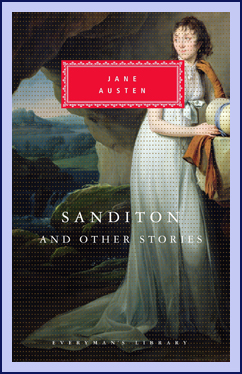
Book Review 2022 #6 - Jane Austen's Sanditon and Other Stories

Sanditon and Other Stories by Jane Austen
Published by: Everyman
Publication Date: March 28th, 1996
Format: Hardcover, 502 Pages
Rating: ★★★★★
To Buy

Due to a geographical mistake and an accident Charlotte Heywood has been given the extreme pleasure of visiting Sanditon with it's chief cheerleader, Mr. Tom Parker. A seaside resort unlike any other. The water is clearer, the sand cleaner, and the prospects endless, as long as one or two large groups were to take homes for the summer. But not to worry, it's just the beginning of the season and Sanditon's year round inhabitants are characters enough for Charlotte. Especially when all the Parker siblings descend on the town and Mr. Arthur Parker shows Charlotte the joy of a perfectly toasted piece of bread. Well buttered. While in another part of England altogether Emma Watson has be thrust back on her family after being raised by her wealthy Aunt and Uncle. Her Uncle tragically died and her Aunt remarried, thus making Emma superfluous and no longer an heiress. She and her family make the best of this sudden reversal in fortune, but it is very odd being thrust back on one's family who now seem more like strangers. Whereas in another section of England entirely Lady Susan is concocting a scheme. Being recently widowed she was rather too open with her feelings and flirtations at some friends she was visiting and therefore has taken refuge with her brother-in-law and his wife, a wife that Lady Susan did her best to make sure he didn't marry. But Lady Susan is so eloquent with her words that she soon smooths over any reservations that anyone might have. She has been ill used and isn't the villain everyone makes her out to be. Or that is what she loudly proclaims while secretly scheming to get her daughter Frederica off her hands and carrying on her affair with a married man. Sadly for Lady Susan her sister-in-law soon starts to suspect that her first opinion of her was the true one and she works to disentangle her family from Lady Susan's copious affairs while also keeping her ill used daughter Frederica within the bosom of her true family. Will Lady Susan be found out or will she somehow slither her way free of scandal once more?

If you are someone who views Jane Austen's output as her canonical six books you are missing out. While yes, if you read this book you might forever be scarred because she was unable to finish Sanditon, once you get beyond this disappointment, made easier by the television adaptation, you will be delighted by the humor and wit of her unfinished works. These aren't polished, these aren't perfect, but that's what makes them genius. This is Jane Austen unfiltered. Her books are perfectly polished gems, these are the uncut rhinestones that will just delight you with their sheer absurdity. Here gentlemen of good fortune aren't in want of a wife, they are in want of animal traps to ensnare women who dare to come too close to their homes, as one does. And yes, I literally snorted out loud at that remark. And don't worry, the young lady's leg which was mangled ended up perfectly fine. I think. She might have fainted a time or twenty. And that was my impression over twenty-five years ago when I first read Austen's juvenalia and it still holds true. Women are passing out left and right, poisoning rivals, carrying on with married men, having husbands die in the most outrageous manner, and hating on Queen Elizabeth. Anything and everything was skewered by Austen and she took obvious delight in doing so. The novella Lady Susan is included in this collection and while many people sadly only know this story because of the subpar adaptation of it a few years back staring Kate Beckinsale confusingly called Love and Friendship, because Love and Friendship is an entirely different story, no one ever talks about how Lady Susan is a brilliant parody of Les Liaisons Dangereuses. Seeing as at seventeen I had not read Les Liasons Dangerueses, though I was familiar enough with the story thanks to the Glenn Close/John Malkovich adaptation being omnipresent, I didn't get how Austen's writing style was aping Pierre Choderlos de Laclos. She was a beautiful mimic when she wanted to be, and she got right to the heart of everything I hate about that book and mercilessly poked fun at it. Seriously, if there's one thing rereading Austen's unfinished and early work all these years later has taught me is that I think she would have been the best and funniest friend a person could ask for.

Wednesday, June 8, 2022

Book Review - Jane Austen's Sanditon and Other Stories

Sanditon and Other Stories by Jane Austen
Published by: Everyman
Publication Date: March 28th, 1996
Format: Hardcover, 502 Pages
Rating: ★★★★★
To Buy

Due to a geographical mistake and an accident Charlotte Heywood has been given the extreme pleasure of visiting Sanditon with it's chief cheerleader, Mr. Tom Parker. A seaside resort unlike any other. The water is clearer, the sand cleaner, and the prospects endless, as long as one or two large groups were to take homes for the summer. But not to worry, it's just the beginning of the season and Sanditon's year round inhabitants are characters enough for Charlotte. Especially when all the Parker siblings descend on the town and Mr. Arthur Parker shows Charlotte the joy of a perfectly toasted piece of bread. Well buttered. While in another part of England altogether Emma Watson has be thrust back on her family after being raised by her wealthy Aunt and Uncle. Her Uncle tragically died and her Aunt remarried, thus making Emma superfluous and no longer an heiress. She and her family make the best of this sudden reversal in fortune, but it is very odd being thrust back on one's family who now seem more like strangers. Whereas in another section of England entirely Lady Susan is concocting a scheme. Being recently widowed she was rather too open with her feelings and flirtations at some friends she was visiting and therefore has taken refuge with her brother-in-law and his wife, a wife that Lady Susan did her best to make sure he didn't marry. But Lady Susan is so eloquent with her words that she soon smooths over any reservations that anyone might have. She has been ill used and isn't the villain everyone makes her out to be. Or that is what she loudly proclaims while secretly scheming to get her daughter Frederica off her hands and carrying on her affair with a married man. Sadly for Lady Susan her sister-in-law soon starts to suspect that her first opinion of her was the true one and she works to disentangle her family from Lady Susan's copious affairs while also keeping her ill used daughter Frederica within the bosom of her true family. Will Lady Susan be found out or will she somehow slither her way free of scandal once more?

If you are someone who views Jane Austen's output as her canonical six books you are missing out. While yes, if you read this book you might forever be scarred because she was unable to finish Sanditon, once you get beyond this disappointment, made easier by the television adaptation, you will be delighted by the humor and wit of her unfinished works. These aren't polished, these aren't perfect, but that's what makes them genius. This is Jane Austen unfiltered. Her books are perfectly polished gems, these are the uncut rhinestones that will just delight you with their sheer absurdity. Here gentlemen of good fortune aren't in want of a wife, they are in want of animal traps to ensnare women who dare to come too close to their homes, as one does. And yes, I literally snorted out loud at that remark. And don't worry, the young lady's leg which was mangled ended up perfectly fine. I think. She might have fainted a time or twenty. And that was my impression over twenty-five years ago when I first read Austen's juvenalia and it still holds true. Women are passing out left and right, poisoning rivals, carrying on with married men, having husbands die in the most outrageous manner, and hating on Queen Elizabeth. Anything and everything was skewered by Austen and she took obvious delight in doing so. The novella Lady Susan is included in this collection and while many people sadly only know this story because of the subpar adaptation of it a few years back staring Kate Beckinsale confusingly called Love and Friendship, because Love and Friendship is an entirely different story, no one ever talks about how Lady Susan is a brilliant parody of Les Liaisons Dangereuses. Seeing as at seventeen I had not read Les Liasons Dangerueses, though I was familiar enough with the story thanks to the Glenn Close/John Malkovich adaptation being omnipresent, I didn't get how Austen's writing style was aping Pierre Choderlos de Laclos. She was a beautiful mimic when she wanted to be, and she got right to the heart of everything I hate about that book and mercilessly poked fun at it. Seriously, if there's one thing rereading Austen's unfinished and early work all these years later has taught me is that I think she would have been the best and funniest friend a person could ask for.

Friday, May 27, 2022

Book Review - Georgette Heyer's The Convenient Marriage

The Convenient Marriage by Georgette Heyer
Published by: Sourcebooks Casablanca
Publication Date: 1934
Format: Paperback, 307 Pages
Rating: ★
To Buy

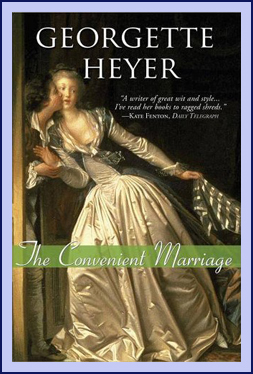
The Earl of Rule has decided that he will marry. What's more he has decided to align himself with the prestigious Winwood family who have fallen on hard times due to their fatal love of gambling. The problem is that he has chosen to marry the eldest daughter Lizzie and Lizzie is desperately in love with another, Edward Heron. What's worse, Edward is a penniless soldier so Lizzie's mother will never allow her to follow her heart when their fortunes could be saved. Lizzie therefore breaks with Edward breaking her heart in the process. But her younger sister Horatia has an idea. Very improperly she approaches Lord Rule with a compromise. He should marry her instead. The reasons being that her sister Lizzie is in love with another, her sister Charlotte would never marry him, and seeing as he just wants to align himself with their family he can have her and she will let him live his life however he wants. The adorably stammering Horatia's bargain intrigues Lord Rule so he agrees to marry her, a girl barely out of the schoolroom. This sends shock waves through the ton. His sister doesn't know what Rule is about, his cousin and presumptive heir Drelincourt is very put out, and as for Rule's mistress Lady Massey, she sees her hopes and dreams shattered and takes comfort in the arms of Rule's rival Lord Lethbridge. And while Horatia's family is shocked by her behavior, her brother Pelham, returning from the continent, welcomes Rule into the family as all his debts are swept away by his generous brother-in-law. But if Rule thought he'd have an easy time with his new bride he's in for a surprise. She seems to have inherited the family's fatal flaw and now that she has access to money she is gambling it away like nobody's business. Not to mention how much she's spending on clothes and fripperies and carriages. What's wrong with spending a fortune on diamond encrusted shoes? Yes, they pinch a little, but they look fabulous. Lord Rule is very sanguine about his new wife's spendthrift ways, after all she amuses him to no end, that is until she decides to befriend Lord Lethbridge. This is a step too far. A step she takes to be daring. But could this end their marriage or bring them closer together? Only when the farce is concluded will the victor be declared.

The fatal flaw of The Convenient Marriage is that the setup just doesn't deliver. Horatia seems rather put together with making this sacrifice for her family, so it's rather shocking to discover she is nothing but a flighty flibbertigibbet with the family's fatal flaw. You start out thinking, hey, this is someone I could root for, she's clever and is going to reform a rake. She is the classic too stupid to live heroine so by the end you are actually wishing for her to be thrown over by her husband and ruined by Lethbridge. Though Lethbridge himself was an ass. In fact every single character in this book is annoying. Except perhaps Pelham's friend Pommeroy, but he is amusing because he's an idiot and says the most shockingly stupid things. And all these characters and their farcical situations just can't make you care one little bit. They're staging fake attacks by highwaymen as what they see as a logical attempt to get back incriminating evidence. What!?! I mean, seriously, why am I supposed to find this interesting. I literally could barely finish this book. What's odd is that Georgette Heyer does go in for the farcical and can succeed, Devil's Cub being an example of something being so far over the top it somehow works. But there at least you could root for Sophie, here, literally there is no one to root for. Even Lord Rule is a rather removed rake. He is like this disinterested observer to his own life. If he can't even be bothered to take an interest why should we? What's more, with Lord Lethbridge and Lady Massey it seemed as if Heyer was going to bring a little Les Liaisons Dangereuses action to the scene, she was actually setting it up, and then, what, got bored? Because that doesn't even deliver. The Massey goes off to Bath and Lethbridge kind of just folds. Nothing follows through, it's all just a chatoic mess of characters I don't care for. I honestly didn't even know what to write for this review. The book is a nonentity. The Convenient Marriage can just got slink off to wherever it came from and never darker my door again. Because it did darken it. When I'm reading a book I don't like I get grumpy. And boy did this book make me grumpy. Not to the level of wanting to watch it burn, but close.

Friday, February 23, 2018

Book Review - Pierre Choderlos de Laclos's Les Liaisons Dangereuses

Les Liaisons Dangereuses by Pierre Choderlos de Laclos
Published by: Doubleday Books
Publication Date: March 23rd, 1782
Format: Hardcover, 497 Pages
Rating: ★★
To Buy (different edition than one reviewed)

The Marquise de Merteuil and the Vicomte de Valmont were once lovers. Yet their rupture wasn't acrimonious, in fact they are now perhaps closer than ever before. They have a voluminous correspondence telling each other of past, present, and future conquests. Salacious details pepper their letters that they know only the other will appreciate. Though the Marquise is already tiring on Valmont's most recent project. He has sequestered himself out in the country with his aunt because he is trying to bed his aunt's houseguest, Madame de Tourvel. Only he doesn't just want this devout young wife's body, he wants her body and soul. To speed up his conquest the Marquise de Merteuil offers a night back in her bed if he were to quickly accomplish the task and return to her in Paris because she has a job for him. The Marquise's former lover, the only one to ever jilt her, is to be married to the virginal Cécile de Volanges. She thinks it would be just if this young girl just out of the convent weren't so innocent when she reaches her wedding bed and for that she needs Valmont. Yet Valmont stalls and drags his heels, could this cad, this supreme seducer be falling for a little church mouse? Luckily the Chevalier Danceny comes on the scene as Cécile's music tutor. The two young ones fall madly in love and yet neither knows what to do! It will take all the cunning of the Marquise de Merteuil to pull this off, but when Valmont learns that Cécile's mother has been writing vitriol against him to Madame de Tourvel he instantly joins in the plan to take the virtue of young Cécile. Passion, love, seduction, the lives of this small and scheming group are about to change forever with Valmont joining the fray and not all will survive.

If you are a fan of Colin Firth who is a completest, one day, after you've worked your way past such oddities as Femme Fatale, where he stars opposite Billy Zane and Billy's sister Lisa, you will stumble upon Valmont. In fact I would go so far as to say that only those attempting to watch Colin Firth's entire back catalog have seen this misfire of a film. Needless to say this addlepated film was overshadowed by the big screen version of Christopher Hampton's stage adaptation the year before starring Glenn Close and John Malkovich. A film that spent so much money on miscasting that their budget was stretched so thin that all those closeups that were thought artistic were really to hide the fact that they didn't have money for anything beyond a few nice costumes. Combined, these two adaptations left me scratching my head because I could not for the life of me understand why Les Liaisons Dangereuses was a classic, with or without Keanu Reeves. But then I saw a broadcast of the National Theatre Live production of Christopher Hampton's stage adaption starring Janet McTeer, Dominic West, and Elaine Cassidy and everything changed. I finally connected to these characters in the intimate setting of the Donmar Warehouse. I would even go so far as to say of all the "live" theater broadcasts I have seen over the years this one was hands down my favorite. This inspired me to finally read the book and all I am left with is the knowledge that Christopher Hampton is a genius given proper casting, and these characters need to be brought to life by talented actors in order to illicit any kind of emotional response.

The problem is this book is one of the most famous epistolary novels that wasn't written by Samuel Richardson. It's not the fame that's the problem it's the form. Epistolary novels over the centuries have expanded to not just be diaries or letters but here we're limited to the letter and Laclos likes to leave a little bit of a mystery. So instead of being extremely intimate, which is what a successful epistolary novel does, letting us into the character's innermost thoughts, the letters purposefully muddy the waters. Characters say one thing to one person and the exact opposite to another but they are both written in the same voice so there is no way to tell what the truth is even if there is a truth. This means you take the characters at face value, what they say is who they are, there are no lines to be read between and you're only sure of one thing, they all come across as dicks. On top of that these characters are interacting with each other between their correspondences and we never really hear what happens except in passing. This leads to the reader being distanced from the characters because of the elliptical way their story is being told. So if you weren't alienated by the characters being assholes, you're alienated by an author who thinks he's being clever. That is why this book works better adapted into another format. Taking the best of the material at hand and making it into conversations instead of having characters sitting in chairs on stage or screen and just reading and writing letters. Giving the story definition and having actors that are able to sell it. Because a good actor can make you root for a bad character any day.

The transference into another medium also helps in eliminating the book's other problem, it's overwritten. Seriously, send an editor in STAT. Again and again the characters go back to the same things, the same arguments, the same platitudes of love, on and on and on and if I read the word chimerical one more time I will scream. If you've read one letter from Valmont to Madame de Tourvel you've literally read them all. Valmont: I love you! Madame de Tourvel: Please don't say that. Over and over and over. The forward progress of the narrative is so infinitesimal that after a time you think nothing is going to happen. I mean, I knew that Valmont was to seduce naive young Cécile and it took FOREVER to get to that point. I'm not joking when I say that took HALF the book to happen. All told there are 175 letters over five months and almost all the action happens at the very end. In fact the big moments are almost swept under the carpet! Valmont's death is just, and he's dead! The Marquise de Merteuil's fate is basically a postscript! This book needed someone like Christopher Hampton to come along and slap it into shape, because Miloš Forman and Jean-Claude Carrière sure made a hatchet job with Valmont. Oddly enough the only forward momentum is not momentum at all but reminiscences. The stories of past conquests and bizarre take-downs that the Marquise de Merteuil and Valmont share are the only lucid and succinct storytelling in all 500 pages of this book. And those stories don't exactly make for the best reading, as it's the destruction of lives and the stealing of virtue.

And virtue is indeed stolen. That is my biggest hangup with Les Liaisons Dangereuses, does consent mean nothing? Again, this is why seeing it on stage or screen works, because the actors can give a look, perform an action, that changes what is being said. Yet here the correspondence is in black and white, there is no middle ground, and to me Cécile is forced into a sexual relationship with Valmont, both from his actions and the Marquise de Merteuil's peer pressure. While Laclos is again elliptical, what you gather is that Valmont rapes Cécile and then she enters into a relationship with him against her will and her heart's desire. This isn't cool people. This isn't right. While I said that an adaptation can create a middle ground to what is happening I want to make it VERY clear that in life there is no middle ground when it comes to consent. I think this was the most shocking discovery to me in reading this book, I knew the lead characters were not likable people, but I thought that their liaisons were based more on seduction than blunt force. The number of times that poor Madame de Tourvel says no and is ignored? What I took to be the central love story that reformed Valmont is nothing more than a man not realizing that no means no and his target becoming so worn down she gives up. And while reading this book at any time would have made me point these problems out, in this day and age with the Time's Up movement and #MeToo, I was struck by how this book revels in the very worst in humanity. Consent should be enthusiastic and no should always, ALWAYS, mean no.

But I wonder if perhaps that's why it was so controversial at the time. Did people behave like this or were they scandalized to think people could behave like this? Or was this just showcasing the lax morals of the previous generation that was about to be overthrown through revolution? That notion actually playing into the recent revival by the National Theatre. While this book is still very scandalous, I don't think that is the reason why it is a classic. The reason why Les Liaisons Dangereuses has lasted is that it's humor, underneath all the horrors, is wry and arch. The book has a humorous self-deprecating style wherein the characters actually comment on Danceny being the hero of the tale, and oh, such a dud of a hero. Like Thackeray's Vanity Fair it's a book where the anti heroine and hero are the compelling characters. You get a vicarious thrill to think of someone destroying another for sport, but in the end you get the added thrill that the assholes get their due. Because THAT is the key when you have unlikeable characters. If these reprehensible examples of human life don't get what's coming to them it's just glorifying their existence. Because they pay for their sins the scales balance in the end. Which makes me really want to sit down with Laclos and ask him what his personal opinions were on issues of consent because you have to wonder, what with Valmont dying and the Marquise de Merteuil getting smallpox, losing an eye, and being shunted off to Amsterdam where something too horrid to mention happens, if he was actually just wanting to write something salacious that would sell and in the end it rather ambiguously states his real opinions through death and disfigurement.

Friday, December 2, 2016

TV Movie Review - Daphne

Daphne
Starring: Geraldine Somerville, Andrew Havill, Christopher Malcolm, Elizabeth McGovern, Nicholas Murchie, Malcolm Sinclair, and Janet McTeer
Release Date: May 12th, 2007
Rating: ★
To Buy

There was a time when two women were Daphne Du Maurier's life entire. Ellen Doubleday was the wife of Daphne's American Publisher, Nelson Doubleday, and Gertrude Lawrence was an actress with whom Daphne sated her unrequited love of Ellen. The news of the death of Gertrude leads to Daphne baring her soul in writing to Ellen, because Ellen was the beginning. They met on a transatlantic crossing. Daphne was coming to America to stay with the Doubledays to defend herself in court against accusations of plagiarism stemming from her most famous book, Rebecca. Ellen wafted into her cabin with her arms laden with presents and from that moment on the trial was nothing but a nuisance to Daphne who liked to do nothing better than bask in the presence of Ellen. Ellen is aware of Daphne's growing infatuation and confides to her that she doesn't judge her, she just can't love her in the way she desires. Daphne returns to England and does what she does best, control her emotions in her work. She writes a play, September Tide, wherein the character of the mother-in-law is Ellen and Daphne's avatar is the son-in-law. In a twist of fate the mother-in-law is played by Gertrude Lawrence, whom Daphne met at a party of Ellen's. Soon Gertrude and Daphne begin an affair, much as Gertrude and Daphne's father Gerald did years earlier. Yet Gertrude isn't Ellen and Ellen will forever be between them.

When I first read Rebecca I knew that it would forever be one of my favorite books. So much so that I actually stole my mom's copy from her collection of Franklin Mysteries despite being only about thirteen and not getting the full impact of the book. One of the first things I remember reading when looking into the life of the author of this classic was that this female writer shared a lover with her father. Right there I knew there was a story that needed telling. It might be a weird story, it might be a disturbing story, but the more I read about Daphne's relationship with her father, the famous actor Gerald Du Maurier, the more I needed to know. And I needed to know this from someone who wasn't Daphne. Daphne had a habit of censoring herself. Just read her autobiography, Myself When Young, and you'll see what I'm saying. She just tells her story in a very flat and conventional way. Her life could have been the life of any of her contemporaries. There was no plumbing of her depths, no hints of what she was so artfully and carefully concealing. Therefore when I first read about Daphne in some catalog I got in the mail I was excited to see that there was a film out there finally dealing with the complexity of Daphne Du Maurier. Her sexuality, her relationships, everything she tried to keep hidden. I wanted in. I wanted to know her better.

Perhaps I had too many expectations of a short movie made for television. Because all I got was surface. There was no complexity. If anything Daphne conflates and condenses until there's almost no story to tell. I can't help but think of the adaptations of Sarah Waters's work, who is herself a big fan of Du Maurier, there risks were taken, here... here is a movie that won't offend the sensibilities of the after church crowd gathering around to watch PBS. Because nothing is explained, nothing really happens. Daphne is a confusing mess of repressed emotions and stilted acting. It felt of another time. As in it felt like a movie made post Hayes Code, but only just. The film stock and direction made Daphne look and feel like a BBC adaptation from the early 70s. But not a good one like Upstairs, Downstairs, one of those ones you saw once and never wanted to see again and have since expunged from your memory. In fact I would go so far as to say that this isn't so much acted as a "historical dramatization" akin to the historical reenactments on the History Channel that are interposed between interviews with scholars. Only those are better acted.

In fact, if Daphne had gone all American Horror Story: Roanoke on us perhaps this would have worked. There is just SO MUCH that is glossed over and omitted, and this coming from someone who has only a passing knowledge, that this movie NEEDED those scholars interjecting and explaining what is happening in Daphne's life and mindset in order to grasp what is going on. Someone who is not at all familiar with Du Maurier would be totally at sea. For example the plagiarism lawsuit was just brushed aside for long awkward glances at Ellen Doubleday. Whereas the countless claims and sole lawsuit against Du Maurier for plagiarizing Rebecca could have alone made an interesting movie, instead of a few quick snapshots that brought her into the orbit of Ellen. Sure a successful book will bring the kooks out of the woodwork, but there is a possibility that Rebecca wasn't all Du Maurier's making... see, I'm already hooked right there, now I want that movie as well! But this movie was never about clarity. Daphne's complex relationship to her father is basically reduced to a not very witty line delivered by Noel Coward.

This here is the fatal flaw. Here is a movie about Daphne Du Maurier that never once goes into the depths of her psyche. Never once goes into the whole creepy control her father tried to exert over her with his countless laments that he wished Daphne had been a boy or the whole THEY SHARED A LOVER. Here she's portrayed as butch, the word "lesbian" literally shan't be uttered, if there has to be a mention of her proclivities, just call it "Venetian" as the unexplained ergot of her family demands. This simplification discounts so much of how Du Maurier viewed herself. Most likely due to the roles her father made her fit she isn't able to be simply called bisexual. She quite literally had a split within her, I'm not saying a split personality, but it could almost be called such. She viewed her creative drive as masculine and home life as feminine. Her creative drive was tied into her passion and therefore her romances with both Ellen and Geraldine, why else does she keep referring to herself as a young boy? And yes, that is never explained within Daphne. These issues needed to be handled with care and insight, not just dressing her up in plus fours and having her walk around the countryside!

This movie was such a missed opportunity that it just, ugh. I just don't want to think about what it could have been. But the true horror is that this movie was brilliantly cast. I mean seriously, you have some of the TOP actresses in British Drama and the directing and writing reduced them to this? Cora Crawley! That doyenne of Downton! Lily Potter! Harry Potter's freakin' mother reduced to this! But what really drives me batty is Janet McTeer. I've always admired her, from bumping people off on Marple to getting the sorcery going in The White Queen to taking on that most famous of mothers, Mrs. Dashwood, she's always been good. But this past February I got to see a broadcast of the National Theatre's live production of Les Liaisons Dangereuses which she stared in with Dominic West and holy shit people, if she doesn't win every award available to her for this it is a crime against humanity. The depth, the complexity, the humanity. I was moved more by that production and her acting than anything else in recent years. To know that this movie had access to that talent and then didn't utilize it? It is yet another crime against humanity.

Older Posts Home