Showing posts with label Georgette Heyer. Show all posts

Friday, January 26, 2024

Book Review 2023 #2 - Jacey Bedford's Silverwolf

Silverwolf by Jacey Bedford
Published by: DAW
Publication Date: January 3rd, 2017
Format: Paperback, 432 Pages
Rating: ★★★★★
To Buy

Will's ghost has been laid to rest and Ross feels like her life with Corwen is about to begin. And when you entwine your life with another you entwine yourself with their family as Corwen well knows after his escapades with Ross's family. Corwen has been estranged from his family, the Deverells of Denby Hall, Yorkshire, for many years. They couldn't come to grips with the fact that he turns into a wolf. Yet he always made sure they could contact him. And they finally have. Though perhaps a little later than they should have. A lot has changed in six years, his little sister Lily and his twin brother Freddie both turned out to be shapechangers as well, and in December their eldest brother Jonathan died resulting in their father having an apoplexy. Freddie should have stepped into the breach left by Jonathan's death but instead he fled to friends in London and now hasn't been heard from in four months. There's been no one to hold the family estate together and there's trouble at the mill. But first things first, the widow Rossalinde Sumner must be introduced to the family as Corwen's fiance. Which is an oddly joyous greeting and homecoming, with only some minor recriminations. Perhaps Corwen's father regrets how they ended things? With very little ability to communicate their problems might never be resolved, but Corwen can at least show his family that he is up to the task at hand. First there's the mill, which is being unscrupulously run, which Lily takes into hand. Then there's the bigger problem of Freddie... He was trying to reject his true nature, a dangerous undertaking. When they arrive at his lodgings in London they can see something bad has happened. With the rowenkind free and wild magic on the loose Walsingham has risen from the ashes to harness this new threat to his own advantage. Can they save Freddie from Walsingham's clutches? And if they do can they then save him from himself?

When the average reader thinks of Regency England they think of Jane Austen. More well read readers might also throw in Georgette Heyer and Julia Quinn. But these women all wrote about a very specific echelon of society. Everyone is, for the most part, financially secure, or at least has the prospects to be secure. In other words, it doesn't really reflect society as a whole it was a very specific slice of Regency life. It would take authors like Dickens and Gaskell to actually shine a light on the working class and the poor. And yet the Industrial Revolution which is so associated with their works was already underway. Which is why I so love this second volume in Jacey Bedford's Rowankind series, because it doesn't just draw on the drawing room aspect of society that was so often written about. In fact I would more associate this book with Elizabeth Gaskell than with Jane Austen. I couldn't help compare Silverwolf to Mary Barton and North and South. Very favorably I might add. We get to see the plight of the workers, the treatment of the rowankind, and an actual effort made to improve the lives of those who are dependent on the Deverell family. This volume is Downton Abbey meets Elizabeth Gaskell, or, because it's all about family drama in Yorkshire, this is Jacey Bedford doing her Barbara Taylor Bradford Emma Harte saga! I never wanted this book to end. But more importantly I could have just stayed at Denby Hall forever. I do love a big country house and a family business and compassionate people, but so many times they are a pale carbon copy of something truly original. And yes, for as much as I love Downton Abbey, it's just Upstairs, Downstairs in Yorkshire with a nicer house that's actually not in Yorkshire. Downton Abbey literally lifts plot points left and right. This world that Jacey Bedford has created is just so original and new. Old themes seen in a different light. And I just think I talked myself into re-reading this volume again. I seriously loved it so much, plus if someone were to ask what I was reading I could respond "trouble at t'mill" which everyone who's anyone knows that that's the start of Monty Python's Spanish Inquisition Sketch. And if there's one thing I love as much as family sagas, it's Monty Python.

Wednesday, May 17, 2023

Book Review - Jacey Bedford's Silverwolf

Silverwolf by Jacey Bedford
Published by: DAW
Publication Date: January 3rd, 2017
Format: Paperback, 432 Pages
Rating: ★★★★★
To Buy

Will's ghost has been laid to rest and Ross feels like her life with Corwen is about to begin. And when you entwine your life with another you entwine yourself with their family as Corwen well knows after his escapades with Ross's family. Corwen has been estranged from his family, the Deverells of Denby Hall, Yorkshire, for many years. They couldn't come to grips with the fact that he turns into a wolf. Yet he always made sure they could contact him. And they finally have. Though perhaps a little later than they should have. A lot has changed in six years, his little sister Lily and his twin brother Freddie both turned out to be shapechangers as well, and in December their eldest brother Jonathan died resulting in their father having an apoplexy. Freddie should have stepped into the breach left by Jonathan's death but instead he fled to friends in London and now hasn't been heard from in four months. There's been no one to hold the family estate together and there's trouble at the mill. But first things first, the widow Rossalinde Sumner must be introduced to the family as Corwen's fiance. Which is an oddly joyous greeting and homecoming, with only some minor recriminations. Perhaps Corwen's father regrets how they ended things? With very little ability to communicate their problems might never be resolved, but Corwen can at least show his family that he is up to the task at hand. First there's the mill, which is being unscrupulously run, which Lily takes into hand. Then there's the bigger problem of Freddie... He was trying to reject his true nature, a dangerous undertaking. When they arrive at his lodgings in London they can see something bad has happened. With the rowenkind free and wild magic on the loose Walsingham has risen from the ashes to harness this new threat to his own advantage. Can they save Freddie from Walsingham's clutches? And if they do can they then save him from himself?

When the average reader thinks of Regency England they think of Jane Austen. More well read readers might also throw in Georgette Heyer and Julia Quinn. But these women all wrote about a very specific echelon of society. Everyone is, for the most part, financially secure, or at least has the prospects to be secure. In other words, it doesn't really reflect society as a whole it was a very specific slice of Regency life. It would take authors like Dickens and Gaskell to actually shine a light on the working class and the poor. And yet the Industrial Revolution which is so associated with their works was already underway. Which is why I so love this second volume in Jacey Bedford's Rowankind series, because it doesn't just draw on the drawing room aspect of society that was so often written about. In fact I would more associate this book with Elizabeth Gaskell than with Jane Austen. I couldn't help compare Silverwolf to Mary Barton and North and South. Very favorably I might add. We get to see the plight of the workers, the treatment of the rowankind, and an actual effort made to improve the lives of those who are dependent on the Deverell family. This volume is Downton Abbey meets Elizabeth Gaskell, or, because it's all about family drama in Yorkshire, this is Jacey Bedford doing her Barbara Taylor Bradford Emma Harte saga! I never wanted this book to end. But more importantly I could have just stayed at Denby Hall forever. I do love a big country house and a family business and compassionate people, but so many times they are a pale carbon copy of something truly original. And yes, for as much as I love Downton Abbey, it's just Upstairs, Downstairs in Yorkshire with a nicer house that's actually not in Yorkshire. Downton Abbey literally lifts plot points left and right. This world that Jacey Bedford has created is just so original and new. Old themes seen in a different light. And I just think I talked myself into re-reading this volume again. I seriously loved it so much, plus if someone were to ask what I was reading I could respond "trouble at t'mill" which everyone who's anyone knows that that's the start of Monty Python's Spanish Inquisition Sketch. And if there's one thing I love as much as family sagas, it's Monty Python.

Wednesday, April 5, 2023

C.C. Aune

I stumbled upon C.C. Aune quite literally at a Wizard World Convention in December of 2018. I had been going to Wizard World Conventions since I first heard about them in 2004 though they had been around my entire life. I could interact with all my favorite geeky celebs! Alan Tudyk, Felicia Day, David Tennant, so many stars! In fact I was star stalking at the Madison convention in 2018. I was stalking Quentin Coldwater, real name Jason Ralph, from The Magicians. But it was a twist of fate that I was there at all. As anyone who has attended a convention knows they are wicked pricey. I was only able to attend because I got a free one day pass. And while yes, getting to meet and talk to Jason Ralph, who is far shorter than I imagined, was fun, the highlight was actually picking up C.C. Aune's The Ill-Kept Oath. The best kept secret about the Wizard World conventions that I hope continue in their new iteration as Fan Expo, is the Artists Alley. Here you get authors, makers, illustrators, any and all people who create selling their wares. You can pick up amazing things for reasonable prices and actually contribute to an artist's livelihood instead of just helping Funko head towards world domination. I have met many amazing people through the years in Artists Alley, one highlight being meeting Peter S. Beagle, another watching one of my friends have a fun time running their own booth. Oddly I think that might have been the same year down in Chicago. Well there I was strolling through Artists Alley and I see this book, this book that looks magical. And I start to talk to the author and I blurt out "YOUR BOOK IS REGENCY MAGIC!?!" She says yes, and the next moment I'm asking her to sign a copy to me, who cares if I can't buy anything else I HAD to buy this. Being at the event, finding this book, it all felt magical. And then I read it and instantly started hounding, very politely, on Facebook for the sequel. And all that has led to this, she was willing to answer a few questions. So I hope you all make C.C. Aune, author of The Ill-Kept Oath, welcome. And also BUY HER BOOK!

Question: When did you first discover Jane Austen?

Answer: Hmm. Shockingly late, considering my work.

I have always been obsessed with historical fiction, nonfiction, and biographies. Also, I'm an Anglophile (not a rabid royal worshiper type, just a history buff), especially because I also do genealogy, and most of my family history is English. The family lines go way back, most of them to the 1400s, and some even further. I've been to Britain several times, once just to do research.

So when the concept for Oath fell into my lap (around 2001), I was predisposed to want to write something super detail-oriented. (That's a whole other topic for discussion.) I was utterly uninformed about regency literature. A writing friend told me about Georgette Heyer. Jane Austen came along sometime after that. (Not to mention Fanny Burney and other authors of that era.) I had missed seeing the famous BBC 1995 P and P, so I had to rent it in bits at the video store!

In short, I'm not exactly sure when I first read P and P, but my Borders Books copy says 2004, so it looks like I must've been writing my series for 2-3 years before I ever read Jane's work! Really shocking! I believe I was channeling Heyer, Dorothy Dunnett (her Lymond series), and Diana Gabaldon as I first embarked on my own writing. And then Jane Austen came along to add the refinement.

I remember quite clearly thinking that I wanted to use the device of writing letters and the delay in communication in 1820 to create the suspense, the drama, and the miscues of the story. I was sitting on my computer thinking how the average reader of 2001 might no longer appreciate how deeply "snail mail" affected lives 200 years earlier. My original drafts were actually epistolary, just Josephine and Prudence writing letters to each other in first person. Sadly, the premise became forced by the second and third books when they can no longer communicate by mail, so I rewrote it using third person structure. I should add that Wilkie Collins' The Woman in White was my real foundation in terms of the first person, epistolary, and document-driven structure.

Question: What do you think Jane Austen would think of her impact with so many literary offshoots, from parody to pastiche?

Answer: For the most part, I think Jane would be delighted. For one thing, she could not have imagined a world where women could write with their own name openly credited, and on any subject of their choosing. I suspect she would've verbally pooh poohed the idea that she led the way, yet would secretly have felt proud of the knowledge that she had.

And what validation! Not only was she a pioneer in a new genre and as a female making her career as an author, but her work has remained relevant in a world where many of the key plot points no longer affect most modern women. Why is this? Because her characters' feelings and behaviors are still universal. Because her humor and dry observations of humanity are still universal.

When it comes to the knockoffs, which range from serious to silly, Jane might rightly feel flattered in all cases, though I'm certain her sensibilities would be shocked by many versions. Could she even wrap her head around any book with adult themes that employed her characters? Surely that would give her the vapors! She might not mind the murder mystery and vampire tale homages, though they'd probably puzzle her to no end. Her purpose was completely different from theirs, which use her beloved characters as pre-fleshed-out props for stories that discard her social commentary. But I like to think that she'd be pleased with the agency given to females in these homages. That has always been my objective, to offer women in Jane's time period the opportunity to have more power in their lives, and to look at how that society, men in particular, would react when women try to assert those strengths. Hint: there are always plenty of obstacles, even when a gentlewoman possesses unique powers.

Question: Where do you get your inspiration from?

Answer: The initial concept itself came from a brief writing project with another writer, who ended up bowing out. I came to it with no knowledge of the historical period, the language and writing style, nor the literature, and no particular affinity for magical fantasy. My learning curve was huge. I had been reading Wilkie Collins and liked the idea of unfolding a story about women through letters, testimony, and legal documents. I had just devoured all four (at that time) Diana Gabaldon Outlander books and loved her attention to historical detail. I started reading Georgette Heyer, which is where I began to pick up the manner of speech of that time (yes I now realize she is not regarded as the finest scholar, among other things.) Oh, and Dorothy Dunnett's truly phenomenal Lymond Chronicles.

At some point, likely after the series was well under way, Jane Austen finally came into my life. All the popular Austen knockoffs like PP and Zombies, Death Comes to Pemberley, and Jonathan Strange and Mr Norrell were published well after my project had gotten under way. I had probably written four or five novels worth of text before they hit the bookstores, so none of those works are influences on my writing.

Question: What makes the early 19th century mesh so well with magic?

Answer: One main theme of my series is that perhaps magic has actually become obsolete. It is the Age of Enlightenment and also the Industrial Age. The Regency sits right on the cusp between the old world and the new world, politically, scientifically, mechanically, and socially. I address the idea that rational people do not and cannot believe in magic. It's considered irrelevant, a relic of the feudal past, when kings and lords had less physical power to maintain their dominions. So when the book opens, magic has been banned for about 15-16 years. Very few people remain alive who've inherited magic, many of them orphaned young adults, but some of the original ones want very much to restore their so-called birthright.

I like to emphasize the "scientific realism" aspect of magic, so I talk about genetic inheritance (yes, the period is 40 years before Mendel, but hey), and in the second book I address layers of consciousness, the "ether" that surrounds us, through which magic moves, and what it feels like to create magic.

I like to think of magic as a thing that must be studied, learned, and honed, and that some people might actually be much better at it than others. This early 19th century time period feels perfect for this clash of rational thought and scholarliness with irrational, inexplicable forces.

Question: The world building and system of magic varies greatly in the Regency fantasy genre, how did you go about creating yours?

Answer: As I said in the previous answer, I started with the idea that this was a world that was transitioning into a more rational, scientific view of inexplicable phenomonena. Magic needs to be experiential and also challenging to its user, not just a "Bewitched" nose wiggle. Also, magic is rare in humans, so a nonbelieving witness will not even stop to consider that they've seen magic as opposed to some odd, inexplicable event.

Certainly, some magical skills do come naturally, and can even be deployed without much aforethought. It will become clearer in the second book that there are two types of Talisman Keepers, Mages and Protectors. Protectors like William MacNeal and Josephine have intuitive defensive physical skills that they are driven to hone without knowing why. They will always be better at fighting, shooting, and leadership than the average person. MacNeal has another enhancement: he has visions that warn him of impending disasters. Mages like Prudence can do minor magical tasks, even unconsciously. But their strength lies in studying the art of magic, knowing specific spells and charms, and knowing which ones to choose and how to deploy them properly (in book 2, Prudence frequently deploys magic incorrectly). Both groups receive additional boosts from their Talismans. The Talismans do not themselves impart powers, they magnify them. Josephine and Prudence don't quite grasp this detail in book one, but by the opening sequence of book 2 it is clear to them.

There is an additional layer to the magic in my world: it is tied to ancient Celtic roots and the language of magic is Gaelic. There is yet more to it, but not everything is revealed, even in the second book. But you will get a further look into the magical system, its history, and the intentions of the antagonist rebel faction.

Question: If you had to choose between writing only period literature or only fantasy literature, which would win?

Answer: That's tough to answer, particularly since I'm researching a new historical fiction series that's period literature but has absolutely no magic. The period aspect to literature is my main jam. The fantasy aspect to my first series came about by chance, though I have really enjoyed creating this intricate alternate universe. I have enough material to explore the Talisman Keepers for a long time yet to come, and would likely be able to create a prequel series using the same world and rules. So, the answer is, I quite love my cast and will not be retiring them any time soon. But I also have non-fantasy ideas to explore.

Question: Be honest, have you ever dressed up in Regency clothes just to pretend for a moment you are in the past?

Answer: Indeed! I was somewhat in costume when you and I met at the Con in Madison in 2018. I had a silly hat that sort of approximated a bonnet, a velvet coat that is cut much like a pelisse, and some granny boots. In 2021, I acquired a handmade period bonnet from a real hatmaker and wore it to a local book fair last year (a super dorky picture is in my posts*). The book fair is coming up again later this month, and I've been contemplating buying a cheap costume dress to go all in.

In the back of my mind, I would love to get the full kit for appearances. And then there's the annual Austen event in Bath....attending that would be a hoot! I'm one of those people who's both an introvert and an extrovert. I rather like the attention I get from cosplaying, moreso than the effort of selling my books in person. I think: aw, just buy my book and let my writing speak for itself! Don't make me talk about it. I'm a writer, hahaha.

*Which I have reposted here! Evil laugh evil laugh!

Biography:
C.C. Aune's ramblings have led her through 49 states - nine of which she has called home - plus a fair number of countries. She has been a journalist and a contributor for the companion book to PBS's 2000 series In Search of Our Ancestors. Currently, she directs the blog One Year of Letters, which explores the internal landscape of writers. The Ill-Kept Oath is her debut novel.

C.C.'s Social Media:
Website
Facebook
Twitter
Goodreads

Friday, October 28, 2022

Book Review - Georgette Heyer's Envious Casca

Envious Casca by Georgette Heyer
Published by: Arrow
Publication Date: 1941
Format: Paperback, 384 Pages
Rating: ★★★★
To Buy (different edition than one reviewed)

Joseph Herriard wants a real English Christmas. With family, friends, and figgy pudding. After years abroad treading the boards he's returned home to Lexham Manor and his older brother Nat. While Joseph embodies the spirit of Christmas his brother embodies that of Ebenezer Scrooge. Needless to say, Nathaniel is not thrilled with having people descend on his home for the holidays. The holidays are just an excuse to force people whose only connection is blood to get together and argue. But Joseph has high hopes, even if his guest list might be a bit problematic being heavy on the relatives. First there's Joseph's wife, Maud, then there's their deceased brother's children, Stephen Herriard and his gold-digging fiance Valerie Dean, Paula Herriard, who brings a young playwright, Willoughby Roydon, in tow hoping her uncle will fund his new play which she will star in, Mathilda Clare, a distant cousin, and Edgar Mottisfont, Nat's old business partner. All these people don't get along at the best of times and they all want something from Nat. In particular, they all want what he's worked hard for; money. But why should he fund the bad play of a nobody? Why should he give his nephew funds against his expectations? Mathilda is the only one who can see what's coming, "[t]here'll be murder before we're through." Nat misses dinner. This isn't like Nat at all. His bedroom door is locked. Stephen and Joseph break it down to find that Nat is dead, stabbed in the back, though the murder weapon is missing. And all six guests, not to mention the inhabitants and servants of Lexham Manor, all have a motive. Inspector Hemingway of Scotland Yard isn't pleased to be called in on Christmas Day during a snowstorm. But murder is murder no matter when it happens and he has one to solve. A locked room whodunit with way too many suspects.

I don't completely know why it is that murder fits the bill around the holidays. I bookmarked an article to read the other day talking about this phenomena and then I promptly forgot to go back and read it. Probably because I know why they are comforting to me. It's not just the vicarious thrill of watching relatives be murdered, though perhaps this is a nice release of the pressure valve that has stopped you from committing familicide. They just make it feel like everything is right in the world. It's a small little world we can inhabit for a short while where everything makes sense and everything is under control. Sure there's death, but it's a death that makes sense. They were murdered for a certain reason, it's not the capricious nature of fate but someone with a score to settle. Murder mysteries literally are like comfort food to me and during the holidays is when we all turn to comfort food and cookies. Like how Midsomer Murders is cozy while still having the highest body count of any murder mystery out there. Seriously, I think in one episode we didn't just hit double digits, but somewhere around twenty people died if you took into account a historical tunnel collapse. Here's the thing, give me a country house, a murder, and something that forces everyone to stay put and I'm a happy camper. Therefore Envious Casca fit the bill perfectly. And it had the added bonus of being a locked room mystery taking place during a snowstorm. It ticked all the boxes. Sure, the cast of characters aren't the nicest lot. In fact any one of them could have been killed and I would have been fine with it. But I just loved the puzzle of it all. Who was where when. All the different rooms, all the preposterous alibis, this was a very cleverly engineered piece of malice and murder. And unlike the previous book involving Inspector Hemingway that I read the atmosphere and the environment added so much that I couldn't help but enjoy it. Savor it this holiday season!

Wednesday, October 26, 2022

Book Review - Georgette Heyer's No Wind of Blame

No Wind of Blame by Georgette Heyer
Published by: Arrow
Publication Date: 1939
Format: Paperback, 352 Pages
Rating: ★
To Buy (different edition than one reviewed)

Ermyntrude Carter is hosting a shooting party at her home, Palings. Little does she realize that it won't be fowl that is shot. She is a former actress and a wealthy widow with a precocious daughter, Vicki, who likes her ensemble to match the moment and the character she is emoting. A flair for the dramatic runs in the family. Ermyntrude made the mistake of choosing the feckless and philandering Wally Carter as her second husband and it has caused her no end of headaches. But if her guest, the Georgian Prince Alexis Varasashvil, has anything to say about it Wally won't be Ermyntrude's husband for much longer. She has put up with Wally's scheming and his sighing and his complaining, but knocking up a local girl might just be the last straw. And as for the blackmail letter.... Well, the Prince's offer of marriage is looking better and better. Who cares if he's also a fortune hunter? He's better than the one she's got. But then the one she's got claims that someone has taken a shot at him. No one believes Wally and what's more, no one cares. But then attempted murder because murder when Wally is shot and killed. He was crossing over a little bridge to the neighbor's house to discuss a new get-rich-quick scheme he's thought up and that, as they say, was that. But no one was near the weapon and it just doesn't seem possible. How can a weapon fire without someone on the trigger? The only evidence of a crime really is Wally's corpse. The local police see this murder as way beyond their pay grade and call in Scotland Yard. Inspector Hemingway arrives on the case and sees that everyone has a motive, from the misused wife, to the courting prince, to the quirky step-daughter, to the ward, to the neighbor, all the way down to the brother of the pregnant girl. And each and every one of them isn't being very cooperative or honest. But if Inspector Hemingway is honest he realizes that first they need to figure out how Wally was killed before they can come to a who. The method will reveal the murderer. Or at least that's the hope.

I picked up No Wind of Blame for one reason and one reason only, I wanted to read Envious Casca. I have a deep seeded need to read holiday themed murder mysteries during the month of December. If it's set up as a locked room murder mystery with the snowbound residents of a country estate as the only suspects, well, all the better. And that in a nutshell is the glory of Envious Casca. But I saw it was the second book in the Inspector Hemingway series so obviously I felt I had to read No Wind of Blame first. I really shouldn't have done this because this book was truly awful. And to add insult to injury, Inspector Hemingway is hardly in it. So really, what was the point? Plus now that they've renumbered the series and this is the sixth in the "Inspectors Hannasyde and Hemingway" series I don't think if I had had four more books to read before getting to Envious Casca I would have ever made it. In fact most Georgette Heyer fans have a strict policy of not reading her mysteries. I can kind of see why if this was the only one I'd read. But my main problem was that the blurb on the back cover basically gave away the whole plot. AKA, why I write my own blurbs for my reviews. They're the blurbs books should have had in my mind. I remember years ago in his book The Polysyllabic Spree where he recounted his love of reading Nick Hornby called out whomever wrote the blurb to his copy of Wilkie Collins's No Name. The book has an ingenious twist that the blurb gave away. His advice was to buy the book but read nothing on it and I did just that. I mean I'm very anti spoilers, but if someone blurts out something in the heat of the moment it's far less egregious an error than writing it out, getting it approved, and then getting it printed on the back of a book. Did no one go, hey, perhaps we shouldn't say this? Maybe they assumed as the book was written in World War II that spoilers no longer mattered. Spoilers always matter! But more importantly is unique characters, kindness to fellow humans, oh, and not having a twist out of a Bond movie!

Wednesday, August 31, 2022

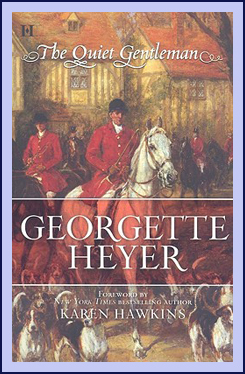
Book Review - Georgette Heyer's The Quiet Gentleman

The Quiet Gentleman by Georgette Heyer
Published by: HQN Books
Publication Date: 1951
Format: Paperback, 352 Pages
Rating: ★★★
To Buy

Gervase Frant had the temerity to survive the Napoleonic Wars. This was a blow to his stepmother and in particular her hopes for his younger half-brother Martin, whom she has reared as if he were going to be the Earl, in spite of primogeniture. To add insult to lack of injury, for a full year after he ascended to be the Earl of St. Erth he wandered around the continent instead of returning to Stanyon to take up his duties. He flippantly claims it was to avoid wearing mourning, but his dandified ways bely the solider he is underneath his perfectly tailored clothes from Weston's. Though one thing is clear, he's going to have an uphill battle with the denizens of Stanyon Castle. He has avoided his "home" as much as he could throughout his life, spending holidays with his maternal grandmother, but now he must face his family and their guests; Mr. Clowne, the chaplain is an unknown quantity, and Miss Morville, a kind neighbor who is acting as companion to Gervase's stepmother, seems to have her head on her shoulders. In fact it's only Theo, his cousin, who has acted as steward for the family, who Gervase is excited to see. Theo is reliable, dependable, and a true friend. There is a tenuous peace that proceeds Gervas's return. A peace that is shattered when he helps out a becoming neighbor, Miss Marianne Bolderwood. Martin only has eyes for her and now Marianne only has eyes for St. Erth. This is not a sustainable situation, and soon things come to a head. As in there are attempts on St. Erth's life. The first attempt could have been imagined, the second could have been written off as an accident waiting to happen, the third attempt was only unsuccessful due to Miss Morville and her swift actions. The attacks are gaining in severity and it is clear that someone wants Gervase dead. But could Martin really be this clever? To get ride of a romantic rival AND ascend to Earl all in one convenient death? Only time will tell, and hopefully Gervase will be around to see how things play out.

The Quiet Gentleman is perhaps the closest to Austen any of Heyer's books I've read this year has come. Though told from a male point of view. In fact I find it rather interesting that all her books that I've read have a masculine viewpoint. That will be something to mull over and look for as I read more of her books. Though my experience with Heyer is she's very hit or miss. I've not found one I love, but I've found some I've loathed, and this one I really like in spite of itself. The Quiet Gentleman has so much going for it but then there's Martin and Marianne. I have major problems with the two of them. Twice Martin forces his attentions on Marianne and both times she comes away shocked and believing Martin's unwanted attention was her fault. A belief that those around her don't contradict and in fact encourage her to just shake off and act normal around Martin. Well, acting normal around Martin led to her being accosted a second time! She was the vicitim. This wasn't her fault AT ALL! I mean, yes, this book was written in the fifties, so victim blaming was at it's height, but dear me it made me angry and uncomfortable. Marianne is a vivacious free spirit and this somehow was her leading Martin on? She was naive, unworldly, and cossetted, how could she expect a man she'd known almost her whole life to just make passionate love to her and force his advances on her? Now it should be made clear he just said things to her that she didn't want to hear and kissed her. But this is still an assault. Especially given the time period. And Marianne blames herself. She blames herself for being a flirt, for being pretty, the light goes out of her and her behavior to everyone changes. She was traumatized and no one really helped her. Yes, there's so much of the book that is just like Austen and is fun matchmaking, but there's this dark underbelly of victim blaming that forever changes a young girl that for the life of me I can not in good conscience fully embrace this book. Especially the denouement which is all about Martin's rehabilitation in the eyes of his cousin. Treat everyone, especially women, with the respect you yourself expect. No exceptions.

Friday, May 27, 2022

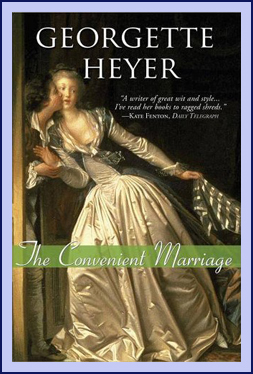
Book Review - Georgette Heyer's The Convenient Marriage

The Convenient Marriage by Georgette Heyer
Published by: Sourcebooks Casablanca
Publication Date: 1934
Format: Paperback, 307 Pages
Rating: ★
To Buy

The Earl of Rule has decided that he will marry. What's more he has decided to align himself with the prestigious Winwood family who have fallen on hard times due to their fatal love of gambling. The problem is that he has chosen to marry the eldest daughter Lizzie and Lizzie is desperately in love with another, Edward Heron. What's worse, Edward is a penniless soldier so Lizzie's mother will never allow her to follow her heart when their fortunes could be saved. Lizzie therefore breaks with Edward breaking her heart in the process. But her younger sister Horatia has an idea. Very improperly she approaches Lord Rule with a compromise. He should marry her instead. The reasons being that her sister Lizzie is in love with another, her sister Charlotte would never marry him, and seeing as he just wants to align himself with their family he can have her and she will let him live his life however he wants. The adorably stammering Horatia's bargain intrigues Lord Rule so he agrees to marry her, a girl barely out of the schoolroom. This sends shock waves through the ton. His sister doesn't know what Rule is about, his cousin and presumptive heir Drelincourt is very put out, and as for Rule's mistress Lady Massey, she sees her hopes and dreams shattered and takes comfort in the arms of Rule's rival Lord Lethbridge. And while Horatia's family is shocked by her behavior, her brother Pelham, returning from the continent, welcomes Rule into the family as all his debts are swept away by his generous brother-in-law. But if Rule thought he'd have an easy time with his new bride he's in for a surprise. She seems to have inherited the family's fatal flaw and now that she has access to money she is gambling it away like nobody's business. Not to mention how much she's spending on clothes and fripperies and carriages. What's wrong with spending a fortune on diamond encrusted shoes? Yes, they pinch a little, but they look fabulous. Lord Rule is very sanguine about his new wife's spendthrift ways, after all she amuses him to no end, that is until she decides to befriend Lord Lethbridge. This is a step too far. A step she takes to be daring. But could this end their marriage or bring them closer together? Only when the farce is concluded will the victor be declared.

The fatal flaw of The Convenient Marriage is that the setup just doesn't deliver. Horatia seems rather put together with making this sacrifice for her family, so it's rather shocking to discover she is nothing but a flighty flibbertigibbet with the family's fatal flaw. You start out thinking, hey, this is someone I could root for, she's clever and is going to reform a rake. She is the classic too stupid to live heroine so by the end you are actually wishing for her to be thrown over by her husband and ruined by Lethbridge. Though Lethbridge himself was an ass. In fact every single character in this book is annoying. Except perhaps Pelham's friend Pommeroy, but he is amusing because he's an idiot and says the most shockingly stupid things. And all these characters and their farcical situations just can't make you care one little bit. They're staging fake attacks by highwaymen as what they see as a logical attempt to get back incriminating evidence. What!?! I mean, seriously, why am I supposed to find this interesting. I literally could barely finish this book. What's odd is that Georgette Heyer does go in for the farcical and can succeed, Devil's Cub being an example of something being so far over the top it somehow works. But there at least you could root for Sophie, here, literally there is no one to root for. Even Lord Rule is a rather removed rake. He is like this disinterested observer to his own life. If he can't even be bothered to take an interest why should we? What's more, with Lord Lethbridge and Lady Massey it seemed as if Heyer was going to bring a little Les Liaisons Dangereuses action to the scene, she was actually setting it up, and then, what, got bored? Because that doesn't even deliver. The Massey goes off to Bath and Lethbridge kind of just folds. Nothing follows through, it's all just a chatoic mess of characters I don't care for. I honestly didn't even know what to write for this review. The book is a nonentity. The Convenient Marriage can just got slink off to wherever it came from and never darker my door again. Because it did darken it. When I'm reading a book I don't like I get grumpy. And boy did this book make me grumpy. Not to the level of wanting to watch it burn, but close.

Wednesday, May 25, 2022

Book Review - Georgette Heyer's A Civil Contract

A Civil Contact by Georgette Heyer
Published by: Sourcebooks Casablanca
Publication Date: 1961
Format: Paperback, 422 Pages
Rating: ★★★
To Buy

Adam Deveril was never meant to be Viscount Lynton. That was for his father and his older brother. But his brother has been gone these many years and now his father has had a riding accident and is likewise gone before his time. Adam was happy with his regiment and now he's had to sell up and come home. Little did he know that his father had so encumbered the estate with mortgages and debts. The only way he can see a way through it is to sell his family's beloved home, Fontley. Everyone, even he, abhors this idea, but what else is he to do? His younger sister Lydia vows to marry an elderly wealthy man, preferably with not long to live, but seeing as she's not yet out this seems an impractical plan. But Adam's solicitor thinks Lydia's idea is splendid, for Adam. Adam can not stomach the idea, mainly because he is madly in love with Julia Oversley. He knows he has to cry off their engagement, but marrying another in her place he will never accept. Julia doesn't handle the news well, claiming that she could survive on love alone. Adam and Julia's father both know this is piffle. In fact, once Julia has been dealt with, it's her father that helps Adam with his finances by introducing him to Mr. Chawleigh. Mr. Chawleigh's daughter Jenny was at school with Julia and so the two men have gotten to know each other. In fact Mr. Chawleigh has helped Lord Oversley a time or two with monetary issues. Mr. Chawleigh is a Cit with aspirations. He has none for himself, they are all for his daughter, which is why she attended school with the daughters of lords. Therefore he has been on the lookout for the right husband for his daughter and he thinks that Adam will do. Adam, realizing the perilous situation he is in agrees to meet Jenny and realizes that Jenny will do very nicely. He knows now he will never love again after Julia, but Jenny is a sensible girl. She will make a very capable wife and her father will make all his money problems disappear. Sure, there are some growing pains as the two families become one, but that was to be expected. The real question is, can Adam learn to love again, in a different, more mature way?

I've never really given much thought to the comparisons between Georgette Heyer and Jane Austen. I just assumed that it was because Heyer wrote books set during the Regency and would name check Austen that a connection was made and never questioned. The Sourcebooks reissues seem to all feature a pull quote from Publishers Weekly that declaims that "[r]eading Georgette Heyer is the next best thing to reading Jane Austen." But I have to say, I finally get it. For once I agree with you Publishers Weekly! Everything finally clicked and I see the connection. Heyer, like Austen, revels in the quirky side characters. I would in fact go so far as to say that these are what make the works of both authors memorable. The older I get the less I am drawn to Austen's heroes and heroines and the more I am drawn to the comic stylings of Sir John Middleton or Mr. Collins or Miss Bates. These very human and very humorous characters make the books shine. The same can be said for Heyer. In all the books of hers I've read I've found one or both of the leads rather annoying and tedious, yet the second all the side characters start popping out of the woodwork, and especially once large family gatherings start happening, I'm a happy camper. And if it wasn't for Mr. Chawleigh, even if he is a tad more Dickensian then Austenesque, this book would have been a no go for me. He is viewed by Adam as vulgar and ostentatious with odious taste in decor, but Adam is an ass and a hypocrite, so his opinion doesn't mater. What matters is that Mr. Chawleigh does everything with love in his heart. Sure, his gestures are usually too big and too grand, but he really, deep down, is asking nothing for himself, and just wants those he loves to be happy. Thankfully Adam was at least somewhat redeemed by the fact he was unwilling to cuckquean Jenny with Julia. And the less said about Julia the better. She and Adam are the weakest characters in A Civil Contract and when for the denouement the narrative is shouldered by Adam the book went down a full star. Is it too late for Mr. Chawleigh to get a spinoff series? Anything but more Wellington and Waterloo!

Friday, April 1, 2022

Book Review - Georgette Heyer's Devil's Cub

Devil's Cub by Georgette Heyer
Published by: Sourcebooks Casablanca
Publication Date: 1932
Format: Paperback, 310 Pages
Rating: ★★★
To Buy

Dominic, the Marquis of Vidal, has quite a legacy to live up to. His father, the Duke of Avon, was known as 'Satanas' and this Devil's Cub is on his way to proving he is the spit of his father. Vidal has left a string of bodies and broken hearts in his wake. But he has never trifled with women of a respectable class, until now. When his father hears that Vidal is fooling around with someone from the bourgeoisie he puts his foot down. This will not be tolerated. Vidal is starting to push boundaries that are there for a reason and when he conducts an impromptu duel in a gaming hell leaving his opponent for dead he has crossed one too many lines and his father banishes him to the continent before his crime catches up with him. But this still leaves the matter of the bourgeoisie unresolved. The young girl is a silly chit. Sophia Challoner has been encouraging Vidal all along despite his reputation, insisting to her sister Mary that she will be the one to put a ring on it. But the night before his departure for Paris he convinces Sophie to be his mistress, because in Paris such things are understood. Mary's worst fears are realized when Vidal sends Sophie the plan for their late night departure but accidentally addresses it to Mary. In that instant Mary comes up with a plan. She will take her sister's place and convince Vidal it was all a joke devised by her and her sister. He will be angry and she will return to her family, and no one will be ruined. She hadn't counted on his temper though. He takes Mary with him out of spite. When she recovers her senses she shoots him. During his recovering they come to realize that they are well suited and attracted to each other. Mary is so different than Sophia that he informs Mary that they are to be wed. This is not the outcome Mary wants. She wants to go home. But seeing as that's out of the question she'd settle for being a governess. As they duel over their future, back in England Vidal's mother is in a tizzy. Mrs. Challoner has approached her and told her of the kidnapping. The Duchess is so worried about what her husband might do to her son after he was specifically warned off the bourgeoisie that she flees to France hoping that she can figure something out before word reaches Avon. Because she is convinced that Mary is just like the odious Sophia and that she has trapped her beloved son. She couldn't be more wrong or more surprised about what happens. The course of love never has run smooth.

If there's one author that has been lurking around my to be read pile for a long time it is Georgette Heyer. I've oddly enough read two of her less lauded mysteries years ago but I have never taken the plunge into her romances until now. The first thing I should say is I probably should have read These Old Shades first as that is the first in this series but I'm not perfect. And I know that Heyer isn't either. Much like Dorothy L. Sayers she was an anti-Semite. In fact there's a push to reissue "sanitized" editions of Heyer's books for a modern audience, like they did with Mark Twain's Huckleberry Finn. This is something I personally disagree with. Books should be left as they are, warts and all, so that we can discuss why things that were viewed by some as acceptable weren't and how we can move forward and evolve. But say what you will, Heyer is kind of the progenitor of modern romance and thankfully Devil's Cub appears to have nothing problematic going on as far as I could tell. Here we're dealing with the common romance trope of the rake and the virgin. But never before have I come across someone who isn't just a rake but leaving tons of dead bodies in their wake. It was disturbing hearing that Dominique's mother had forewarned him that his next kill might prove problematic for him. WTF!?! Seriously, within the first third of the book he's probably killed two people, one highwayman, and one drunk, who is still clinging to life. Sure, the duel is the one that got him in trouble, but shouldn't it be more troubling that he left a corpse by the side of the road and was like, whatever, my bad. And we're supposed to believe that someone could fall in love with this!?! But the further I got into the narrative the more I realized I shouldn't take anything at face value, because this, this is a farce. The crush and commotion of Vidal's family and their over-the-top behavior was hilarious. There are serious arguments on how best to get a large quantity of wine from Dijon to London and whether a carriage or a canal would be preferable. And since the majority of the action takes place in France, yes, we can call it a French Farce. There's some Shakespeare, some Aphra Behn, some She Stoops to Conquer. If it's over the top and nearly improbable, I could totally see it happening in Devil's Cub. So it wasn't at all what I expected, but in the end I think the levity is what I needed.

Tuesday, March 1, 2022

Regency Romp

Two things last year coincided to thrust me back into the Regency period. One was me finally getting around to reading Julia Quinn's Bridgerton series before I watched the Netflix adaptation. The second was Lauren Willig doing a monthly Pink Carnation Read Along of her delightful series about Napoleonic spies. Right there I had twenty Regency books I was diving headfirst into. Add to that the fact that Lauren and her guest moderators, many of whom write in the Regency period, were name checking tons of other Regency books that instantly ended up on my to be read, and I went, hang on a minute, I'm not the only Regency obsessed person in the world, I should do a theme month, or as it turns out, a slew of months dedicated to Regency literature, after all once season two of Bridgerton drops this month everyone will be look for read alikes! Like many people my first glimpse into the Regency period was via Jane Austen. It was 1996, the Colin Firth miniseries had been released, and I graduated high school and spent the summer reading Jane Austen. Dragging my omnibus edition with the minuscule font from Waldenbooks on every trip I took. I fell completely in love with everything Regency but it really wasn't until I discovered The Secret History of the Pink Carnation almost a decade later that I learned how much the Regency era had influenced other authors and how many of those authors Lauren would introduce me to. So I hope you'll join me over the next few months as I romp through Regency literature. Julia Quinn, Lauren Willig, Sarah MacLean, Eloisa James, Lisa Kleypas, Andrea Penrose, and of course, Jane Austen and Georgette Heyer, are just some of the authors I'll be reading. Let's make this a real Regency Romp!

Monday, July 6, 2020

Tuesday Tomorrow

A Peculiar Peril by Jeff VanderMeer
Published by: Farrar, Straus and Giroux
Publication Date: July 7th, 2020
Format: Hardcover, 656 Pages
To Buy

The official patter:
"A Peculiar Peril is a head-spinning epic about three friends on a quest to protect the world from a threat as unknowable as it is terrifying, from the Nebula Award–winning and New York Times bestselling author of Annihilation, Jeff VanderMeer.

Jonathan Lambshead stands to inherit his deceased grandfather’s overstuffed mansion - a veritable cabinet of curiosities - once he and two schoolmates catalog its contents. But the three soon discover that the house is filled with far more than just oddities: It holds clues linking to an alt-Earth called Aurora, where the notorious English occultist Aleister Crowley has stormed back to life on a magic-fueled rampage across a surreal, through-the-looking-glass version of Europe replete with talking animals (and vegetables).

Swept into encounters with allies more unpredictable than enemies, Jonathan pieces together his destiny as a member of a secret society devoted to keeping our world separate from Aurora. But as the ground shifts and allegiances change with every step, he and his friends sink ever deeper into a deadly pursuit of the profound evil that is also chasing after them."

I was excited just by the idea of cataloging a curious house, throw in Aleister Crowley and I'm beyond excited! 

Burn Our Bodies Down by Rory Power
Published by: Delacorte Press
Publication Date: July 7th, 2020
Format: Hardcover, 352 Pages
To Buy

The official patter:
"From the author of the New York Times bestseller Wilder Girls comes a new twisty thriller about a girl whose past has always been a mystery - until she decides to return to her mother's hometown... where history has a tendency to repeat itself.

Ever since Margot was born, it's been just her and her mother. No answers to Margot's questions about what came before. No history to hold on to. No relative to speak of. Just the two of them, stuck in their run-down apartment, struggling to get along.

But that's not enough for Margot. She wants family. She wants a past. And she just found the key she needs to get it: A photograph, pointing her to a town called Phalene. Pointing her home. Only, when Margot gets there, it's not what she bargained for.

Margot's mother left for a reason. But was it to hide her past? Or was it to protect Margot from what's still there?

The only thing Margot knows for sure is there's poison in their family tree, and their roots are dug so deeply into Phalene that now that she's there, she might never escape."

Oh, family secrets and hometown pilgrimages!

Unravel the Dusk by Elizabeth Lim
Published by: Knopf Books for Young Readers
Publication Date: July 7th, 2020
Format: Hardcover, 368 Pages
To Buy

The official patter:
"Maia Tamarin proved her skill as a tailor when she wove the dresses of the sun, the moon, and the stars, but it will take more than a beautiful gown to hide the darkness rising up within her. . . . The stakes are higher than ever in this breathtaking sequel to Spin the Dawn, perfect for fans of Six of Crows.

Maia Tamarin's journey to sew the dresses of the sun, the moon, and the stars has taken a grievous toll. She returns to a kingdom on the brink of war. Edan, the boy she loves, is gone - perhaps forever - and no sooner does she set foot in the Autumn Palace than she is forced to don the dress of the sun and assume the place of the emperor's bride-to-be to keep the peace. When the emperor's rivals learn of her deception, there is hell to pay, but the war raging around Maia is nothing compared to the battle within. Ever since she was touched by the demon Bandur, she has been changing...glancing in the mirror to see her own eyes glowing red; losing control of her magic, her body, her mind. It's only a matter of time before Maia loses herself completely, and in the meantime she will stop at nothing to find Edan, protect her family, and bring lasting peace to her country."

I love the epic fableness of this series. 

The Book of Dragons edited by Jonathan Strahan
Published by: Harper Voyager
Publication Date: July 7th, 2020
Format: Hardcover, 576 Pages
To Buy

The official patter:
"Scott Lynch, R.F. Kuang, Kate Elliott, Ken Liu, Todd McCaffrey, Garth Nix, Peter S. Beagle, and other modern masters of fantasy and science fiction put their unique spin on the greatest of mythical beasts - the dragon - in never-before-seen works written exclusively for this fantasy anthology compiled by award-winning editor Jonathan Strahan and with art by Rovina Cai!

Here there be dragons...

From China to Europe, Africa to North America, dragons have long captured our imagination in myth and legend. Whether they are rampaging beasts awaiting a brave hero to slay or benevolent sages who have much to teach humanity, dragons are intrinsically connected to stories of creation, adventure, and struggle beloved for generations.

Bringing together nearly thirty stories and poems from some of the greatest science fiction and fantasy writers working today - Garth Nix, Scott Lynch, R.F. Kuang, Ann Leckie & Rachel Swirsky, Daniel Abraham, Peter S. Beagle, Beth Cato, Zen Cho, C. S. E Cooney, Aliette de Bodard, Amal El-Mohtar, Kate Elliott, Theodora Goss, Ellen Klages, Ken Liu, Seanan Maguire, Patricia A McKillip, K. J. Parker, Kelly Robson, Michael Swanwick, Jo Walton, Elle Katharine White, Jane Yolen, Kelly Barnhill, Brooke Bolander, Sarah Gailey, and J. Y. Yang - and illustrated by award-nominated artist Rovina Cai with black-and-white line drawings specific to each entry throughout, this extraordinary collection vividly breathes fire and life into one of our most captivating and feared magical creatures as never before and is sure to become a treasured keepsake for fans of fantasy, science fiction, and fairy tales."

The older I get the more I want to proclaim my love of dragons!

Haunted Heroine by Sarah Kuhn
Published by: DAW
Publication Date: July 7th, 2020
Format: Paperback, 400 Pages
To Buy

The official patter:
"The fourth book in the smart, snarky, and action-packed Heroine series follows Evie Tanaka, Aveda Jupiter, and Bea Tanaka as they combat a new supernatural threat.

Everything in Evie Tanaka's life is finally perfect. As a badass superheroine, she defends San Francisco from demon invasion on the regular. Her relationships with superhero partner Aveda Jupiter, little sister Bea, and hot, half-demon husband Nate have never been stronger. Maybe it's possible for a grad school dropout turned put-upon personal assistant turned superhero to have it all?

Just when she thinks life can't get any better, Evie learns she's pregnant. Everyone around her is overjoyed...but Evie has major doubts about whether she's cut out for motherhood. Before she can dwell on her dilemma, a local women's college reports a string of mysterious "hauntings," and Evie and Aveda are called in to investigate, going undercover as grad students during the creepiest time of the year: Halloween.

As she confronts terrifying ghosts and lives out a bizarre version of the grad school life she left behind, Evie can't help but wonder about the road not taken: what would her life be like if she'd stayed here instead of pursuing superheroing with Aveda? And can an overwhelmed pregnant superhero truly have it all?

She's about to find out."

I love that this series keeps growing and expanding, I love it even more that there are hauntings! 

The Heir Affair by Heather Cocks and Jessica Morgan
Published by: Grand Central Publishing
Publication Date: July 7th, 2020
Format: Hardcover, 480 Pages
To Buy

The official patter:
"Making it up the aisle was the easy part: Rebecca "Bex" Porter must survive her own scandals and adjust to royal British life in this "timely and positively delicious" follow-up to The Royal We that's "just as fun, charming, and delightful as the first" (Taylor Jenkins Reid)

After a scandalous secret turns their fairy-tale wedding into a nightmare, Rebecca "Bex" Porter and her husband Prince Nicholas are in self-imposed exile. The public is angry. The Queen is even angrier. And the press is salivating. Cutting themselves off from friends and family, and escaping the world's judgmental eyes, feels like the best way to protect their fragile, all-consuming romance.

But when a crisis forces the new Duke and Duchess back to London, the Band-Aid they'd placed over their problems starts to peel at the edges. Now, as old family secrets and new ones threaten to derail her new royal life, Bex has to face the emotional wreckage she and Nick left behind: with the Queen, with the world, and with Nick's brother Freddie, whose sins may not be so easily forgotten - nor forgiven."

For your "royals" fix now that Harry and Meghan are off living the L.A. life.

Bodies from the Library edited by Tony Medawar
Published by: Collins Crime Club
Publication Date: July 7th, 2020
Format: Paperback, 336 Pages
To Buy

The official patter:
"This anthology of rare stories of crime and suspense brings together 16 tales by masters of the Golden Age of Detective Fiction for the first time in book form, including a newly discovered Agatha Christie crime story that has not been seen since 1922.

At a time when crime and thriller writing has once again overtaken the sales of general and literary fiction, Bodies from the Library unearths lost stories from the Golden Age, that period between the World Wars when detective fiction captured the public's imagination and saw the emergence of some of the world's cleverest and most popular storytellers.

This anthology brings together 16 forgotten tales that have either been published only once before - perhaps in a newspaper or rare magazine - or have never before appeared in print. From a previously unpublished 1917 script featuring Ernest Bramah's blind detective Max Carrados, to early 1950s crime stories written for London's Evening Standard by Cyril Hare, Freeman Wills Crofts and A.A. Milne, it spans five decades of writing by masters of the Golden Age.

Most anticipated of all are the contributions by women writers: the first detective story by Georgette Heyer, unseen since 1923; an unpublished story by Christianna Brand, creator of Nanny McPhee; and a dark tale by Agatha Christie published only in an Australian journal in 1922 during her 'Grand Tour' of the British Empire.

With other stories by Detection Club stalwarts Anthony Berkeley, H.C. Bailey, J.J. Connington, John Rhode and Nicholas Blake, plus Vincent Cornier, Leo Bruce, Roy Vickers and Arthur Upfield, this essential collection harks back to a time before forensic science - when murder was a complex business."

If you all knew about this series of anthologies and never told me about it I'm going to be pissed! 

Death at the Dance by Verity Bright
Published by: Bookouture
Publication Date: July 7th, 2020
Format: Paperback, 276 Pages
To Buy

The official patter:
"A masked ball, a dead body, a missing diamond necklace and a suspicious silver candlestick? Sounds like a case for Lady Eleanor Swift!

England, 1920. Lady Eleanor Swift, adventurer extraordinaire and reluctant amateur detective, is taking a break from sleuthing. She’s got much bigger problems: Eleanor has two left feet, nothing to wear and she’s expected at the masked ball at the local manor. Her new beau Lance Langham is the host, so she needs to dazzle.

Surrounded by partygoers with painted faces, pirates, priests and enough feathers to drown an ostrich, Eleanor searches for a familiar face. As she follows a familiar pair of long legs up a grand staircase, she’s sure she’s on Lance’s trail. But she opens the door on a dreadful scene: Lance standing over a dead Colonel Puddifoot, brandishing a silver candlestick, the family safe wide open and empty.

Moments later, the police burst in and arrest Lance for murder, diamond theft and a spate of similar burglaries. But Eleanor is convinced her love didn’t do it, and with him locked up in prison, she knows she needs to clear his name.

Something Lance lets slip about his pals convinces Eleanor the answer lies close to home. Accompanied by her faithful sidekick Gladstone the bulldog, she begins with Lance’s friends – a set of fast driving, even faster drinking, high-society types with a taste for mischief. But after they start getting picked off in circumstances that look a lot like murder, Eleanor is in a race against time to clear Lance’s name and avoid another brush with death..."

A masked ball in the 1920s with a side of murder? Just what I wanted!

Friday, April 12, 2019

Alison Goodman

Alison Goodman is one of those rare authors whose books remind you why you love reading. They are so rich and detailed that you can't help but fall in love with reading all over again. Born in Melbourne, Australia, Alison has an obvious love of learning having been a D.J. O'Hearn Memorial Fellow at Melbourne University. She holds a masters degree and is currently working on her PhD at the University of Queensland. But her academic bent doesn't surprised me in the least with how much detailed research goes into her books. You have to have a love of learning to want to find out how exactly women relieved themselves when they were presented to the Queen in Regency England. While she published her first book in 1998 it was her Eon/Eona duology from 2008 that really cemented her as an internationally bestselling and award-winning author. In fact in 2008 she was a James Tiptree, Jr. Award Honor Book, which is part of WisCon and seriously, if this means she, like Zen Cho, was in Madison at some point and I missed her I'm going to be very sad. At least it was in 2008 and that's before I started going, so at least I can console myself with that.

While it was her duology, before duologies really took off again, that made her a New York Times bestselling author it's The Dark Days Club books that are where it's at for me. This series has won a plethora of awards which proves that occasionally awards get it right. But awards don't matter as much as seeing that an author truly loves what they are writing. Alison lives and breathes the Regency. Just look at her Pinterest boards! I just adore that Alison has Pinterest boards! Because I am a visual person, despite my love of reading, and to visually see inside her brain, to look at her writing process in this medium, to troll through the architecture and art of the Regency period which she absorbed while writing a series I love adds a whole new level of reading enjoyment for me. What's more, she doesn't just virtually live in the Regency world, according to her website "Alison can dance a mean contra-dance, has a wardrobe full of historically accurate Regency clothes and will travel a long way for a good high-tea." Now the problem I have is that there really isn't a good place for high-tea near me to lure her in with... 
Question: When did you first discover Jane Austen?

Answer: I was quite a latecomer to Jane Austen and only started reading her in my late teens. Before that I read all of Georgette Heyer’s Regency books, so that was my real introduction to the era. My Lady Helen series is probably more of a direct descendant of Heyer than Austen - more emphasis on an adventure plot, a rich Regency setting, and lots of banter between the lead female and male.

Question: What do you think Jane Austen would think of her impact with so many literary offshoots, from parody to pastiche?

Answer: For all her gentility, Jane Austen was not without ambition! She published novels that were not in the usual mode for a woman of her time (and let’s not forget that a woman publishing in the early 1800’s was fairly unusual in itself). Not only that, when her brother was no longer able to negotiate with the publishers on her behalf, she took over the management of her career. I think that secretly - and in her letters to her beloved sister, Cassandra - she would have been thrilled and victorious about the afterlife of her novels, but publicly she would have been properly demure.

Question: Where do you get your inspiration from?

Answer: The Lady Helen series is often called Pride and Prejudice meets Buffy, and I can see why - Buffy and her girl power was definitely an inspiration. I find inspiration in all manner of things including Pinterest, newspapers and magazines from the Regency era, diaries written by people who lived at that time, and history books and documentaries (I have a list of my favourite books and documentaries that I used for the Lady Helen series on my website under Research at www.darkdaysclub.com). I also love visiting Regency cities and towns in England, and going to re-enactment events like balls and festivals. Frankly, anything and everything can be an inspiration. Writers are like magpies - we pick up all the shiny things that catch our eye and stash them away in our mind or notebooks for use in a story one day!

Question: What makes the early 19th century mesh so well with magic?

Answer: For me the early 19th century meshes so well with magic because it sits between the superstitions of pre-1700 and the new rationality that came with the Enlightenment. It was also a time when the bawdy, raucous manners of the Georgian era were being replaced by a new civility, which placed an emphasis on manners and gentility. In the Lady Helen series, I play on this duality and have created an underbelly of demonic chaos in the form of the Deceivers, deadly creatures that feed on the wild emotions of people that have been supressed beneath the new gentility.

Question: The world building and system of magic varies greatly in the regency fantasy genre, how did you go about creating yours?

Answer: Oops, I think I kind of answered this in the previous question. But let me elaborate - I built the magic system in the Lady Helen world directly from the idea of how early 19th century society was changing from the boorish Georgian era into the more refined civility of the Regency. With that as a starting point, I created a personification of that wildness in the form of the demonic Deceivers who live in human bodies and move in society, feeding on emotions. As soon as I had worked out their powers, I could then work out the powers of Lady Helen and her fellow Reclaimers, the human counter to the Deceiver threat.

Question: If you had to choose between writing only period literature or only fantasy literature, which would win?

Answer: I think it would have to be period literature. It would pain me to give up fantasy and all its mythic aspects and story freedoms, but in the end I love the research that goes along with writing period fiction. The one thing that I probably wouldn’t miss about writing fantasy is keeping track of the magic system. If you are writing a magic system, I recommend keeping up-to-date notes about what can and can’t happen in your magic world, and also create a chart at the end so that everything is kept straight as you edit. Believe me, you’ll thank me later.

Question: Be honest, have you ever dressed up in Regency clothes just to pretend for a moment you are in the past?

Absolutely - I proudly own my Regency geekdom. I have a full Regency wardrobe including a ball gown, spencer jackets and all the under-things. I’ve also learned how to dance in the Regency manner and go to balls and Regency events in full costume. I love it!

Monday, October 2, 2017

Tuesday Tomorrow

Under the Pendulum Sun by Jeannette Ng
Published by: Angry Robot
Publication Date: October 3rd, 2017
Format: Paperback, 416 Pages
To Buy

The official patter:
"Victorian missionaries travel into the heart of the newly discovered lands of the Fae, in a stunningly different fantasy that mixes Crimson Peak with Jonathan Strange and Mr. Norrell. 

Catherine Helstone’s brother, Laon, has disappeared in Arcadia, legendary land of the magical fae. Desperate for news of him, she makes the perilous journey, but once there, she finds herself alone and isolated in the sinister house of Gethsemane. At last there comes news: her beloved brother is riding to be reunited with her soon – but the Queen of the Fae and her insane court are hard on his heels."

Yeah, I'm basically in this for the copy mentioning Jonathan Strange and Mr. Norrell. 

The Goblins of Bellwater by Molly Ringle
Published by: Central Avenue Publishing
Publication Date: October 3rd, 2017
Format: Paperback, 288 Pages
To Buy

The official patter:
"Most people have no idea goblins live in the woods around the small town of Bellwater, Washington. But some are about to find out.

Skye, a young barista and artist, falls victim to a goblin curse in the forest one winter night, rendering her depressed and silenced, unable to speak of what happened. Her older sister, Livy, is at wit’s end trying to understand what’s wrong with her. Local mechanic Kit would know, but he doesn’t talk of such things: he’s the human liaison for the goblin tribe, a job he keeps secret and never wanted, thrust on him by an ancient family contract.

Unaware of what’s happened to Skye, Kit starts dating Livy, trying to keep it casual to protect her from the attention of the goblins. Meanwhile, unbeknownst to Kit, Skye draws his cousin Grady into the spell through an enchanted kiss in the woods, dooming Grady and Skye both to become goblins and disappear from humankind forever.

It’s a midwinter night’s enchantment as Livy, the only one untainted by a spell, sets out to save them on a dangerous magical path of her own."

Ever since Labyrinth, say goblin and I'm in. 

The Little Red Wolf by Amélie Fléchais
Published by: Lion Forge
Publication Date: October 3rd, 2017
Format: Hardcover, 80 Pages
To Buy

The official patter:
"Lose yourself in in the dark forests of Amélie Fléchais’ spectacular artwork. A young wolf, on a journey to bring his grandmother a rabbit, is charmed by the nice little girl who offers to help him…but nice is not the same as good. A haunting fairy tale for children and adults alike."

Look at the wolf!!! Seriously, have you ever seen anything cuter?

The Witches' Tree by M.C. Beaton
Published by: Minotaur Books
Publication Date: October 3rd, 2017
Format: Hardcover, 288 Pages
To Buy

The official patter:
"The Witches’ Tree continues the tradition in M. C. Beaton's beloved Agatha Raisin mystery series―now a hit show on Acorn TV and public television.

Cotswolds inhabitants are used to inclement weather, but the night sky is especially foggy as Rory and Molly Devere, the new vicar and his wife, drive slowly home from a dinner party in their village of Sumpton Harcourt. They strain to see the road ahead―and then suddenly brake, screeching to a halt. Right in front of them, aglow in the headlights, a body hangs from a gnarled tree at the edge of town. Margaret Darby, an elderly spinster, has been murdered―and the villagers are bewildered as to who would commit such a crime.

Agatha Raisin rises to the occasion (a little glad for the excitement, to tell the truth, after a long run of lost cats and divorces on the books). But Sumpton Harcourt is a small and private village, she finds―a place that poses more questions than answers. And when two more murders follow the first, Agatha begins to fear for her reputation―and even her life. That the village has its own coven of witches certainly doesn't make her feel any better..."

Wait, the show is still on? I ask because most fans of the books I know don't like the show...

The Dead Shall Be Raised and The Murder of a Quack by George Bellairs
Published by: Poisoned Pen Press
Publication Date: October 3rd, 2017
Format: Kindle, 297 Pages
To Buy

The official patter:
"Two classic cases featuring Detective Inspector Littlejohn.

In the winter of 1940, the Home Guard unearth a skeleton on the moor above the busy town of Hatterworth. Twenty-three years earlier, the body of a young textile worker was found in the same spot, and the prime suspect was never found - but the second body is now identified as his. Soon it becomes clear that the true murderer is still at large...

* * *

Nathaniel Wall, the local quack doctor, is found hanging in his consulting room in the Norfolk village of Stalden - but this was not a suicide. Against the backdrop of a close-knit country village, an intriguing story of ambition, blackmail, fraud, false alibis and botanical trickery unravels."

TWO classic detection stories for the price of one!

Verdict of Twelve by Raymond Postgate
Published by: Poisoned Pen Press
Publication Date: October 3rd, 2017
Format: Kindle, 197 Pages
To Buy

The official patter:
"A woman is on trial for her life, accused of murder. The twelve members of the jury each carry their own secret burden of guilt and prejudice which could affect the outcome.

In this extraordinary crime novel, we follow the trial through the eyes of the jurors as they hear the evidence and try to reach a unanimous verdict. Will they find the defendant guilty, or not guilty? And will the jurors' decision be the correct one?

Since its first publication in 1940, Verdict of Twelve has been widely hailed as a classic of British crime writing. This edition offers a new generation of readers the chance to find out why so many leading commentators have admired the novel for so long."

Yeah, love the work Poisoned Pen Press is doing, but NOT loving this cover. 

Snowdrift and Other Stories by Georgette Heyer
Published by: Sourcebooks Casablanca
Publication Date: October 3rd, 2017
Format: Paperback, 304 Pages
To Buy

The official patter:
"Delightful, glittering, timeless romance for your holiday season.

The Queen of Regency Romance, Georgette Heyer, shines in this sparkling collection of fourteen short stories brimming with romance, intrigue, villainy, gallant heroes, compelling heroines, and, of course, the dazzling world of the Regency period.

Additional content in this re-issue of the Pistols for Two collection includes three of Heyer's earliest short stories, rarely seen since their original publication in the 1930s, as well as a Foreword by Heyer's official biographer, Jennifer Kloester.

Revel in a Regency world so intricately researched and charmingly realized, you'll want to escape there again and again in Heyer stories new and old."

Three rare stories? I'm in!

The Orphan of Florence by Jeanne Kalogridis
Published by: St. Martin's Griffin
Publication Date: October 3rd, 2017
Format: Paperback, 336 Pages
To Buy

The official patter:
"In this irresistible historical novel set in the turbulent world of the Medicis, a young woman finds herself driven from pick-pocketing to espionage when she meets a mysterious man.

Giulia has been an orphan all her life. Raised in Florence's famous Ospedale degli Innocenti, her probing questions and insubordinate behavior made her an unwelcome presence, and at the age of fifteen, she was given an awful choice: become a nun, or be married off to a man she didn't love. She chose neither, and after refusing an elderly suitor, Giulia escaped onto the streets of Florence.

Now, after spending two years as a successful pickpocket, an old man catches her about to make off with his purse, and rather than having her carted off to prison he offers her a business proposition. The man claims to be a cabalist, a student of Jewish mysticism and ritual magic, who works for the most powerful families in Florence. But his identity is secret―he is known only as "the Magician of Florence"―and he is in need of an assistant. She accepts the job and begins smuggling his talismans throughout the city.

But the talismans are not what they seem, and neither is the Magician. When Giulia's involvement with him ends with his murder, she's drawn into a treacherous web of espionage and deceit involving the forces of Rome, Naples, and a man known as Lorenzo the Magnificent. Accused of the Magician's murder, Giulia is pursued by the handsome policeman Niccolo, Lorenzo's henchmen, and foreign spies, and in order to survive, she must not only solve the mystery of the mystery of the Magician's murder, but that of her own past."

I am a sucker for the Medicis. 

The Lido Girls by Allie Burns
Published by: HQ Digital
Publication Date: October 3rd, 2017
Format: Kindle, 384 Pages
To Buy

The official patter:
"Escape to the inter-war years in this emotional story where opportunity can be found at the pool-side in your local lido… Perfect for fans of Pam Evans and Gill Paul.

Change is in the air...

It’s the summer of 1935 and holidaymakers are flocking to St Darlstone’s magnificent lido beside the sea!

With little hope of finding a husband, no-nonsense Natalie lives for teaching, until she finds herself out of a job courtesy of her best friend Delphi. But if she can team up with Delphi to bring her rigorous physical fitness programme to the people of St Darlstone, maybe there’s a chance she can start again and help her friend to follow her dreams too?

So Natalie takes on the Lido Girls. But, with Delphi’s handsome brother, Jack, on the scene, and Delphi’s desperate struggle to defy her overbearing parents, Natalie must find the courage to face up to her own fears, and realise what she truly wants in life...

Set against the backdrop of the pioneering keep fit movement; this is a feel-good celebration of friendship and what's possible when you follow your heart."

There was a time when the lido was THE place to go when on vacation, hence I'm very excited about this book, even if it isn't a history of this phenomenon, I'm interested.

Older Posts Home