
































Showing posts with label C.S. Lewis. Show all posts

Friday, January 24, 2025

Book Review 2024 #3 - Lev Grossman's The Magician's Land
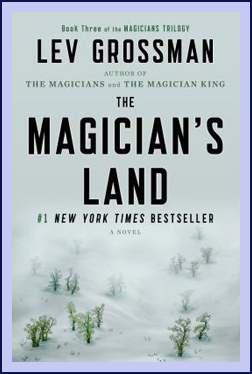
The Magician's Land by Lev Grossman
Published by: Penguin Books
Publication Date: August 5th, 2014
Format: Paperback, 416 Pages
Rating: ★★★★★
To Buy

Quentin Coldwater saved magic. Quentin Coldwater saved Fillory. So what was his reward? Banishment. Back to Earth. He found his place, his home, his reason for being in a fantastical world and now he's been cut adrift. He goes back to the only other place he's ever thought of as home, Brakebills. Thankfully he's able to get a teaching job there while he studies his only connection to Fillory, a spell he found in the Neitherlands which he can't even begin to understand. He finds a kind of contentment there. But his life is going to face much more upheaval. First his father dies and he leaves Brakebills for the funeral. At "home" he realizes, now, more than ever, how he never fit into the "real" world. Brakebills though won't be his safe haven for much longer. There's a group of students called "The League" founded by Plum Purchas. They mete out justice on those they feel have done wrong. Like Wharton who purposefully withholds libations during dinner. There prank against Wharton goes horrifically wrong. The magical wards protecting Brakebills are endangered. The incursion is someone Quentin knows. It's Alice. But she's a niffin. Plum is expelled and Quentin is fired. Of their own accord they both show up at a meetup looking to hire magicians for a heist. It was inevitable they'd meet on the outside, they're both magicians and they're both in need of money. The heist fails. Spectacularly. Though they end up in possession of a book written by Martin Chatwin. Fillory is calling to Quentin again. Or so he thinks. But maybe this time it's calling to Plum. Because she has a secret. She's Martin Chatwin's great-granddaughter. On her mother's side. The two of them hide out in New York City in a bolthole that Plum has had for awhile in case they're on anyone's radar after the heist. There they discover a spell in Martin's book to create a new magical land. Having nothing better to do they attempt it and instead of getting a mini Fillory they get an eerie mirror version of the house they're staying in which happens to be inhabited by Alice, the niffin. Who Quentin is able to restore to her human body thanks to the spell from the Neitherlands. Something she is very furious about. She saw everything, she knew everything, from the dawn of time until it's demise and now she's stuck in a meat sack which craves bacon. But everything has a purpose and Alice's return coincides with Eliot's. He has come to inform them that Fillory is ending. The apocalypse has begun. There are no keys to save it this time. Though there's Alice. She saw the beginning of Fillory on her "travels" and her knowledge could save Fillory. Can they save Fillory? Rebuild that world? Or do they want to build their own?

For those of us who grew up on The Chronicles of Narnia, The Dark is Rising Sequence, The Chronicles of Prydain, and The Neverending Story, this series was written for us, though with far less nightmare fuel. We might have been jaded by life but after three books, like Quentin, we are able to find the wonder and joy once again in the world. Or find it at least temporarily with an ending reminiscent of the epic cataclysmic nothingness of The Neverending Story that brought back to life a whole world at the hands of one broken little book nerd. A world ended and a new one began. Because of book nerds. Never forget our power. We are legion. Though there's one thing that every book nerd who has read this series has fantasized about and that's actually being able to read the five Fillory and Further books by Christopher Plover. Yes, there's the small matter that they don't exist, nor does Christopher Plover, but Lev Grossman could conceivably write them. In fact if you go on a deep dive into Reddit there are rumors that at one time he considered doing just that. Obviously this never came to be because otherwise I would be reading them right now. Though if they did exist the question arises, would they prove worthy of their supposed compatriots? Could they rise to the level of C.S. Lewis or Michael Ende? Because we have learned a fair bit about The World in the Walls, The Girl Who Told Time, The Flying Forest, The Secret Sea, and The Wandering Dune over the course of Lev Grossman's three books. We've even learned there are secretly two more books; The Magicians written by Jane Chatwin, and The Door in the Page: My Life in Two Worlds by Rupert Chatwin and could they really meet expectations and known storylines? Well, it's this second book by Rupert that we finally get to read in The Magician's Land. And after reading Rupert's account I can safely say that I think Lev Grossman is well capable of this Ploverian feat. Fillory and Further could be real if Lev Grossman would just make it so. While the whole series has callbacks to other famous children's tales, this one felt more real, more like Narnia, if just because of structure, the story within the story. I also really started to think about the Chatwins being real people, not just characters in a book. And how being nobodies in the real world and being kings and queens in Fillory must really fuck with your head. I mean, no wonder Martin became a psycho, the stuff with Plover notwithstanding. I'd never really thought about this disconnect. You go to the magical world and everything is fixed, unless you know C.S. Lewis kills you all. But this series has been all about how magic doesn't fix you, a magical world doesn't make everything right. And while we've seen this again and again, this somehow was the first time it really struck home for me. That disconnect. Not just the coming back to reality and growing up, but the whole, this is really fucked up. And who created this "purity" rule? And how did that get broken, was it because of Martin breaking the rules? Selling his humanity to Umber? And is that how the Brakebills crowd got in? I have questions. I will always have questions. But I also have certainty. Certainty in my love of this series, in the fact that Lev Grossman could write Fillory and Further if he so wanted, and in the fact that magic can be found anywhere because this world is just as fucked up as any imaginary one.

Friday, March 8, 2024

Book Review - George MacDonald's Phantastes

Phantastes: A Faerie Romance for Men and Women by George MacDonald
Published by: A Public Domain Book
Publication Date: 1858
Format: Kindle, 165 Pages
Rating: ★★★
To Buy

Anodos's father has died. When going through his late father's desk he finds a compartment containing an old female fairy. She describes to him the land of Fairy and he dreams of it as he falls to sleep that night. When he awakes his room is transformed. There are recognizable objects, but the forest is encroaching on them. As he alights from bed he realizes that he is in the land of Fairy and that his adventure has begun. He soon learns that the land of Fairy isn't all wonder, there is both good and evil in this magical realm. The evil of the Ash and Alder Tree are notorious, and he has a frightful enounter with the Ash, being saved and protected by the Beech Tree. The Beech turns him to thoughts of love and he falls for a beautiful marble statue, but is tricked by the Ash once more. But soon the Ash isn't the only evil pursuing Anodos, his own shadow becomes antagonistic, and this evil presence weighs on him night and day. When he finds a palace he finally finds respite from the shadow. The library of the palace contains many books. But the magic of the realm of Fairy is that reading one of these books isn't like reading other books, you actually live the story. The adventure is your own. With this magic he lives many lifetimes, but his heart still belongs to the marble lady. He believes he sees her in one of the lives he reads but finds out the truth, she loves another, someone whom he has met. Yet still Adnodos searchs for her. He becomes obsessed that in the long checkered hall of the palace that the statues dance when he is not looking. And he believes that she is there. He is not wrong, but by now he should have realized you need to be careful what you wish for because pursuing the woman means leaving the palace and his shadow returns. The weight and despair plunge him into the depths of his psyche. He has been travelling for he doesn't know how long, always in one direction, towards the rising sun. But what little adventures he has had meeting with people begin to weary and tire him. Is he headed towards a goal? Will he be able to find redemption for the shadow he carries with him? An old woman holds some answers behind four doors. But will reliving his past trauma heal him? He remembers the death of his brother and it's two brothers that will help him to find purpose. They seek to slay tyrannical giants and it's Anodos's songs of his journeys and adventures through Fairy that give them strength in their preparations. But who will give Anodos strength to find his way home?

George MacDonald is probably best known for At the Back of the North Wind and The Princess and the Goblin, children's classics of the highest order. But his book Phantastes is probably the most influential. Within the first few pages you can see why C.S. Lewis referred to him as his "master." And yes, that's because there is a rather prominent wardrobe in the wilderness. You can just picture the Inklings bending over a table at The Eagle and Child and dissecting this tome page by page. Therefore it's hard to discuss this book on it's own. Because Anodos's journey through Fairy is rather prosaic. Nothing much happens and yet the vignettes showcased lit a fire in the minds of other authors. It's not hyperbole to say that Phantastes created the fantasy genre. It's a solid adventure on it's own and competently written, but my true enjoyment from reading it was every time it blew my mind because it connected to another piece of literature or film that I saw in a new light. C.S. Lewis and the wardrobe that took root started here, Lewis Carroll and his humorous turn of phrase to describe the surreal can be read in these pages, but don't forget L. Frank Baum and Dorothy! Though the two examples that most struck me happen in the palace that Anodos discovers. There there is a long hall with a checkerboard floor and music and mirrors and statues and red curtains. Two filmmakers took this as inspiration in their work. The first was Ridley Scott in Legend. When Lili dances with her shadow self and eventually becomes the darker version we then see in the mirror at the end, that was inspired by this! But then again Legend is heavily influenced by fantasy literature, as Terry Gilliam has said Legend is the only film that successfully captured the way he viewed the kitchens in his unrealized production of Mervyn Peake's Gormenghast. But the other auteur might surprise you because it's David Lynch. The antechambers of the Fairy palace's hall are the Black Lodge. The checkerboard floor, the statues, the red curtains, and there's always music in the air? Check, check, check, and check. Mind utterly blown. I'm sure if there was ever an annotated copy of this slim volume it would bulk it out to encyclopedic levels. One day I'd like to read that encyclopedia, as well as rereading Phantastes for itself. Though I have a feeling I'd still find the ending too preachy about "what we call evil." But MacDonald was a minister after all when he wasn't creating entire literary genres.

Thursday, January 9, 2020

Book Review 2019 #8 - Philip Pullman's The Subtle Knife

The Subtle Knife by Philip Pullman
Published by: Alfred A. Knopf
Publication Date: July 22nd, 1997
Format: Paperback, 352 Pages
Rating: ★★★★★
To Buy (different edition than one reviewed)

Lyra followed her father across the bridge in the sky and lost him. There was a fog. A dense, impenetrable fog and she has found herself in a world with no one. The town she is in is deserted until one day Will shows up. Will is from an Oxford different than her own. His father was a great explorer and his mother is mentally ill. Will has been caring for his mother all his life since the disappearance of his father. Only now he and his mother are in danger. Men have broken into their house and are searching for something that his father left behind. He secrets his mother away and when he goes home to retrieve that which is sought he accidentally kills one of the intruders. On the run he sees a window into another world and climbs through and meets Lyra. They decide to join forces as the only outsiders in this weird little world they've found themselves in, which isn't empty after all. The town is run by gangs of children because the adults fled due to Spectres, dangerous beings that are invisible to children but destroy adults. The two kids go back and forth between Will's Oxford and Cittàgazze. Lyra is trying to learn about Dust and Will is trying to find his father. Lyra soon learns, thanks to nudges from the alethiometer, that perhaps her questions will be answered by helping Will find his father. Because as it turns out, his father might have played an important role in Lyra's life so far, as he one day found a window into another world like his son did and walked through, never looking back. But how are these windows even formed? Will will learn the hard way about the Subtle Knife, but it also means that in spite of the danger to him he can always go home.

If you're expecting The Subtle Knife to be a straightforward sequel to The Golden Compass you're in for a bit of a surprise. Yes, it is a continuation of Lyra's story, but perhaps not as anyone growing up reading the Harry Potter books would foresee. Harry Potter is always front and center, but here, Lyra takes a backseat. The spitfire we've grown to love has been drastically changed because of her father's betrayal and therefore it is up to the new character of Will to fill the void. While you could say that it's all about the balancing of these two characters, of male and female, I think the shifting of focus off Lyra might be more in the vein of another famous writer who dealt with church indoctrination, C.S. Lewis. The Chronicles of Narnia pick up and drop the various Penvensies like they're going out of fashion, and while Pullman never deserts any of our beloved characters, they all have their specific heft depending on the book. And The Subtle Knife belongs to Will, and to a lesser but more emotionally charged way to Lee Scorsby the Texas aeronaut. This kind of results with the reader feeling a little alienated. We've fallen in love with this world and now we're back at square one. Even weirder, we're back in our own world. We have to rebuild our love of this expanding universe while our heroine is in shock. Because Lyra's absenting herself from steering the book makes sense when you think of the very real situation she is in. She's in shock from the death of her best friend Roger. She doesn't know what to do, she's just pinballing around looking for something, someone to rally around and she finds Will and makes him her new cause. Lyra is actively promoting Will while stifling her and Pan's voice.

This change up just adds to the fact that this book is suffering from typical "middle book" problems. Everyone has heard of middle child syndrome, but I think more people need to be aware of the problems inherent in middle books. Ah, the issues facing the bridging book of a trilogy... you need to make it interesting enough that people will wait with baited breath for the final volume, yet you must give them a story that holds up on it's own, while also having a satisfying ending. If you want a master class in a successful middle book look to J.R.R. Tolkien's The Two Towers or Laini Taylor's Days of Blood and Starlight or Galen Beckett's The House on Durrow Street. I could go on because when a middle book gets it right it just stays in your mind as being the exception to the rule. While The Subtle Knife does "technically" hold up on it's own, it's not due to any overarching story, it's due to little moments that take your breath away. Imagery that is unforgettable, while Pullman struggles with setting up all the pieces that will be needed for the epic conclusion. Lee Scorsby's last stand in that rocky gulch will just rip your heart out and put it back in all gritty and pained. The witches swirling through the sky, like the unforgettable illustrations of Adrienne Adams's A Woggle of Witches. The dangerous yet somehow ingenious heist of the alethiometer from the odious Sir Charles Latrom. These moments stick with you. I remembered these moments in all the years since I first read The Subtle Knife, but as for anything else like plot? It had slipped out of my head because of all those middle book issues... and worst of all Pullman decided to end the book on a major cliffhanger... sigh. You know, minor cliffhangers can be just if not more satisfying. They also don't alienate your readers.

While there are those who grow to love Will as much as Lyra, I have to say that I've always been on the fence about him. Yes, he has struggled, yes he has survived against the odds, and yes, he has a soft spot for cats, yet there was always something that I couldn't quite put my finger on. Until now. Will's mother is mentally ill. This isn't the problem, the problem is the way in which Philip Pullman describes Will's thoughts in regards to his mother. I don't know if Pullman is trying to show that Will is young and naive or if Pullman himself just doesn't get mental illness. And yes, there are people out there that try as they might just aren't able to comprehend what mental illness is in any form, from having it to dealing with someone who has it. Will is very straightforward about knowing that his mother's problems come from within, that there's something wrong. She obviously has OCD as well as other more serious problems yet when Will hears about the Spectres he starts to fantasize that somehow in his world, this world, that perhaps they are what cause mental illness. While yes, a child does dream of there being some external force that can be removed and their parent returned to normal, the actual belief wouldn't be there. Having spent a childhood growing up seeing those with problems and having OCD myself Will would never be this naive. What's more he describes what his mother does as just things she does, he never once focuses on the underlying compulsion. It's like a flip got switched in her and she does these things without any logic. But the truth is for the person suffering there is a logic, a drive. They might not want to do it, they might be fighting against it every step of the way, but Pullman just doesn't get this across. Mental illness becomes just another problem Will deals with instead of the horror it really is. Pullman trivializes it for his character's backstory.

I guess the reason the way Pullman handles mental illness annoys me is because he's dealing with such weighty issues, reconciling religion and science and yet he got something so wrong that can I trust his analysis of anything? This weird give and take between religion and science is one we have fought of centuries and which is sadly still being fought as Creationism is being taught again in many schools. Yet in Lyra's world experimental theology is what physics is in our world, indicating that there science and religion are more entwined and accepting of each other. As the series continues you see that yes, it is the battle between free thought and that of indoctrination but it's not so clear cut as The Magisterium would want you to think. And yes, this book is taking many ideas and bringing them together for you to think about, especially the fall of man as Milton depicted it in Paradise Lost, but to me, at this point in the series, it almost feels as if Pullman isn't sure what his side is. Both sides have committed atrocities in his narrative, yet we have yet to learn what is the truth. Because this is fiction, while we might speculate day and night and a book that leads to a good discussion is the friend of all book lovers and book clubs everywhere, we still need to know where Pullman's opinion lies. Did God create the universe or did science? This needs to be stated. Clearly. And it wasn't here. Here we suffer once again from middle book issues and have to wait. Sometimes I just want to find authors and shake them. As I write this I'm about a third of the way through The Amber Spyglass and the truth has been revealed and with that revelation I wonder why he waited. Yes, he's created a big set piece with it, so it would have made this book a little longer. But some of the building blocks were in place and a touch more foreshadowing might have made this book a more satisfying read.

But life isn't about satisfaction most of the time. Life is about just living day to day wondering about the mysteries of the universe that if we think too long on we'll be right there with Will's mom. Yet in the end I keep coming back to the more supernatural elements of this story, the fantastical, the prophetic. The witches. The witches have a prophecy that Lyra will be the end of fate by initiating the second fall of man. Here's the thing though, how is there really fate in this "world" that Pullman has built. Prophecies are all nice and good but he's clearly shown us that the multiple worlds theory is at play here and that each and every decision creates a different universe that has splintered off. Therefore everything is possible and everything IS happening at the same time. In a multiverse where everything is possible how exactly does prophecy come into play? Is it just for this ONE Lyra and this ONE Will? If something happened to them could Lord Asriel or Mrs. Coulter or the church go to another universe and nudge that other Lyra or Will into line with what they want? I get that this is a multiverse changing war that's on the horizon, but if everything is possible at all times yet you need a certain chain of events to happen how do you do this? It's almost too hard to reconcile these opposing ideas. So Lyra will end fate. What does that mean? I mean, really, how is fate possible in these books? It could be possible if the worlds were self contained. But travel between them is possible, so then what? Again, middle book issues! It's like he just threw everything at this book and figured he'd work it all out in the end. The problem I have is can he actually work it all out?

Wednesday, October 18, 2017

Book Review - Philip Pullman's The Subtle Knife

The Subtle Knife by Philip Pullman
Published by: Alfred A. Knopf
Publication Date: July 22nd, 1997
Format: Hardcover, 326 Pages
Rating: ★★★★
To Buy (different edition than one reviewed)

Lyra followed her father across the bridge in the sky and lost him. There was a fog. A dense, impenetrable fog and she has found herself in a world with no one. The town she is in is deserted until one day Will shows up. Will is from an Oxford different than her own. His father was a great explorer and his mother is mentally ill. Will has been caring for his mother all his life since the disappearance of his father. Only now he and his mother are in danger. Men have broken into their house and are searching for something that his father left behind. He secrets his mother away and when he goes home to retrieve that which is sought he accidentally kills one of the intruders. On the run he sees a window into another world and climbs through and meets Lyra. They decide to join forces as the only outsiders in this weird little world they've found themselves in, which isn't empty after all. The town is run by gangs of children because the adults fled due to Spectres, dangerous beings that are invisible to children but destroy adults. The two kids go back and forth between Will's Oxford and Cittàgazze. Lyra is trying to learn about Dust and Will is trying to find his father. Lyra soon learns, thanks to nudges from the alethiometer, that perhaps her questions will be answered by helping Will find his father. Because as it turns out, his father might have played an important role in Lyra's life so far, as he one day found a window into another world like his son did and walked through, never looking back. But how are these windows even formed? Will will learn the hard way about the Subtle Knife, but it also means that in spite of the danger to him he can always go home.

If you're expecting The Subtle Knife to be a straightforward sequel to The Golden Compass you're in for a bit of a surprise. Yes, it is a continuation of Lyra's story, but perhaps not as anyone growing up reading the Harry Potter books would foresee. Harry Potter is always front and center, but here, Lyra takes a backseat. The spitfire we've grown to love has been drastically changed because of her father's betrayal and therefore it is up to the new character of Will to fill the void. While you could say that it's all about the balancing of these two characters, of male and female, I think the shifting of focus off Lyra might be more in the vein of another famous writer who dealt with church indoctrination, C.S. Lewis. The Chronicles of Narnia pick up and drop the various Penvensies like they're going out of fashion, and while Pullman never deserts any of our beloved characters, they all have their specific heft depending on the book. And The Subtle Knife belongs to Will, and to a lesser but more emotionally charged way to Lee Scorsby the Texas aeronaut. This kind of results with the reader feeling a little alienated. We've fallen in love with this world and now we're back at square one. Even weirder, we're back in our own world. We have to rebuild our love of this expanding universe while our heroine is in shock. Because Lyra's absenting herself from steering the book makes sense when you think of the very real situation she is in. She's in shock from the death of her best friend Roger. She doesn't know what to do, she's just pinballing around looking for something, someone to rally around and she finds Will and makes him her new cause. Lyra is actively promoting Will while stifling her and Pan's voice.

This change up just adds to the fact that this book is suffering from typical "middle book" problems. Everyone has heard of middle child syndrome, but I think more people need to be aware of the problems inherent in middle books. Ah, the issues facing the bridging book of a trilogy... you need to make it interesting enough that people will wait with baited breath for the final volume, yet you must give them a story that holds up on it's own, while also having a satisfying ending. If you want a master class in a successful middle book look to J.R.R. Tolkien's The Two Towers or Laini Taylor's Days of Blood and Starlight or Galen Beckett's The House on Durrow Street. I could go on because when a middle book gets it right it just stays in your mind as being the exception to the rule. While The Subtle Knife does "technically" hold up on it's own, it's not due to any overarching story, it's due to little moments that take your breath away. Imagery that is unforgettable, while Pullman struggles with setting up all the pieces that will be needed for the epic conclusion. Lee Scorsby's last stand in that rocky gulch will just rip your heart out and put it back in all gritty and pained. The witches swirling through the sky, like the unforgettable illustrations of Adrienne Adams's A Woggle of Witches. The dangerous yet somehow ingenious heist of the alethiometer from the odious Sir Charles Latrom. These moments stick with you. I remembered these moments in all the years since I first read The Subtle Knife, but as for anything else like plot? It had slipped out of my head because of all those middle book issues... and worst of all Pullman decided to end the book on a major cliffhanger... sigh. You know, minor cliffhangers can be just if not more satisfying. They also don't alienate your readers.

While there are those who grow to love Will as much as Lyra, I have to say that I've always been on the fence about him. Yes, he has struggled, yes he has survived against the odds, and yes, he has a soft spot for cats, yet there was always something that I couldn't quite put my finger on. Until now. Will's mother is mentally ill. This isn't the problem, the problem is the way in which Philip Pullman describes Will's thoughts in regards to his mother. I don't know if Pullman is trying to show that Will is young and naive or if Pullman himself just doesn't get mental illness. And yes, there are people out there that try as they might just aren't able to comprehend what mental illness is in any form, from having it to dealing with someone who has it. Will is very straightforward about knowing that his mother's problems come from within, that there's something wrong. She obviously has OCD as well as other more serious problems yet when Will hears about the Spectres he starts to fantasize that somehow in his world, this world, that perhaps they are what cause mental illness. While yes, a child does dream of there being some external force that can be removed and their parent returned to normal, the actual belief wouldn't be there. Having spent a childhood growing up seeing those with problems and having OCD myself Will would never be this naive. What's more he describes what his mother does as just things she does, he never once focuses on the underlying compulsion. It's like a flip got switched in her and she does these things without any logic. But the truth is for the person suffering there is a logic, a drive. They might not want to do it, they might be fighting against it every step of the way, but Pullman just doesn't get this across. Mental illness becomes just another problem Will deals with instead of the horror it really is. Pullman trivializes it for his character's backstory.

I guess the reason the way Pullman handles mental illness annoys me is because he's dealing with such weighty issues, reconciling religion and science and yet he got something so wrong that can I trust his analysis of anything? This weird give and take between religion and science is one we have fought of centuries and which is sadly still being fought as Creationism is being taught again in many schools. Yet in Lyra's world experimental theology is what physics is in our world, indicating that there science and religion are more entwined and accepting of each other. As the series continues you see that yes, it is the battle between free thought and that of indoctrination but it's not so clear cut as The Magisterium would want you to think. And yes, this book is taking many ideas and bringing them together for you to think about, especially the fall of man as Milton depicted it in Paradise Lost, but to me, at this point in the series, it almost feels as if Pullman isn't sure what his side is. Both sides have committed atrocities in his narrative, yet we have yet to learn what is the truth. Because this is fiction, while we might speculate day and night and a book that leads to a good discussion is the friend of all book lovers and book clubs everywhere, we still need to know where Pullman's opinion lies. Did God create the universe or did science? This needs to be stated. Clearly. And it wasn't here. Here we suffer once again from middle book issues and have to wait. Sometimes I just want to find authors and shake them. As I write this I'm about a third of the way through The Amber Spyglass and the truth has been revealed and with that revelation I wonder why he waited. Yes, he's created a big set piece with it, so it would have made this book a little longer. But some of the building blocks were in place and a touch more foreshadowing might have made this book a more satisfying read.

But life isn't about satisfaction most of the time. Life is about just living day to day wondering about the mysteries of the universe that if we think too long on we'll be right there with Will's mom. Yet in the end I keep coming back to the more supernatural elements of this story, the fantastical, the prophetic. The witches. The witches have a prophecy that Lyra will be the end of fate by initiating the second fall of man. Here's the thing though, how is there really fate in this "world" that Pullman has built. Prophecies are all nice and good but he's clearly shown us that the multiple worlds theory is at play here and that each and every decision creates a different universe that has splintered off. Therefore everything is possible and everything IS happening at the same time. In a multiverse where everything is possible how exactly does prophecy come into play? Is it just for this ONE Lyra and this ONE Will? If something happened to them could Lord Asriel or Mrs. Coulter or the church go to another universe and nudge that other Lyra or Will into line with what they want? I get that this is a multiverse changing war that's on the horizon, but if everything is possible at all times yet you need a certain chain of events to happen how do you do this? It's almost too hard to reconcile these opposing ideas. So Lyra will end fate. What does that mean? I mean, really, how is fate possible in these books? It could be possible if the worlds were self contained. But travel between them is possible, so then what? Again, middle book issues! It's like he just threw everything at this book and figured he'd work it all out in the end. The problem I have is can he actually work it all out? I seriously don't remember from when I first read this series!

Friday, April 21, 2017

Book Review - Ursula K. Le Guin's Tales from Earthsea

Tales from Earthsea by Ursula K. Le Guin
Published by: HMH Books for Young Readers
Publication Date: 2001
Format: Paperback, 480 Pages
Rating: ★★★
To Buy

Magic has always been at the center of the epic stories of Earthsea. It is the heart of the great archipelago just as much as the Immanent Grove on Roke is. But magic takes many forms and also takes a toll. From the days when magic wasn't institutionalized and evil wizards could take advantage of others, leading to the safe haven of Roke and magic being taught by men and women to those with a pure heart and ability to having to face the ultimate choice between one's ability for magic and one's true heart's desire, stories can be grand in scale or seemingly small, like the love between two people. And love takes many forms, between man and woman and between master and apprentice. The great mage Ogion's master, his teacher, made the greatest sacrifice to save Gont and yet, years late, all people remember is Ogion's heroism. Yet surely all Ogion remembers is that he didn't get to say goodbye. But Ogion left Roke, went to Gont to complete his training, while there were those on Roke whose true love was power. Power that can break a human completely. Power that is so dangerous that it is best to forget, it is best to choose a new path, a new destiny. But there are some destinies that can never be avoided. The latent power within where you know you weren't destined for this world, you were destined to fly. But your sex, your station, precludes you. So what's wrong with breaking a few rules if the magic inside you is leading you to who you're meant to be? It all depends on your story.

What's interesting about Tales from Earthsea is that the whole book feels like a writing experiment, which Le Guin herself basically confirms in her foreword and afterword. These tales being not much more than trial and error as to how best to handle the conclusion of the Earthsea cycle and come to grips with the narrative arc. What this means is that they vary in quality from transcendent tales of Ogion saving Gont to rather ponderous tales of choosing your journey through life, be it music or magic. I do find it interesting though that she is rather blunt in her bookends to the tales and what comes across is the feeling of a writer who is visibly struggling with her shortcomings. What I admire is that she obviously knows she needs improvement and was willing to take the time to try to fix her failings. Because the truth is we all can improve and hone whatever craft, whatever calling we have, and to admit this so publicly? I really am in awe of that. But more than that, I can see the improvement! Le Guin's biggest flaw is her inability to handle endings properly. There's an ineptitude there that all these tales are working to redress. In fact of the five tales here collected, only 'Darkrose and Diamond' had a slightly convoluted ending. Now that is improvement. Because even though I adore The Tombs of Atuan, I have to say, even it has a rushed ending that could have been improved.

Yet she's not just redressing the issues of her plotting, she is redressing the balance, the equilibrium that is so out of whack in Earthsea that it could be the cause of the great change that is underway in the archipelago. What she is finally doing is firmly establishing women and their roles within the cycle. Because this series has always been about maintaining the balance. This series was never just about Ged, it was about Ged and Tenar, two sides of a coin. So therefore, aside from reading about Tenar, how are women set within this universe? While a more traditional series written by a male author might just ignore this whole issue and not even question an entire male party heading off to Mount Doom, a modern female author would hopefully in this day and age not do this. Thankfully Le Guin is such an author. Therefore we're finally seeing in much more detail how woman fit into the magical system of the mages. It's not just hedge witches anymore! While we would dearly miss the hedge witches we've come to know and love, seeing more into the male hierarchy of Roke and the holes in their theories when we see that women were a part of that founding, we see that women are far more powerful than the males would like to think. There's a feeling of reclaiming their story throughout the pages of this book, seeing that it's not all celibate men dictating the course of history.

But those celibate men have been causing troubles and there's a big plot hole in this book because of it. In the first tale, 'The Finder,' we read about Otter and his arrival at Roke, which was run by women, and the founding of the school for wizards there. A founding wherein his partner was female and she was the first Master Patterner. Yet in "modern" times the school is basically a monastery with men hoarding all knowledge of magic because women can't deal with it because of their delicate sensibilities and all that bull shit. So sex AND women were originally allowed, but come the "modern" times in the fifth tale, 'The Dragonfly,' and Irian is being turned away because she is female, though she did attempt a male disguise. So the plot hole is HOW THE HECK DID THIS HAPPEN!?! How did Roke go from an egalitarian to a patriarchal society? There is ONE mention in the history of the land in 'A Description of Earthsea' that the first Archmage just got ride of the women. How!?! And when!?! I mean, I thought this book was kind of here to fill in the blanks and yet to show us this wonderful golden age of equality and then show us what we know it becomes without an inbetween seems like a major oversight. I mean seriously, how and why? Le Guin made this world, the least she could do is explain how this major imbalance of the sexes came to be.

Le Guin though loves to leave her stories a little messy. She picks up threads in later stories and books and so while this book as well as the final book, The Other Wind, doesn't address this seismic shift, just the fact of it's being, I wouldn't rule out her finally coming back to it years from now. In fact it wasn't until this book that we got some much longed for resolution when it came to Therru and her being a dragon. While it is only repeatedly insinuated in Tehanu that Therru is able to turn into a dragon, as she can call the great dragon Kalessin and speaks the language of the making, we never see her turn into a dragon. She stays human and with her humans and it's really a big letdown. In fact you kind of start to wonder if she even CAN turn into a dragon and maybe you were just reading what you wanted to read in Tehanu. But then comes the story "Dragonfly" and we FINALLY have a girl turning into a dragon! Not only that, she arrives on Roke and puts the masters all out of whack and then, bam, dragon. It's not a perfect tale by any means, starting off with a very creepy "wizard" Ivory trying to seduce Irian in her human form. But once we journey to Roke everything seems to fall into place. We see Irian doing the transformation that Therru may one day do and proving all my daydreams about Tehanu right. Yes to women not only being powerful but being dragons!

Yet in the end Tales from Earthsea has a very Tolkien vibe. Because this isn't one consistent narrative but lots of little stories that help you piece together the history of Earthsea. This can be seen most in 'A Description of Earthsea' which is SO Tolkien in that it lays out the races, the sexes, the languages, the dragons, everything is set down, but it's set down in a quick and perfunctory manner which mercifully doesn't go to the multiple volumes Tolkien would. I think that is what I love most about Earthsea, you know what you need to know and so much more is hinted at but you don't have to laboriously plod through all this ephemera to get the history of the archipelago. Yes, it might bother me that I want to know exactly how women were thrown out of the school on Roke, but would I want to read a three volume box set to learn why? No I wouldn't. The reason why Earthsea is so good a place to journey to is that's it's accessible. It's not bogged down in history and stilted writing like Tolkien, sorry to Tolkien fans but he was a historian not a writer. It's not replete with religious overtones that are trying to convert you to Catholicism, and yes, I do love Narnia, but that ending is brutal. Earthsea is like this wonderful middle ground that has the stories, the history, but also powerful women and an approachable text. So while I might not love everything about it, I do love visiting and hope that one day maybe in the not too distant future Le Guin will give us another adventure to this cycle.

Monday, May 9, 2016

Tuesday Tomorrow

The Wolf in the Attic by Paul Kearney
Published by: Solaris
Publication Date: May 10th, 2016
Format: Paperback, 320 Pages
To Buy

The official patter:
"A novel that will enchant readers of J.R.R. Tolkien, C.S. Lewis and Philip Pullman. The fantastical appears in the middle of 1920's Oxford as a young refugee looking to escape her grim reality rubs shoulders with two of the founding fathers of modern fantasy, Tolkien and Lewis.

1920s Oxford: home to C.S. Lewis, J.R.R. Tolkien... and Anna Francis, a young Greek refugee looking to escape the grim reality of her new life. The night they cross paths, none suspect the fantastic world at work around them.

Anna Francis lives in a tall old house with her father and her doll Penelope. She is a refugee, a piece of flotsam washed up in England by the tides of the Great War and the chaos that trailed in its wake. Once upon a time, she had a mother and a brother, and they all lived together in the most beautiful city in the world, by the shores of Homer's wine-dark sea.

But that is all gone now, and only to her doll does she ever speak of it, because her father cannot bear to hear. She sits in the shadows of the tall house and watches the rain on the windows, creating worlds for herself to fill out the loneliness. The house becomes her own little kingdom, an island full of dreams and half-forgotten memories. And then one winter day, she finds an interloper in the topmost, dustiest attic of the house. A boy named Luca with yellow eyes, who is as alone in the world as she is.

That day, she’ll lose everything in her life, and find the only real friend she may ever know."

It's like someone read my brain that time I was watching that awesome episode of Lewis about the literary luminaries of Oxford and turned it into a book! 

Tuesday, September 9, 2014

Book Review - Charis Cotter's The Swallow

The Swallow by Charis Cotter
Published by: Tundra Books
Publication Date: September 9th, 2014
Format: Kindle, 322 Pages
Rating: ★★
To Buy

Polly and Rose live next door to each other. Polly's house is too full of people and her macabre tastes make her long to see a different kind of person, one who is no longer alive, ie, a ghost. Rose's house is the opposite of Polly's and is always empty and Rose has the dubious ability to see ghosts. The two soon strike up an unlikely friendship and Polly is right jealous of Rose's "gift." Yet maybe there's a reason she can see ghosts? There's a tombstone behind their houses with Rose's name on it... perhaps Rose herself is a ghost? One thing is clear, there is something strange going on and Polly thinks that the two of them need to get to the bottom of the spooky goings on; because one of them might be a ghost.

If you've ever thought, wow there really needs to be a middle grade version of The Sixth Sense set in 1960s Toronto, then I have good news for you! If on the other hand you're looking for a story that isn't predictable like, oh, anything ever done by M. Night Shyamalan, look elsewhere. The main problem with The Swallow is that everything is so obvious. It's not like there was one of two things that surprised me. Oh no. Every. Single. Thing. Was. Expected. It's like Cotter has no ability to dissemble. She can't hide her story structure, and she certainly can't hide her big reveals. From the second Polly went into her attic I knew that there'd be a secret passage, because I'd read C. S. Lewis's The Magician's Nephew. Yeah, you didn't do a good job of hiding where that attic came from Cotter, much like everything else.

But as to each reveal, they were delivered exactly when you'd expect it. There was no flow to this story, no chance for surprises. It felt as if Cotter sat down and wrote the most rigid structure she could to tell her story, with each reveal carefully placed, and when she went from outline to prose not one thing was allowed to vary from that outline. I felt at times as if the book was more a rigid structure of steal that had words around it then an actual narrative. You could feel the story gripping the spine trying to be a real book. A good author transports us and makes us not see the craft behind the work. Cotter pulled back the curtain on the wizard and showed us that writing isn't magic, it's labor intensive, and not just for her, but for us as readers as well. The only positive that can be said for this book is that it was a short read so the pain was quickly over.

Though what is most aggravating to me is that this could have been a unique story! We have the 1960s, we have the ghostly aunt/doppelganger, vintage shoes, creepy pictures of Rose and Winifred dressed alike, and yet it felt like it could be happening right now because none of these interesting aspects are delved into or exploited for the benefit of the story! Instead we get two girls, Polly and Rose, who are just as annoying and whiny as any kid today with no sense given to us readers of how they fit into their time to better explore the sixties. They are completely unlikable in the beginning, and even if you grudgingly like them a little later, the jeopardy they get placed in is so badly contrived that they are never able to rise up and save the book. In a true sign that shows how utterly commonplace everything about the book is, the girl's voices are basically the same. If it weren't for their different situations and the little label saying who's head we're in, I doubt you could tell which girl was which.

As for the ghosts. Well, I have problems with them. First, let's take the ghosts as a whole, and I won't talk about how thick Rose is, we'll just accept that as a given. The ghosts seem to have been given stupid characteristics, like the ability to eat and touch so that we wouldn't know that Polly was dead all along. Oops, I hope you hadn't planned on reading this book, because yeah, spoilers! Though with Cotter's writing if she'd been allowed to write the book's blurb, well, she would have signaled you into that twist in just those few short sentences. Since when can ghosts eat? Like seriously, I think this would be the number one thing on my "things ghosts can't do list." Haunt, yeah, move objects, yeah, give me nightmares, yeah, eat my food, NO! Also more specifically, Winifred is like the worst developed ghost ever. She's angry and crazy and remorseful and a loving sister? Yes, people can be a cornucopia of different personality traits, but, you know what? It has to be explained. Just having her go from crazy to contrite, it doesn't work.

But what I really want to know is was this book a teaching moment? So many of the reviews and blurbs talk about how this book will help kids with concepts like grief and acceptance. If this book was written to tell a rigidly plotted story and it just happened to help with grief and acceptance, well, I'm ok with that. On the other hand, if this book was written just to teach kids about these concepts? NO! I am not a fan of the "teaching moment." I want learning to be a byproduct of reading not the be all end all. Plus, when did everything have to be made "improving" for children? All literature had to teach them lessons. All toys had to be educational. WTF people! How about literature is there to teach kids the joy of reading? And how about toys being there to grow their imagination? I loved toys but I was slow to books. If I had read this book as a kid, it would have put me even more off reading, it's middle grade meh.

Wednesday, May 22, 2013

Dorothy L. Sayers

Dorothy L. Sayers was a singular and unique character, whose singular and unique creation, Lord Peter Wimsey, has not only been awarded a place in the pantheon of great fictional crime solvers, but has also secured a place in the heart of many a romantic for his wooing of his lady love, Harriet Vane. Sayers led an interesting life that tended to buck convention. She was one of the first women to be awarded a degree from Oxford University and she even had an illigetimate child she passed off as her nephew, all in the roaring twenties.

Her passion was always for writing, whether poetry or even copy for an advertising firm, which later inspired Murder Must Advertise. She is credited with creating the saying "It pays to advertise!" What is interesting about her writing is that while she wrote in many different mediums and genres, including Christian writing like her Inkling friend C.S. Lewis, she actually never wrote any other fiction on her own aside from Lord Peter Wimsey stories... this focusing solely on Lord Peter never hurt her and has made her one of the Grand Dames of the Golden Age of Mysteries.

Older Posts Home