




















Showing posts with label Dorothy L. Sayers. Show all posts

Friday, February 13, 2026

Season 4 - Murder Must Advertise/The Nine Tailors (1974-1975)

No, your eyes aren't deceiving you, this is the second Lord Peter Wimsey post in a week. I made a vow to myself to not repeat shows for Fifty-Five Years a Masterpiece, much as I did for its predecessor, Fifty Years a Masterpiece, but sometimes it's unavoidable, especially as later seasons of Masterpiece Theatre have fewer shows and one season had only a single show. Yes, I'm looking at you season thirty-seven. If it had been I good show I might have forgiven you, but The Amazing Mrs Pritchard is not good. Over thirty years earlier season three of Masterpiece Theatre had six shows while season four had five. With my self-imposed vow to not repeat a review that omitted Country Matters, The Edwardians, and Upstairs, Downstairs from consideration. Which left Lord Peter Wimsey, The Man Who Was Hunting Himself, and Vienna 1900. Thanks to YouTube I have actually found a lot of supposedly lost media this past year but The Man Who Was Hunting Himself and Vienna 1900 weren't among them when I previously checked. So I decided to take a novel approach so you wouldn't get the same post twice in a week. That approach was to watch the two mysteries featured in season three and then write my review before I started the two mysteries featured in season four. And voila! Two entirely new and unique reviews. Of course if I do a celebration for the sixtieth and the two aforementioned shows haven't made an appearance by then I have a feeling I'll be repeating myself... But I do at least try to refresh it and say thankee for indulging me. PS I'm totally planning on doing Sixty Years a Masterpiece. I might already be writing posts for it. So this season adapts Lord Peter's most famous case, "Murder Must Advertise," and I have to say, this is the Dorothy L. Sayers I know and loath. The racial slurs and infodumps are all here. Why no, I do not want to learn every single employee in the advertising agency in the first five minutes while they're all talking over each other simultaneously because I will forget who they all are, oh, and you're now doing it with the bell ringers in "The Nine Tailors?" I do not want to know the name of every single bell ringer, as well as the name, number, and tone of their bell. Because there is no way I will remember this information as they all look like identical old white men. And yes, she did this to me in Gaudy Night too. Which I haven't forgiven her for. I actually started a cast list while reading that book to try to avoid confusion. At least in a visual medium I can remember some of the faces. You know, the one young bell ringer, the one that reminds me of Richard Griffiths, that sort of thing. Because if there's one thing that these adaptations get right about Dorothy L. Sayers, beyond the racial slurs and infodumps, they are confusing as hell. One crime deals with breaking up a drug smuggling ring which I literally couldn't care less about all while Lord Peter is rather annoying darting around town dressed up as a harlequin with a penny whistle while the other is so badly plotted I have no idea when the mystery took place. I think it started right before the outbreak of WWI and then leaped forward to the middle of thirties, but with everyone still oddly talking about the Spanish Flu. Which led me down a rabbit hole about when there were other flu outbreaks, and needless to say, if you're having to do extracurricular research just to enjoy a show perhaps the show should have been giving you more information. I mean, they could have just put the date on the screen! Sigh. That obviously would have been too easy. I just really feel bad for Ian Carmichael. He really is a great Lord Peter. Too bad the source material isn't the greatest. And I know that sounds like blasphemy to some, but it's exactly how I feel.

Wednesday, February 11, 2026

Season 3 - Clouds of Witness/The Unpleasantness at the Bellona Club (1973-1974)

Love or hate Lord Peter Wimsey and his antisemitic creator Dorothy L. Sayers, if not for them Mystery! would never exist. These adaptations of the Lord Peter Wimsey mysteries were so popular that Mobil suggested underwriting a crime based spinoff of Masterpiece Theatre and thus Mystery! was born. So I say thankee to Lord Peter in his own argot. But being indebted to him doesn't mean I'm willing to unequivocally embrace the adaptations of Sayers's second and fifth books. Even if it's one of my father's favorite television shows of all time. Which of course he prefaced with, remember, it was a different time. Oh, I know, I've read Dorothy L. Sayers and can say the best thing this series did was skip the first book. Whose Body? is as incomprehensible as it is antisemitic. So I saw this series as an opportunity, a chance to fix all the problems and strip out the outmoded and hateful speech, even if it was the seventies and therefore still problematic. And, for the most part, they succeeded, so far, the problem is they started with Clouds of Witness, which is painfully boring. I first read this book over a decade ago and literally when the episode started I went, hang on, is this the one where he wanders around the moors forever? Yes dear reader, it is. Sir Peter wanders around the moors forever and it's just as boring to watch as it is to read. And unlike every other book adapted for this series it was five instead of four episodes. Which means a whole extra moor episode just for me! How did you know this is exactly not what I wanted? And as for his family? They are a group of annoying prigs played by fabulous actors that couldn't escape the morass of the source material. We were all trapped in Peter's Pot without a chance in hell that an extra from Cold Comfort Farm was coming to rescue us. But I was willing to keep an open mind. With The Unpleasantness at the Bellona Club, which for years I thought was the Belladonna Club, I was getting a clean state and a new, inferior Bunter. Don't worry, Bunter number one returns soon enough, much to my father's surprise. He was convinced that the bad Bunter stayed until the end. The Unpleasantness at the Bellona Club is all about an inheritance and finding out which of two siblings died first. Because there were shenanigans with a corpse. And then more shenanigans when there was an inquest. This was a wonderful mystery because it dealt with so many issues from money insecurity with damaged veterans to Bloomsbury artists yet with a light touch that is Lord Peter's trademark. Always help, but do it with a smile, and don't forget your thankees. It also doesn't hurt that he's an honorable and people tend to doff their cap to him. What made this second episode so special to me was it included some of my favorite actors from seventies British television whom I of course refer to by favorite character name or familial connection. So I had Merriman (John Walsh in The Duchess of Duke Street), Dolly Longstaffe (Donald Pickering in The Pallisers), and Emma Thompson's mom (Phyllida Law). It created a wonderfully rounded cast, even if it appears I'm better at interpreting bad art than the characters on this show. Maybe that's what my art degree is useful for? If the show hadn't ended on a note of bygone notions of valor and honor it would have been the perfect mystery.

Friday, March 21, 2025

Book Review - Cyril Hare's An English Murder

An English Murder by Cyril Hare
Published by: Faber and Faber
Publication Date: 1951
Format: Paperback, 240 Pages
Rating: ★★★
To Buy

This will be Viscount Warbeck's last Christmas. Which is why he's invited those near and dear to him to Warbeck Hall, rumored to be the oldest inhabited house in Markshire. Which is why Dr. Wenceslaus Bottwink, a survivor of the Third Reich and the concentration camps, is visiting the house; not because he's near or dear, but because of the history within the walls and the manuscripts. To think, letters from the reign of George III with magnificent marginalia! He is perusing just such a document when the butler, Briggs, informs him of the Viscount's wishes. Dr. Bottwink had assumed that this holiday season would be more circumspect at Warbeck Hall given the circumstances, but these are a dying man's wishes, so guests are coming! Just a few members of his lordship's family. There's Sir Julius Warbeck, the Chancellor of the Exchequer and Lord Warbeck's first cousin, and his securty detail, James Rogers, Lady Camilla Prendergast, a niece of her late ladyship's first husband, Mrs. Carstairs, whose father was the rector of the parish and was practically raised in Warbeck Hall, and the son and heir, Robert Warbeck, whose arrival leads Dr. Bottwink to ask a favor of Briggs. Because Briggs has informed Dr. Bottwink that he has been placed for the duration with the family party, which Dr. Bottwink is loath to have happen. He wishes to eat with Briggs and his daughter Susan rather than the son of his host because Robert is the leader of a Fascist organization, The League of Liberty and Justice. Though Robert's antisemitic views are also abhorred by Sir Julius and Mrs. Carstairs, Dr. Bottwink knows that this is not a man he could take a meal with. Though Lady Camilla has a soft spot for Robert. Even if lately he has been cold to her. With so many tensions right from the start it's a wonder they make it through tea and dinner, but it is Lord Warbeck's dying wish, so they all try to get along. They bury their hatred and carry on. As the bells ring out Christmas Day Robert proposes a a toast hinting that he has a secret to be revealed. A secret that won't pass his lips as he drops down dead. Dr. Bottwink is sure it's potassium cyanide poisoning and suggests the police are called. Which is when they realize they are on their own. They are snowed in and the lines are down. It would be logical for James Rogers to head the investigation as he's a sergeant at the Met. But it's obvious he's in over his head and Dr. Bottwink worries that being Jewish and a foreigner that he will be the scapegoat. Therefore it is up to this historian to catch a killer before he or she strikes again! The marginalia will have to wait.

When reading books from the Golden Age of Detective Fiction, any informed reader knows that there are bound to be outmoded ways of thinking that were common back then. Or at least outmoded to those who aren't alt-right. I am of course talking about racism and antisemitism. And these outdated viewpoints aren't relegated to murder mysteries written in the early to mid twentieth century, just look to Mark Twain and the controversy about the bowdlerized edition of Huckleberry Finn which was re-released with the n-word removed. I don't believe in censorship, and I believe it's important to read books as they were written because it's a reflection of the time period and our culture just as much as it is a story. Changing that text, bowdlerizing it, changes it's impact and is done to make people feel better. We have to be willing to feel uncomfortable and try to continually be doing better. Literature is a reflection of us and our times, if you feel uncomfortable, perhaps you should look into why and try to change what you can in the world. This problem though is exacerbated within the Golden Age of Detective Fiction because of the five big name authors, Agatha Christie, Dorothy L. Sayers, Ngaio Marsh, Josephine Tey, and Margery Allingham, while they all have been known to have dated viewpoints, Dorothy L. Sayers is an out and out antisemite. Many people I know revere Dorothy L. Sayers as the pinnacle of writing. But I came to her late, I was thirty-four years old when I first read her, which is far too old to brush any objections under the carpet. When you read something as a kid or during your formative years, you can embrace it without fully understanding it and then it just becomes a part of your DNA, which explains why so many people can turn their backs on J.K. Rowling but still read Harry Potter. All this is to say that while this book is from 1951, firmly in the wider circle of the Golden Age, I was so pleasantly surprised by the lack of cringe. I didn't have to wince as Nazis walked across the pages, because they were, rightfully, the bad guys! I know that having this book come out after World War II contributed to Nazis being evil and there being a sympathetic Jewish lead, but, seriously people, we did not need a world war to know right and wrong. And yes, I am glaring at Dorothy L. Sayers. We need more Dr. Bottwinks and less Robert Warbecks. Which is why I like this book so much. It gets it.

Wednesday, October 19, 2022

Book Review - Dorothy L. Sayers's Gaudy Night

Gaudy Night by Dorothy L. Sayers
Published by: HarperTorch
Publication Date: 1935
Format: Paperback, 501 Pages
Rating: ★★★
To Buy (different edition than one reviewed)

Harriet Vane's name might be notorious because of a certain murder trial but she has decided that that is in her past and she will no longer allow it to control her future. She has longed to return to her beloved alma mater, Shrewsbury College in Oxford, to catch up with old friends, and therefore accepts the invitation to attend their Gaudy. She is surprised to be so warmly welcomed and falls quickly in love with academia once again. Perhaps she will return and write a book? A serious book, not the mysteries she is known for. On her return home though she finds a nasty and vulgar drawing in her robes. The poison pen message refers to her as a "dirty murderess" and taints her entire return to Oxford. She tries to put it behind her but then the Dean of Shrewsbury reaches out to Harriet. The poison pen letter Harriet received wasn't a one time occurrence. They have been plaguing the staff and students at the school and have escalated into wanton vandalism. As a woman's college they are viewed under a microscope so if word gets out about these attacks they could be ruined. Harriet, no stranger to the poison pen even before the Gaudy, agrees to come back to Shrewsbury and lend a hand. In order to not make it look suspicious she puts it about that she is there to research Sheridan Le Fanu for a biography she means to write, as well as assisting one of the dons on the endless revisions of her book. Alibi firmly in place she heads back into the bosom of Oxford and finds a writhing snake pit. The letters are getting more vicious, the vandalism more destructive. Harriet wonders, what would Lord Peter do? Well, as he's off doing something on the continent, she can guess, but can't get his help. It's up to her to solve this mystery and decide where she's going to go from here. Could she become a serious academic? Or is that only a way to run away from her feelings and the complication of love? And does she love Lord Peter? Will she succumb to his advances and agree to marry him? First she has to make sure she survives before she plans a future.

One might like to point out to those who view this as a paragon, a classic of mystery fiction, that perhaps three hundred pages of exposition was unnecessary. But then again, as one member of my book club put it,"I had the thought today of going back to count every single proper noun that was dropped... at a guess: 82? If she expected me to remember anything about any of these people, well, she misunderestimated my attention span." More than an editor this book also needed a dramatis personae. But I feel like I'm getting ahead of myself here. Gaudy Night was to be the bellwether as to my final decision on Dorothy L. Sayers. This was her proving ground. I had earlier read the first three adventures of Lord Peter Wimsey, Whose Body?, Clouds of Witness, and Unnatural Death (which had a nice callback here) and basically hated them. There's no beating around the bush with my dislike of the books and her obvious hatred of Jews. I was shocked to see that she was actually against Hitler. But EVERYONE said Gaudy Night was a must read. So read it I must. But I kept putting it off. And off again. I even left it out and yet I couldn't bring myself to pick it up. So my solution was to make my book club read it. I feel slightly bad... maybe? But not really when I think of some of the things they've made me read. In fairness we don't mean to choose bad books, it just seems to turn out that way. Most people cite this book as their favorite Dorothy L. Sayers because it cements the relationship of Harriet Vane and Lord Peter. I wanted to read it because I love Oxford. I was let down on both accounts. The overt specificity with regard to Oxford down to specific turns at specific cobbles in the streets made it too hard for the Oxford enthusiast but not the aficionado to enjoy. As for Harriet and Peter, the aforementioned three hundred pages of exposition means that until Peter actually showed up there wasn't much of a book. I SO wanted Harriet Vane to solve the crime on her own, but sadly, it's Lord Peter who not only solves the crime, but makes the book bearable. Which is really Dorothy L. Sayers letting the sisterhood down. A college full of smart women and they can't catch the culprit in their midst? Yeah, that really supports women's rights. Grumble grumble. So the question becomes, did this book make me actually want to read the rest of the series? No, yes, I don't know. Give me a few years and maybe I'll pick up another one? Maybe. Just tell me she translates the Latin this time?

Friday, April 1, 2022

Book Review - Georgette Heyer's Devil's Cub

Devil's Cub by Georgette Heyer
Published by: Sourcebooks Casablanca
Publication Date: 1932
Format: Paperback, 310 Pages
Rating: ★★★
To Buy

Dominic, the Marquis of Vidal, has quite a legacy to live up to. His father, the Duke of Avon, was known as 'Satanas' and this Devil's Cub is on his way to proving he is the spit of his father. Vidal has left a string of bodies and broken hearts in his wake. But he has never trifled with women of a respectable class, until now. When his father hears that Vidal is fooling around with someone from the bourgeoisie he puts his foot down. This will not be tolerated. Vidal is starting to push boundaries that are there for a reason and when he conducts an impromptu duel in a gaming hell leaving his opponent for dead he has crossed one too many lines and his father banishes him to the continent before his crime catches up with him. But this still leaves the matter of the bourgeoisie unresolved. The young girl is a silly chit. Sophia Challoner has been encouraging Vidal all along despite his reputation, insisting to her sister Mary that she will be the one to put a ring on it. But the night before his departure for Paris he convinces Sophie to be his mistress, because in Paris such things are understood. Mary's worst fears are realized when Vidal sends Sophie the plan for their late night departure but accidentally addresses it to Mary. In that instant Mary comes up with a plan. She will take her sister's place and convince Vidal it was all a joke devised by her and her sister. He will be angry and she will return to her family, and no one will be ruined. She hadn't counted on his temper though. He takes Mary with him out of spite. When she recovers her senses she shoots him. During his recovering they come to realize that they are well suited and attracted to each other. Mary is so different than Sophia that he informs Mary that they are to be wed. This is not the outcome Mary wants. She wants to go home. But seeing as that's out of the question she'd settle for being a governess. As they duel over their future, back in England Vidal's mother is in a tizzy. Mrs. Challoner has approached her and told her of the kidnapping. The Duchess is so worried about what her husband might do to her son after he was specifically warned off the bourgeoisie that she flees to France hoping that she can figure something out before word reaches Avon. Because she is convinced that Mary is just like the odious Sophia and that she has trapped her beloved son. She couldn't be more wrong or more surprised about what happens. The course of love never has run smooth.

If there's one author that has been lurking around my to be read pile for a long time it is Georgette Heyer. I've oddly enough read two of her less lauded mysteries years ago but I have never taken the plunge into her romances until now. The first thing I should say is I probably should have read These Old Shades first as that is the first in this series but I'm not perfect. And I know that Heyer isn't either. Much like Dorothy L. Sayers she was an anti-Semite. In fact there's a push to reissue "sanitized" editions of Heyer's books for a modern audience, like they did with Mark Twain's Huckleberry Finn. This is something I personally disagree with. Books should be left as they are, warts and all, so that we can discuss why things that were viewed by some as acceptable weren't and how we can move forward and evolve. But say what you will, Heyer is kind of the progenitor of modern romance and thankfully Devil's Cub appears to have nothing problematic going on as far as I could tell. Here we're dealing with the common romance trope of the rake and the virgin. But never before have I come across someone who isn't just a rake but leaving tons of dead bodies in their wake. It was disturbing hearing that Dominique's mother had forewarned him that his next kill might prove problematic for him. WTF!?! Seriously, within the first third of the book he's probably killed two people, one highwayman, and one drunk, who is still clinging to life. Sure, the duel is the one that got him in trouble, but shouldn't it be more troubling that he left a corpse by the side of the road and was like, whatever, my bad. And we're supposed to believe that someone could fall in love with this!?! But the further I got into the narrative the more I realized I shouldn't take anything at face value, because this, this is a farce. The crush and commotion of Vidal's family and their over-the-top behavior was hilarious. There are serious arguments on how best to get a large quantity of wine from Dijon to London and whether a carriage or a canal would be preferable. And since the majority of the action takes place in France, yes, we can call it a French Farce. There's some Shakespeare, some Aphra Behn, some She Stoops to Conquer. If it's over the top and nearly improbable, I could totally see it happening in Devil's Cub. So it wasn't at all what I expected, but in the end I think the levity is what I needed.

Friday, October 26, 2018

Meeting Tasha: The First Time

2012 was a very hard year. This was my last year taking classes toward my Associate Degree in Applied Arts, Graphic Design and Illustration, and my winter semester literally started with my mom breaking her hip. I had to call 911 before leaving for my first class. I needed something, anything, to look forward to and thankfully by the end of that first hard week I had something to look forward to. On Wednesday, February 22nd, at 1:30 PM at the Barrington Public Library in Barrington, Illinois, Lauren Willig was doing an event to promote her ninth Pink Carnation book, The Garden Intrigue. Even better, the event being on a Wednesday it didn't interfere with my classes because I had a Tuesday/Thursday schedule. Though I fully admit I would've skipped for Lauren, even more so because as Lauren stated in her Valentine's Day newsletter, she was going to "be joined by the lovely Tasha Alexander." At this time Tasha already had six Lady Emily books in print but I had yet to meet her! Despite the fact she lived in Chicago, a mere three hours away from me, in good traffic! The event was billed as Talk and Tea and I just couldn't wait.

The day arrived, I was thankful it wasn't snowing, being February in Wisconsin you just can not guess what the weather will be like, a tornado is even possible! So off I headed to the flatland. I'd never been to the Barrington Public Library, all I knew from a map search was that there was a Half Price Books nearby, and yes, of course I visited it. The library was lovely. The space was large and open, it felt like a cathedral of high wood beams and lovely bookish silence. While the day was overcast it was easy to see that on a sunny day it would be magnificent, the library version of the Thorncrown Chapel in Eureka Springs, Arkansas. The event was in a large room to the left of the soaring space and I eagerly entered. Along the back wall was copious teapots and cups with a choice of Lipton teas, not exactly the "tea" I had imagined, but then again after going to high tea at The Pierre in New York City my idea of what a tea should be is not really in line with what a Midwestern library is probably going to do. But more importantly, tea should not be balanced with stacks of books! And they had stacks of books to buy! I have never seen so many books, and I felt bad I owned all but two, because I love to support local bookstores.

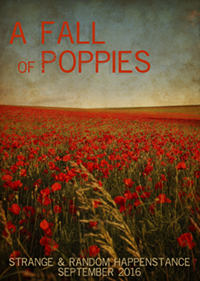
See, the problem was, though it's not really a problem until you go to a signing, but I had already gotten all my books by Tasha signed through Murder by the Book. Luckily I found out Tasha had written the movie tie-in edition for Elizabeth: The Golden Age, a movie I have criminally not seen especially as it has Laurence Fox in it, but my "History of Costume" class for my BA in Theater had me a little Elizabeth-ed out. We watched that first movie a lot. Well, in fairness the costumes are amazing. Even more amazing in person as I learned a few years later. But this meant there was a Tasha book I could have signed at the event! In case Lake Forest Book Store didn't have a copy I was ready with one I had gotten off Amazon. But thankfully they did so I had two copies for Tasha to sign, one was for me and one was for my blog and oh, how I wish I had saved it for Alexander Autumn, but sadly it was not to be. With my new copy of The Garden Intrigue and my two copies of Elizabeth: The Golden Age, I sat down and waited, talking to a few of my fellow book enthusiasts. One of them was very interested in my copy of Fall of Poppies, an anthology about the Great War that Lauren had participated in and which they hadn't heard of. I was happy to talk to them about it but really I couldn't wait for the event to begin.

The event was spectacular. Sometimes I really wish I had the wherewithal to remember to write down everything that happens at memorable events, but I've found taking notes makes me not really present and I tend to forget to do it afterwards when I'm still basking in the afterglow, or in this case buying a whole set of Kerry Greenwood's Miss Fisher Mysteries IN HARDCOVER from the nearby Half Price Books. There's also something about writing it out that takes some of the glamor away, it's far better to talk about it with friends as you drive home. So what do I remember about Tasha and Lauren's event? I remember thinking that they should always tour together. They are both great speakers on their own, but together they are a great double act, discussing champagne and dancing on tables, and you can just see their friendship as they're able to finish each others sentences and simultaneously recite their favorite lines from Dorothy L. Sayers. As for what Tasha talked about? Well Death in the Floating City, Lady Emily's seventh adventure, would be coming out later in the year, and she talked a bit about her process for writing the Venetian adventure. Mainly that she was glad she had a family who supported her when she said she had to write the book in Venice.           

As I'm currently a third of the way through Death in the Floating City (review up next Wednesday!) I can say that going to Venice really did pay off. In fact Tasha is unique among a lot of writers in that she loves to travel and walk the streets of where she is going to set her books. This adds such a level of realism that you feel you are walking the streets beside her and Lady Emily. Also, I really wouldn't say no to writing a book in Venice... After the talk there was a signing, I talked to Lauren about what I was doing in school (personal branding) and I remember she complimented my shorter hair and I know I made a face, to which she insisted she liked the short hair, and the thing was, I wasn't making the face about my short hair, I was making the face because I really needed to get it trimmed up and a little shorter, it was a bit raggedy. I agree with Lauren, I like my hair short! Then I finally got to meet Tasha, and she was just lovely and so nice and so happy I had a book I was signing to give away on my blog (again people I'm sorry I gave it away prematurely!) Then I went back out into the lovely atrium and went on my way. Book signings always seem to end abruptly. There's all this build up, a lovely talk, a little chat with the author, and you're out the door and on your way home. It's a harsh return to reality. But at least I can look back on two of my favorite authors sharing favorite quotes and quips from Gaudy Night whenever I want. 

Friday, July 24, 2015

Book Review - Dorothy L. Sayers's Unnatural Death

Unnatural Death (Lord Peter Wimsey Book 3) by Dorothy L. Sayers
Published by: Harper Torch
Publication Date: 1927
Format: Paperback, 264 Pages
Rating: ★★
To Buy

"Any excuse to read Dorothy L. Sayers!

If I’m being honest, though, before Other Daughter, Unnatural Death was never a re-read for me. I tended to skim over Whose Body, Unnatural Death, and so on and skip straight to Strong Poison and the introduction of Harriet Vane.

But Unnatural Death had been written at exactly the right time and set in the right place—the London of summer 1927. There could be no better guide for daily life, slang, customs, places. It’s all what a professor of mine used to call “accidental evidence”. So I read it. And I read it again. (And I borrowed a block of flats while I was at it.) Sayers is a wonderful mystery novelist, but she’s also a great chronicler of the manners and mores of her time and I’m so very grateful to her for it.

Unnatural Death is now one of my favorite Wimsey mysteries. If you’ve never read Sayers before, it’s an excellent place to start. (And keep an eye out for that block of flats. You’ll know the one I mean.)" - Lauren Willig

One night at dinner Lord Peter and Detective-Inspector Parker are talking and a man at a nearby table overhears them and tells them his sad life story. He was a well placed Doctor, but after the death of an elderly patient with cancer his insistence that it was murder, not natural causes, resulted in his ostracization and his having to leave the small town where he had set up his practice, attempting to reestablish himself in London. The Doctor gives no names, but Lord Peter is so intrigued that he sets off to solve this "crime." Because Lord Peter is sure there is a crime. The only problem is means and motive... but he's sure once he starts poking around he'll find something.

The problem is, that while there were indeed odd goings on in Leahampton, the deceased, Miss Agatha Dawson, died quite awhile back and will or no will, the only person who would inherit was a great-niece, Miss Mary Whittaker. So why would she kill her "Auntie" if she was guaranteed to inherit? Once Lord Peter starts to intervene, secreting an old lady, Miss Climpson, in Leahampton as his agent on the ground, the bodies start to pile up. If the murderer of Miss Dawson had left well enough alone they would have gotten away with it because their was no proof. The ever growing stack of bodies is all the proof Lord Peter and Detective-Inspector Parker needed to know that their suppositions were right. Can they catch a killer before Lord Peter's conscience gets the better of him?

Two summers ago was my "Golden Summer" which I "created" solely with the intent to read all the great Golden Age mysteries which I had been remiss in not reading. I devoured Christie and Sayers, Allingham and Milne, Tey and Berkeley, getting lost in plot twists and dallying with dangerous killers. Some of the books I loved without question, others, others I had problems with. Sayers was one of those authors that was problematical. While reading only three of her books so far is more a sampling then an in-depth analysis, I'm not the biggest fan. Whether the books are parroting her own beliefs or just a product of the times, some of her views are quite racist and that doesn't sit very well with me. Interestingly enough my mother who was a big Sayers fan back in the day re-read the books with me and felt that they didn't retain the magic they had once possessed and that they are rather offensive.

So how do I justify so many people I know who love and admire Sayers? Well, actually it's quite easy. I mentioned in book club the other day that I had just finished a massive re-read of all Michael Crichton's books, to which a resounding why was asked. Because they are special to me because of the time I read them and how they made me love reading. Yes others might look down on them but to me they are sacred, along with the Star Wars novelizations of Timothy Zahn. That's what Sayers is to certain of my friends. A touchstone to a certain time, a certain way of life that they go back to again and again, remembering and loving what is best but glossing over that which might be objectionable to someone reading it for the first time. Certain books are in our DNA, Sayers will never be in mine.

I have to say that my first reaction to Unnatural Death was holy time jump Batman! This book starts out with an odd little biographical note that brought confusion galore to me and I had to go look up online to see if I was really reading book three. The thing is the note is written from the future date of 1935 by a Paul Austin Delagardie, a relative of Lord Peter's we've never met... yet. In actuality the book was written in 1927 and takes place in that year. So why was I forced to read all this weird spoilerish information about who Lord Peter marries (though I have always known that) and has a child with and that Parker would eventually succeed in wooing Peter's sister Mary? Gathering from some reviews online, this might be an addition to the book... again, I ask why? As one review I read said "I can't imagine why Sayers would include it in this book since it makes reference to any number of events in the lives of Lord Peter and his friends and family that haven't happened yet." So shame on you Dorothy L. Sayers, I shall now send River Song to beat the shit out of you for trying to mess with the linear narrative of Lord Peter's life.

Now I will get to the actual plot, not the preface of the book. Spinster Sleuths. Or spinsters that are sleuths and occasionally murderers. Apparently this book was originally titled The Singular Case of the Three Spinsters which I think captures the themes in the book far better then Unnatural Death. The question is... who came up with the first spinster who decided to put aside the knitting and start asking some rather pointed questions. I was going back and forth between Sayers and Christie, I mean, this book came prior to Miss Marple, but Miss Marple was based on another character of Chirstie's that came out prior to this book... looking into it, apparently it's neither! Apparently it was an American author named Mary Roberts Rinehart with her book The Circular Staircase. So there goes my theory of rivalling writers. But it's nice to give the spinsters some love. Or at least writers giving the spinsters some love because they aren't getting it elsewhere. Though Sayers seems to kind of hold them in contempt and uses them as a punching bag while viewing their lifestyle as a little too "outre," dropping one too many hints of lesbianism. Which I'm guessing she's against. Sayers has pretty well established her racist card in earlier volumes, so her being a homophobe wouldn't really surprise me.

As for the method of death. Anyone who is anyone will figure out that an undetectable injection that kills has to be an air embolism. I mean, they use this constantly as a trope in fiction, be it television, film, or book. Apparently this was Sayers idea, at least my googling hasn't proved otherwise. Yet critics weren't too kind about this new method of murder. "In Unnatural Death, she had invented a murder method that is appropriately dramatic and cunningly ingenious, the injection of an air-bubble with a hypodermic, but not only, in fact, would it require the use of an instrument so large as to be farcical, but Miss Sayers has her bubble put into an artery not a vein. No wonder afterwards she pledged herself 'strictly in future to seeing I never write a book which I know to be careless'." So, the question is, if this was so unpopular with critics then (and with me now) how did it ever become a trope? Sigh... sometimes I will never understand books.

Yet the nail in the coffin for this book is the fact that everything hinges on obscure British law... didn't I say I hate this? Didn't Dorothy get my memo I sent back with The Doctor? So what that the Law of Property Act of 1925 changed certain inheritances? I DON'T CARE! Yes, it's interesting, mildly, that some law passed by the government would spur a murderer to act, but... really, is it really that interesting? No! But then again, apparently I'm just having many issues with Dorothy L. Sayers that will never be resolved. Why have stupid quotes from books that no one has ever or will ever read at the beginning of each chapter? They don't even relate to the subject material at all! Also, writing it as three parts? Was this supposed to be that "epic" of a story that parts were needed? Still, there's a little bit of irony I love. Lord Peter says, "it isn't really difficult to write books. Especially if you either write a rotten story in good English or a good story in rotten English, which is as far as most people seem to get nowadays." The thing is, Dorothy L. Sayers... neither can be said of you. It's a rotten story in rotten English, I guess it is more difficult to write books then you think. Well, I guess that's pretty obvious by now.

Friday, January 10, 2014

Book Review 2013 #8 - Margery Allingham's The White Cottage Mystery

The White Cottage Mystery by Margery Allingham
ARC Provided by the Publisher
Published by: Bloomsbury Reader
Publication Date: 1928
Format: Kindle, 168 Pages
Rating: ★★★★★
To Buy

Jerry Challenor is driving slowly to London. Taking the sleepy back roads and obscure thoroughfares. He is in no hurry, so when he sees an attractive girl alight from a bus with a large burden, he offers her a ride home. She lives at the White Cottage, which is very close at hand. After he drops the girl off he notices that the weather is in for a change and he stops to put the roof up on his convertible and gets to chatting to the local policeman. While relaxing by the side of the road the two men hear the report of a gunshot. They rush to the White Cottage, but someone is dead.

As it happens, Jerry's father is the famous Detective Chief Inspector W.T. Challenor, and Jerry calls him in to handle this mysterious murder. The victim is one Eric Crowther who lived next to the White Cottage in the grey monstrosity, the Dene. No one morns his passing. Every single person who knew him wanted him dead and everyone in the house had means and motive. The shotgun that did the deed was in the corner of the dining room, so anyone could have wandered in and blown him away. For personal reasons Jerry hopes fervently that it is not Norah, the attractive girl he gave a lift to. W.T. is baffled. He could easily arrest anyone in the house with circumstantial evidence, but it's the truth he wants. With Jerry in tow, W.T. heads to the continent and tracks down every lead he can think of... but will he ever make an arrest?

Someone at the BBC needs to make this into a movie right now! This would make a wonderful adaptation, much in the vein of the recent retelling of The Lady Vanishes with Tuppence Middleton. I'm picturing Laurence Fox as the lovestruck son Jerry and his real life father, James Fox, for W.T. Challenor. Perhaps Jenna-Louise Coleman as Norah? I'm telling you, it would be awesome. There was just something so fresh and vital about this story that I can see it appealing to anyone with a love of British period dramas and murder mysteries.

After having rather a rocky go of it with Dorothy L. Sayers, I was starting to become a little leery of my "Golden Summer" scheme. What if all these other hallowed authors where of the same ilk? Great as precursors, as proto-mysteries, as a jumping off point for later authors, but lacking that something that made them timeless and a great read till this day (Agatha Christie is exempt from these thoughts because she is awesome). What if the "Golden Age" wasn't really that golden? Thankfully The White Cottage Mystery has changed my mind and just hardened my heart to Dorothy L. Sayers. Unlike Sayers who fills her books with nonsense and ramblings, there was something so clean and spare to Margery Allingham's book that I wanted to give her book a great big hug. Not literally, because I think that might shatter my Kindle. No nonsense, no fluff, just a great whodunit that reminded me on more then one occasion of the great short stories that Daphne Du Maurier is known for. The style and turn of phrase, not to mention the setting were reminiscent of Du Maurier. And trust me, this is a true compliment from me if I'm comparing Allingham to Du Maurier.

Like Du Maurier and her obsession with the Brontes, Margery Allingham has created in Eric Crowther a character with some very interesting Bronte overtones. It's almost as if Allingham wanted to create a character as psychologically manipulative, hostile, and threatening as Heathcliff and then gleefully kill him. The fact that Crowther, through his machinations and games, is able to keep not only good people in line, but evil degenerates, shows the force of his character. He is an evil man and I echo the sentiments of Jerry that perhaps his death was an "act of God." As for the murderer... well... wait till you get to the final chapter of this lean mean mystery. My faith has been restored by this "act of God" and I will now pick up the first Campion mystery, not with cringing hands, but with a joyful song in my heart.

Wednesday, July 31, 2013

Catriona McPherson

"My writing about the 1920s and 30s was born from a love of the contemporary literature, especially the mysteries. My Dorothy L Sayers are dog-eared from re-reading. Margery Allingham, Ngaio Marsh, Michael Innes and Agatha Christie's Miss Marple too. 

I do have a passion, as well, for some aspects of the actual 1920s and 30s. Unlike many enthusiasts, though, it's not the clothes. I adore the vintage clothes of the 40s, 50s and 60s (Doris Day in a pair of gingham capris is my style icon) but, oh my grated floor soap, I love 20s houses. Especially the kitchens, laundries and sculleries; the products and recipes; the vegetable gardens and garages; the sewing baskets and washing lines. 

There's quite a bit of tramping round stately homes, castles and mansions in the course of researching Dandy Gilver and the drawing-rooms and dining-rooms are all very well. But show me an attic floor of servants' bedrooms and a back stairway to the basement and I'm (a) in heaven and (b) wondering who set the trip wire at the top and sent who tumbling to the bottom and why and how Dandy's going to catch them."- Catriona McPherson

Catriona McPherson was born in Scotland, Edinburgh to be precise, unlike her famous sleuth Dandy Gilver, who just moved to Scotland upon marrying her husband Hugh Gilver. She lived in Ayrshire, Dumfriesshire, and Galloway before emigrating to the United States and settling in in California three years ago, though she's still coming to grips with how big our country is, though she might just beat me for number of states visited... nope, just checked, I'm at 29, she's at 22, let's see who's the first to 50! Married to another artistic soul, she is a little peeved that despite being a writer she isn't the most artistic member of her household. She loves reading, gardening, cooking, baking, and practising an extreme form of Scotch thrift, from eating home-grown food to dumpster-diving for major appliances. Catriona should really stop by Wisconsin in a few weeks when it's college moving time... great deals to be found in the gutters.

But more importantly is that not only has she just released the eighth book in the Dandy Gilver series in the UK, but she's winning some seriously awesome and well deserved awards, such as being the recipient of this past year's Agatha for Best Historical Novel! How awesome is that? And then in just random coolness, she's totally awesome to follow on facebook, so you should go do that. I am beyond jealous that she has the amazing Jessica Hische doing her cover art for her. She likes Doctor Who and Jane Austen to name just a few! Oh, and finally, her new book, As She Left It, is published by my bestie Amy's company Llewellyn Worldwide under their Midnight Ink imprint.

Friday, July 19, 2013

Elizabeth Speller

"As for why I love the period –which is the same thing really as why I set my books in it: I had read all of Agatha Christie, Dorothy Sayers or Ngaio Marsh's books while I was in my teens!

What novelists enjoy is putting their characters in jeopardy and then seeing how they get out of it (or don't!). The 1914-1918 Great War put everybody in jeopardy; it changed the lives of everybody in Britain; not just because of the huge casualties but because new ideas emerged - about a woman's place, about class, about foreigners. It offered exciting new possibilities in technology, in travel and in entertainment: cinema, jazz, recorded music. What followed in the 1920's was a fast-moving time of revolutions, economic disasters and a devil may care attitude among the elite.

There were too few men to provide husbands, too few who wanted to be servants in big houses. Heirs had been killed, once grand families were hiding the fact that they were nearly destitute.

In Golden Age fiction, which I have loved practically since I could read it, there are stock characters: the spinster, the brash incomer with new money, the injured war veteran, the outsider –usually a nattily dressed European. Mistrust of strangers, bequests, inheritances, false identities, lost letters and unsuitable marriage were very real issues but wonderful for a fiction writer.

What I like is that these situations and these characters, who were actually created by the aftermath of the war, appear in novels set in the 20's in quite traditional privileged surroundings: an Oxford College, a country house, a cathedral close, an exclusive school; apparently un-changed, closed societies and perfect places for tensions and a dramatic tale to unfold and to create atmosphere.

One of my books, The Return of Captain Emmett, concerns a young officer trying to settle back into peacetime but finding himself confronted with the death of a friend, the past and its violent mysteries. The Strange Fate of Kitty Easton is set in a struggling country house where the men who worked on the estate have almost all been killed in the war and a child has disappeared. In my next book, At Break of Day, (comes out in autumn) one character is a wealthy Englishman who has long lived in New York, escaping a potential scandal back home. In 1915 he is called up to serve his birth country and, returning to England, his secrets start to unravel." -  Elizabeth Speller

Elizabeth Speller is the author of three novels (one forthcoming this fall, which I am excited to read even though it doesn't star Laurence Bartram) and four non-fiction books, one of which is a memoir. She is also a poet and recently won the Bridport poetry competition and was short-listed for the Forward Prize in 2009, which led to her sensitive handling of poets in her book The Return of Captain John Emmett. Elizabeth Speller had the envious opportunity to read Classics at Cambridge as a mature student where she received a post-graduate degree in Ancient History. She has had numerous jobs, one of which, making a survey of inscriptions in a large village churchyard, I am sure helped with the creation of Laurence Bartram, and most definitely contributed to his own fictitious book on churches.

Elizabeth is currently the Chair of the Criticos Prize (for an outstanding book in English about, or inspired by, Greece) and holds a Royal Literary Fund fellowship at the University of Warwick. She divides her time between Glouchestershire and Greece, working in a restored shepherd's hut in an old apple orchard on the edge of a Cotswold valley and in a small cottage on the Ionian island of Paxos. The Return of Captain John Emmett is an astounding mystery that will rivet you to your seat and was actually chosen as a Richard and Judy Summer Book Club pick in 2011, though I would hope you are more swayed by me then Richard and Judy... This book was followed up with the labyrinthine The Strange Fate of Kitty Easton, which I am hoping fervently will not be the last we see of Laurence Bartram. I am honored to have Elizabeth Speller as the first of many authors participating in my Golden Summer, a place rightfully reserved for her and Laurence!

Wednesday, July 17, 2013

Continuing the Tradition

While the "Golden Age of Detection" has come and gone, we can always revisit it by opening the pages of these hallowed classics. But the problem is, once you have read all these books, there is no more. There is a finite number of these classics, and once read, well, you can obviously re-read them many times till the covers are worn and frayed, but you will always know whodunit. Thankfully there are authors who have come to answer our plight. In literature there is, I wouldn't say a new, but currently a very prevalent trend, to go back and live within this golden age. To have mysteries once more set within the heyday of Agatha Christie and Dorothy L. Sayers. New fresh stories with modern twists on old tropes. A balm to our hearts that are yearning for more.

My "Golden Summer" will now shift it's focus from the old doyennes and masters of the craft, to those authors currently writing in the genre that was created by these great luminaries. I have been blessed with not only loving these author's works, but having the joy of when I reached out to them to have them not only contact me back, but enthusiastically agree to take part in my blog this summer. There is nothing more wonderful then the thrill of sending an email out to an author and getting a little ping back in your inbox. While I could keep you waiting to see who is participating... I view that a little as cruel and unusual punishment, therefore, without further ado, I present my Golden Summer lineup: Joanna Challis, Carola Dunn, Kerry Greenwood, Catriona McPhearson, J.J. Murphy, and Elizabeth Speller. This is quite literally my dream lineup, but while I told you who is participating, you'll have to come back to see why they set their books when they do. I know, I'm such a tease!

Remember to check back often as I'll have guest posts from all these authors, and don't forget to enter the giveaway. You want free books right?

Wednesday, July 3, 2013

Book Review - Anthony Berkeley's The Layton Court Mystery

The Layton Court Mystery by Anthony Berkeley
Published by: The Langtail Press
Publication Date: 1925
Format: Kindle, 222 Pages
Rating: ★
To Buy

Because of his friend Alec, the author Roger Sheringham has been invited by Victor Stanworth to be a part of his house party at Layton Court. Victor has rented a lovely house for the summer and has surrounded himself with friends. So why do they find Victor locked in his library with an apparently self inflicted gunshot wound to the head and a suicide note? Despite the fact that all the windows and doors are locked from the inside, Roger thinks that perhaps it was murder and it would be fun to play at being a sleuth. He has to have a Watson to his Holmes, someone who will be a dumb sounding board and willing to be berated constantly. Alec grudgingly takes up this mantle and they set about solving a crime that they aren't sure even happened. At one time or another they suspect all of their fellow guests, and even a mysterious "Prince." With the clock running against them till the inquest and their imminent departure from Layton Court, can an amateur sleuth and his reluctant Watson solve it in time?

When I sat down here at my computer and hammered out the details to my Golden Summer, I added Anthony Berkeley for the reason I have had a copy of The Poisoned Chocolates Case sitting on my bookshelf for... well, I don't know how long it's actually been there, but a dash long time. Yet when I got to reading up on Berkeley I found out that The Poisoned Chocolates Case was not the first Roger Sheringham book as I had thought. Because of Berkeley's propensity for writing under pseudonyms, or in this case, sometimes anonymously, The Poisoned Chocolates Case is either the forth or fifth book with Sheringham... so obviously, I had to start at the beginning and my poor copy of The Poisoned Chocolates Case would be neglected for some while more.

My initial impressions of The Layton Court Mystery was that it had more then a few striking similarities with A.A. Milne's The Red House Mystery, which I had just finished and loved. Sadly, where that one had wit and originality, this was just labored and had an angry tone throughout... or maybe it was my rage reading because everything grated on my nerves. I was more then once struck by how this reminded me of an episode of the BBC's Comedy Showcase called "Felix and Murdo." In the episode the hilarious actors Ben Miller and Alexander Armstrong, are Edwardians looking forward to the 1908 Olympics in London, this being aired to spur the fervor for last year's summer Olympics. The thing about the whole episode was that it was trying too hard to be witty and ended coming out crap. That's how I felt about this whole book. It was trying too hard. That and the fact that seeing as both Milne and Berkeley worked for Punch, that there is no way Berkeley didn't realize how similar his book was and I think Milne should have taken him out back, not necessary for a dust up, but maybe to school him in the ways of actually writing a good book. Or perhaps it's crappiness was why it was published anonymously...

There is just so much wrong with this book I literally don't know where to start... shall I dissect the horrid characters or the plot... decisions, decisions... ok, let's go with characters, because their stupidity made the plot drag and drag until I could barely stand it anymore. Roger and his "friend" Alec are the two most unlikable people ever. They are mean and snipe at each other constantly. I would say that they quite literally hate each other. I would never treat a friend in the manner they treat each other, a mortal enemy, maybe... but still, it wouldn't be as harsh as these two. Also, they act against character all the time. They say they are not prone to sentimentality, yet the act that Alec commits is the definition of being a sentimental fool and rushing in to save the damsel in distress. But luckily, they aren't sentimental...wtf? Not to mention Roger is a bigoted jackass, and a hypocritical one at that who calls others bigoted! He looks down on the servants, whom having a discussion with "would be as ineffective as to harangue a hippopotamus." Also, his views on women... oh dear me. Women are all crying milksops that need a big strong man to protect them, and with their inferior mental capabilities "there's always the chance that a woman will" give away a clue. Though nothing compares to how Roger's antisemitism comes out. The line was so offensive I can't even bring myself to quote it. Unlike the pervasive racism that is in the work of Dorothy L. Sayers, Berkeley's was like a slap in the face. I literally cannot think why anyone would say something so offensive.

Now to the plot... or what I gather you would call a plot. It's really just two guys arguing and then arguing some more and at the end of the day, well... nothing happens at the end. It just sort of stopped. All the plot problems are because of the idiocy of Roger and Alec. Their attempt to solve the "murder" of their host is like a how-to guide on how not to solve a mystery. They look at the scene of the crime and then retreat into the garden and talk things out, repeat ad infinitum. Because obviously they can't be overheard in a garden? Why is this garden so damn secretive? Is it in fact The Secret Garden? NO!?! Well then, anyone with any sense can hear what you're saying. As for your host and resident corpse... you didn't figure out that his circle of friends are all people he is blackmailing till about 150 pages in? Well, I figured it out 10 pages in. Haven't you seen Clue? Ok, no... you wouldn't, but still, it was obvious. Also, why would you discount the fact that the killer was probably among the house guests? Why would you think an outside person was the perpetrator? Ug. But the worst of all, why would you think that a suspect would have the name "Prince?" I mean, the SECOND I read that name I was like, dood, that's an animal, as it turned out to be a bull, I was spot on. In fact, everything about this book was either bang my head against the wall obvious or so offensive that I wished to throttle the author. And here I go... getting ready to read his next book... am I a masochist? Yes, I think I might be, but it's all for you, my gentle reader.

Friday, June 28, 2013

Anthony Berkeley

Anthony Berkeley Cox is one of the lesser remembered writers of Britain's Golden Age of Detection, yet was oddly one of the leading members of the genre at the time. While not educated in the hallowed halls of Oxford or Cambridge, like many his contemporaries, he attended the secular University College London. After serving in the British army during WWI, Berkeley took to writing as a journalist for such magazines as Punch and The Humorist. Berkeley published under many pseudonyms, such as Francis Iles, Anthony Berkeley (he omitted the Cox) and A. Monmouth Platts. In fact many people might recognize his writing as Francis Iles more, because his book, Malice Aforethought, was made into a BBC Movie staring Richard Armitage, and when I say staring, it's really a minor role, but it is staring to me.

In his writing, Berkeley is most known for the creation of the novice sleuth Roger Sheringham, who appeared in Berkeley's first novel, The Layton Court Mystery, which he published anonymously. Berkeley's book The Poisoned Chocolate Case staring Sheringham, is considered a classic of this classic genre. While he continued writing for The Daily Telegraph, The Sunday Times and The Gaurdian until his death in 1971, it wasn't his writing that Berkeley is most famous for.

In 1930 he co-founded the legendary Detection Club with Agatha Christie, Dorothy L. Sayers, Baroness Orczy, G.K. Chesteron,  and other established mystery writers. The club had regular meetings where the authors would discuss their projects and get help with the technical aspects of their books. The club is noted for the fact that they adhered to a code of "fair play." Meaning, in their writing, they were to give the reader a fair chance at guessing the guilty party. While the club still exists, the fair play rule has become even more lax... in fact their were several members of the original club who didn't adhere to the rule at the time. They published several anthologies and co-authored many books, which Berkeley contributed to. Because of Berkeley's involvement in the club he is considered a key figure in the development of crime fiction and a worthy inclusion in my Golden Summer.

Wednesday, June 12, 2013

Book Review - Margery Allingham's The Crime at Black Dudley

The Crime at Black Dudley (Albert Campion Book 1) by Margery Allingham
Published by: Felony and Mayhem
Publication Date: 1929
Format: Paperback, 256 Pages
Rating: ★★
To Buy

George Abbershaw is indebted to his friend Wyatt Petrie. Wyatt is having a large house party at his remote ancestral pile Black Dudley and to help out George he has invited Meggie Oliphant. George is a man of science, being a pathologist, and he has decided that his new feelings that have arisen for Meggie must be tested out at close quarters to determine if it is infatuation or love. Infatuation can run it's course and for the most part be ignored, but love, well, love is another thing. At dinner, sitting next to Meggie, they gossip about the strange array of people gathered. From Wyatt's invalid Uncle Colonel Coombe who lives year round at Black Dudley, to Benjamin Dawlish, a man with the hair of Beethoven and an implacable manner, to the foolish society fop, Albert Campion, who no one remembers inviting. The group seems so diverse, it's almost as if they were all brought there for a reason.

After dinner in the great hall, the guests eyes alight on a sinister dagger rather ostentatiously displayed over one of the fireplaces. Wyatt tells of a family legend of death and tragedy, that imbued the dagger with the power to bleed if it was held by a killer. In later generations, this has devolved into a ritual, a game of hide and seek where the dagger is passed back and forth among the guests in a darkened house, the one left with the dagger being the "killer." The guests are eager to take part in this ritual and soon the house is darkened and the "game" begins. Abbershaw views the game as insipid and uses the opportunity to go outside and check on his car, were he runs into Campion. The two amiably chat and return to the house together, where something is most definitely wrong.

Colonel Coombe has had a heart attack and been taken upstairs. Soon Abbershaw learns that Coombe is dead and is asked to hastily sign a cremation order. Abbershaw, very suspicious, gets a quick look at Coombe and decides that the man has most definitely been murdered. Though Coombe's thuggish friends, led by Dawlish, make it quite clear to Abbershaw, that not signing the cremation order is not an option. Something sinister is at Black Dudley. Come morning, all the guests realize they are captives. Dawlish has lost something of value and no one leaves until it is returned. If his item is returned, will he let everyone go though?

It is interesting to me that this is considered the first Albert Campion book seeing as, while a memorable character, he is by no means the star, that task is left to the too upright and altruistic Doctor Abbershaw. In fairness, The Crime at Black Dudley's blurb did warn me that Albert Campion is "in a supporting role, for the first and last time." I just thought he'd have a bigger part... apparently we have Allingham's American publisher to thank for Campion taking center stage. Originally she wanted to have Abbershaw be the star of her new mystery series. All I have to say to that is snooze fest. Campion is far more interesting in that he has flexible morals, but more importantly, was created to make fun of Lord Peter Wimsey. And right now, anyone taking the piss out of Dorothy L. Sayers gets two big thumbs up from me.

Personally, I can't decide yet as to whether I'll like Campion... he was too peripheral and there were just too many characters running around and mucking things up that I had to juggle. There really has to be some way to find the perfect balance of number of characters to narrative. But then there's authors like George R. R. Martin who are juggling so many they need an exhaustive appendix, yet I can keep them all straight, then there's The Crime at Black Dudley, where some of the characters are forgettable even to others in the book. I mean Martin is actually described as "just a stray young man" with black hair! How am I to remember anything about Martin with this vague description thrown in amongst all the the guests and thugs wandering around this house with impossible and improbable secret passageways and staircases and old areas that were part of the monastery? How I ask you? Also, throw in three characters with W's for names, Wyatt, Watt, and Whitby, add three doctors, and three ladies and I didn't care enough to keep track of who was who. Never mind that the ending was out of left field with no hints, by the end I didn't care, I was just glad it was over.

The main reason I disliked The Crime at Black Dudley was the mysterious organized crime element. Organized crime to me just doesn't feel British enough to my bones. While I know that's absurd, when I get a country house murder, I expect something more Gosford Park and less John Gotti. Sure, organized crime can be interesting... there was a time in my life I found it very interesting. Yet, with the hulking and stone-faced Dawlish as the "head" of the organization I was left cold. He didn't seem to have any intelligence or ingeniousness to lead a world wide crime syndicate. Also he seemed rather hesitant to kill. I'm sorry, but at the point where you've got tons of people locked up, and over half a million pounds on the line, just start killing them to get what you want. Leaving them alive gives them opportunity to escape... which of course, from the heroes point of view is felicitous, but unrealistic in my mind. Perhaps it's my dislike of the stolid Abbershaw that is making me see things through the eyes of the criminals... but really, kill them, be done with it.

Reading this fresh on the heels of Allingham's wonderful The White Cottage Mystery, I was struck by a similarity between the two. When I read Carola Dunn's first Daisy Dalrymble book, Death at Wentwater Court, it struck me as interesting that she let the criminal go free. I thought that this was an interesting twist on the mysteries of the 20s. Little did I know that Margery Allingham was also very fluid in the punishment meted out on criminals. Allingham definitely has a scale she uses to judge the guilty, and sometimes the scale does not point "go to jail, go directly to jail, do not pass go, do not collect $20." While I find it refreshing... two books in a row, well... it was repetative. Also, if at this point you're thinking, dammit, she's spoiled the book for me... remember the killer comes out of left field, so, no I didn't. I wasn't able to guess the killer and neither will you, the punishment is immaterial in this case.

Friday, June 7, 2013

Book Review - Margery Allingham's The White Cottage Mystery

The White Cottage Mystery by Margery Allingham
ARC Provided by the Publisher
Published by: Bloomsbury Reader
Publication Date: 1928
Format: Kindle, 168 Pages
Rating: ★★★★★
To Buy

Jerry Challenor is driving slowly to London. Taking the sleepy back roads and obscure thoroughfares. He is in no hurry, so when he sees an attractive girl alight from a bus with a large burden, he offers her a ride home. She lives at the White Cottage, which is very close at hand. After he drops the girl off he notices that the weather is in for a change and he stops to put the roof up on his convertible and gets to chatting to the local policeman. While relaxing by the side of the road the two men hear the report of a gunshot. They rush to the White Cottage, but someone is dead.

As it happens, Jerry's father is the famous Detective Chief Inspector W.T. Challenor, and Jerry calls him in to handle this mysterious murder. The victim is one Eric Crowther who lived next to the White Cottage in the grey monstrosity, the Dene. No one morns his passing. Every single person who knew him wanted him dead and everyone in the house had means and motive. The shotgun that did the deed was in the corner of the dining room, so anyone could have wandered in and blown him away. For personal reasons Jerry hopes fervently that it is not Norah, the attractive girl he gave a lift to. W.T. is baffled. He could easily arrest anyone in the house with circumstantial evidence, but it's the truth he wants. With Jerry in tow, W.T. heads to the continent and tracks down every lead he can think of... but will he ever make an arrest?

Someone at the BBC needs to make this into a movie right now! This would make a wonderful adaptation, much in the vein of the recent retelling of The Lady Vanishes with Tuppence Middleton. I'm picturing Laurence Fox as the lovestruck son Jerry and his real life father, James Fox, for W.T. Challenor. Perhaps Jenna-Louise Coleman as Norah? I'm telling you, it would be awesome. There was just something so fresh and vital about this story that I can see it appealing to anyone with a love of British period dramas and murder mysteries.

After having rather a rocky go of it with Dorothy L. Sayers, I was starting to become a little leery of my "Golden Summer" scheme. What if all these other hallowed authors where of the same ilk? Great as precursors, as proto-mysteries, as a jumping off point for later authors, but lacking that something that made them timeless and a great read till this day (Agatha Christie is exempt from these thoughts because she is awesome). What if the "Golden Age" wasn't really that golden? Thankfully The White Cottage Mystery has changed my mind and just hardened my heart to Dorothy L. Sayers. Unlike Sayers who fills her books with nonsense and ramblings, there was something so clean and spare to Margery Allingham's book that I wanted to give her book a great big hug. Not literally, because I think that might shatter my Kindle. No nonsense, no fluff, just a great whodunit that reminded me on more then one occasion of the great short stories that Daphne Du Maurier is known for. The style and turn of phrase, not to mention the setting were reminiscent of Du Maurier. And trust me, this is a true compliment from me if I'm comparing Allingham to Du Maurier.

Like Du Maurier and her obsession with the Brontes, Margery Allingham has created in Eric Crowther a character with some very interesting Bronte overtones. It's almost as if Allingham wanted to create a character as psychologically manipulative, hostile, and threatening as Heathcliff and then gleefully kill him. The fact that Crowther, through his machinations and games, is able to keep not only good people in line, but evil degenerates, shows the force of his character. He is an evil man and I echo the sentiments of Jerry that perhaps his death was an "act of God." As for the murderer... well... wait till you get to the final chapter of this lean mean mystery. My faith has been restored by this "act of God" and I will now pick up the first Campion mystery, not with cringing hands, but with a joyful song in my heart.

Wednesday, June 5, 2013

Margery Allingham

Margery Allingham was born to a very literary family. Her father, mother, and aunt where editors of literary journals. Yet her parents also took to writing. Margery's father found fame as a pulp fiction writer and her mother contributed stories to women's magazines. When Margery was eight she earned her first fee as a writer for a story that ran in her aunt's magazine. As a teenager, she went to school to correct a stammer she had. While there she met her future husband, Philip Youngman Carter, whom she would collaborate with. He designed many of her book's dust jackets and even completed her final Campion novel for her after her untimely death from Breast Cancer.

She had her first book published when she was nineteen. Blackkerchief Dick, while well regarded, was not a financial success. It was when Margery decided to write mysteries that her career really took off. The creation of Albert Campion, to ape Dorothy L. Sayers' Lord Peter Wimsey, seemed to have the same natural light-heartedness as the author and soon became a hit with her readers. Allingham went on to write eighteen novels and twenty short stories about her gentleman sleuth possibly born of royalty operating under a pseudonym. Campion has since entered the pantheon of famous literary detectives and put Allingham on par with Christie and Sayers as a doyenne of Golden Age Detection.

Friday, May 31, 2013

Book Review - Dorothy L. Sayers's Unnatural Death

Unnatural Death (Lord Peter Wimsey Book 3) by Dorothy L. Sayers
Published by: Harper Torch
Publication Date: 1927
Format: Paperback, 264 Pages
Rating: ★★
To Buy

One night at dinner Lord Peter and Detective-Inspector Parker are talking and a man at a nearby table overhears them and tells them his sad life story. He was a well placed Doctor but after the death of an elderly Cancer patient his insistence that it was murder, not natural, resulted in his ostracization and his having to leave the small town and try to reestablish himself in London. The Doctor gives no names, but Lord Peter is so intrigued, that he sets off to solve this "crime." Because Lord Peter is sure there is a crime. The only problem is means and motive... but he's sure once he starts poking around he'll find something.

The problem is, that while there where indeed odd goings on in Leahampton, the deceased, Miss Agatha Dawson, died quite awhile back and will or no will, the only person who would inherit was a great-niece, Miss Mary Whittaker. So why would she kill her "Auntie" if she was guaranteed to inherit? Once Lord Peter starts to intervene, secreting an old lady, Miss Climpson in Leahampton as his agent on the ground, the bodies start to pile up. If the murderer of Miss Dawson had left well enough alone they would have gotten away with murder because their was no proof. The ever growing stack of bodies is all the proof Lord Peter and Detective-Inspector Parker needed to know that their suppositions were right. Can they catch a killer before Lord Peter's conscience gets the better of him?

Holy time jump Batman! I have to say, that was my first reaction to Unnatural Death. This book starts out with an odd little biographical note that brought confusion galore to me and I had to go look up online to see if I was really reading book three. The thing is the note is written from the future date of 1935 by a Paul Austin Delagardie, a relative of Lord Peter's we've never met... yet. In actuality, the book was written in 1927 and takes place in that year. So why was I forced to read all this weird spoilerish information about who Lord Peter marries (though I have always known that) and has a child with and that Parker would eventually succeed in wooing Peter's sister Mary? Gathering from some reviews online, this might be an addition to the book... again, I ask why? As one review I read said "I can't imagine why Sayers would include it in this book since it makes reference to any number of events in the lives of Lord Peter and his friends and family that haven't happened yet." So shame on you Dorothy L. Sayers, I shall now send River Song to beat the shit out of you for trying to mess with the linear narrative of Lord Peter's life.

Now I will get to the actual plot, not the preface of the book. Spinster Sleuths. Or spinsters that are sleuths and occasionally murderers. Apparently this book was originally titled The Singular Case of the Three Spinsters which I think captures the themes in the book far better then Unnatural Death. The question is... who came up with the first spinster who decided to put aside the knitting and start asking some rather pointed questions. I was going back and forth between Sayers and Christie, I mean, this book came prior to Miss Marple, but Miss Marple was based on another character of Chirstie's that came out prior to this book... looking into it, apparently it's neither! Apparently it was an American author named Mary Roberts Rinehart with her book The Circular Staircase. So there goes my theory of rivalling writers. But it's nice to give the spinsters some love. Or at least, other writers giving the spinsters some love. Sayers seems to kind of hold them in contempt and as a punching bag and views their lifestyle as a little too "outre" and she drops one too many hints of lesbianism. Which, I'm guessing she's against. Sayers has pretty well established her racist card in earlier volumes, so her being a homophobe wouldn't really surprise me.

As for the method of death. Anyone who is anyone will figure out that an undetectable injection that kills has to be an air embolism. I mean, they use this constantly as a trope in fiction. Apparently this was Sayers idea, at least my googling hasn't proved otherwise. Yet critics weren't too kind about this new method of murder. "In Unnatural Death, she had invented a murder method that is appropriately dramatic and cunningly ingenious, the injection of an air-bubble with a hypodermic, but not only, in fact, would it require the use of an instrument so large as to be farcical, but Miss Sayers has her bubble put into an artery not a vein. No wonder afterwards she pledged herself 'strictly in future to seeing I never write a book which I know to be careless'." So, the question is, if this was so unpopular with critics then (and with me now) how did it ever become a trope? Sigh... sometimes I will never understand books.

Yet the nail in the coffin for this book is the fact that everything hinges on obscure British law... didn't I say I hate this? Didn't Dorothy get my memo I sent back with The Doctor? So what that the Law of Property Act of 1925 changed certain inheritances? I DON'T CARE! Yes, it's interesting, mildly, that some law passed by the government would spur a murderer to act, but... really, is it really that interesting? No! But then again, apparently I'm just having many issues with Dorothy L. Sayers that will never be resolved. Why have stupid quotes from books that no one has ever or will ever read at the beginning of each chapter? They don't even relate to the subject material at all! Also, writing it as three parts? Was this supposed to be that "epic" of a story that parts were needed? Still, there's a little bit of irony I love. Lord Peter says, "it isn't really difficult to write books. Especially if you either write a rotten story in good English or a good story in rotten English, which is as far as most people seem to get nowadays." The thing is, Dorothy L. Sayers... neither can be said of you. It's a rotten story in rotten English, I guess it is more difficult to write books then you thing. Well, I guess that's pretty obvious by now.

Wednesday, May 29, 2013

Book Review - Dorothy L. Sayers's Clouds of Witness

Clouds of Witness (Lord Peter Wimsey Book 2) by Dorothy L. Sayers
Published by: Harper Torch
Publication Date: 1926
Format: Paperback, 288 Pages
Rating: ★★
To Buy (different edition than one reviewed)

Lord Peter is taking some time off in Corsica. He has been incommunicado for some time. Therefore it is quite a surprise to him on arriving in Paris to find his older brother's name splashed across the front of the papers. Gerald has been arrested for murder! For once Lord Peter can show Gerald that his "lurid hobby" might be of some use to the family. Rushing back to England Lord Peter is fighting against the passing of time and the fact that the inquest has already happened. The family was in Riddlesdale, Yorkshire, where Gerald had rented out a lodge for hunting. Peter and Gerald's younger sister Mary was playing hostess and her fiance, Denis Cathcart was the victim of foul play.

Yet the motive for Gerald killing Cathcart is absurdly flimsy. Supposedly Gerald found out about Cathcart being a cardsharp and told him to leave. Why this should result in murder makes no sense. But Gerald is being obdurate. He will not tell where he was or what he was doing that night. The fact that Mary is also lying soon becomes obvious. With his own family obfuscating the truth, Lord Peter takes many a wrong turn, some into very boggy situations, before he heroically saves the day.

Me and Lord Peter have come to a bit of an understanding with this latest volume. Firstly, I didn't at any time want to hurl it across the room and I would only grumble about the stupid title every hour or so, not constantly. Clouds of Witness is one of those awkwardly titled books, I keep wanting to say "Clouds of Whiteness"... because, clouds, generally speaking, are white. If the title actually was the line used in the book "cloud of witnesses" that might have worked better, but still, awkward and will forever be a title I mangle. Back to me not hating Peter so much. Sure, most of the problems of the previous volume still proliferated, but the crime itself was far more interesting. In fact, I might have said I actually liked this book if the end of it hadn't gotten so bogged down in Gerald's trial that I was lost in a morass of legalese of outmoded British laws. If there is only one thing British I could be said to hate it's outmoded British courtroom dramas, this being the second worse perpetrator, P.D. James being the queen with Death Comes to Pemberley.

What I don't get is Sayers's weird way of setting up the crime in this case. It is odd that we arrive with Peter after the crime is committed. Almost as if we where the police brought in after some time to get to the bottom of things. Usually when you have a traditional country house murder that is very familial you're there every step of the way. Here it's a very different and novel approach. I personally was left a little cold by it. By not being on the ground and in the trenches as it happened, I was unable to get a connection to these other characters. They were literally just people I read about not cared about, which is the difference between a so-so book and a great book. Also, if she was going to take this tack of following Peter, why does Sayers let Peter wander off and leave is in the dark? She contradicts herself by changing her narrative style, especially at the end when Peter dramatically enters the House of Lords and lays out the case. If she had stayed true to the earlier half of the book we could have followed Peter and then curtailed the drawn out court case... just saying...

My big complaint of the previous volume was that you can't really tell one character from another, them all having, basically, the same voice. She seemed to have gotten this criticism at the time as well because she laboriously tries to make the Yorkshire natives "real" with a weird dialect that doesn't really work. I mean, yes, it's kind of funny because it's Jeeves and Wooster meets Wuthering Heights... but it just came across as not quite right and just another thing slightly wrong that made the book less whole. I also think I understand why Lord Peter annoys me. The way he's written he talks like he's speaking gibberish, like a 1920s version of Doctor Who. Sure it can be funny, and far more enjoyable if you picture Matt Smith as Lord Peter, but in the end, it's tiring trying to pick out the important bits of information from his verbal diarrhea. A forty minute show is one thing, and 300 page novel is another. Once again I shall lament the need for editors and move onto another book... hopefully this one without an author who assumes the reader is fluent in French... a common misconception of writers at the time... damn you Sayers and Mitford!

Friday, May 24, 2013

Book Review - Dorothy L. Sayers's Whose Body?

Whose Body? (Lord Peter Wimsey Book 1) by Dorothy L. Sayers
Published by: Harper Torch
Publication Date: 1923
Format: Paperback, 212 Pages
Rating: ★
To Buy (different edition than one reviewed)

Lord Peter Wimsey and his manservant Bunter are very lucky in their lifestyle, in that they get to indulge their passions. For Lord Peter, this is rare Folios and amateur sleuthing, for Bunter, this is photography, which can be very helpful in amateur sleuthing. When Lord Peter hears about a body mysteriously appearing in the bathroom of the architect Thipps, his curiosity is peeked. He is even willing to miss a rare book auction to get there before the police cordon makes it impossible. Lord Peter sees many things amiss, but can't quite put his finger on anything in particular, aside from the fact that the police have got it all wrong.

While at the same time, Inspector Parker, a friend of Lord Peter's, is investigating the disappearance of Sir Reuben Levy. At first the cops jump to the conclusion that the body in the tub must be a shorn Levy... but aside from their both being Jewish and of a similar appearance, this is obviously not the case. Yet... could the two be somehow connected. Inspector Parker with Lord Peter and Bunter are determined to get to the bottom of this, even if it puts them in personal peril. At least if they have to hole up at Lord Peter's there is plenty to read and drink.

Please don't attack me for not liking this book. Send me no death threats or piercing glances. No flamethrowers in the darkness to wake me from a deep sleep. I know it verges on sacrilege to say I didn't like this book, but... I just didn't like this book. I will use as my "get out of jail free" card the fact that many people have told me to just skip to Strong Poison and the arrival of Harriet Vane or to just skip ahead to Gaudy Night, which is the best by far. So, my thought is, that what they're really saying, instead of emphasising the awesomeness of Harriet Vane, they're pointing out the flaws in the earlier books and are trying to get me to skip ahead so I won't abandon Lord Peter before he meets his match. That's how I'm justifying it, ok?

The overwhelming problem with Whose Body is that Dorothy L. Sayers can't write. I mean, literally, this book verged on the incomprehensible. Shall I sweep this under the rug as the foibles of a first time writer? Or shall I ripe her to shreds? Shreds it is. Whose Body almost reads like some bizarre exercise to get as many styles of writing into one book. First, there's the standard third-person narration, which isn't well executed, but, at least it's expected. Then she throws in some straight up back and forth dialogue, which, I'm cool with, Lisa Lutz does it all the time, so, that's fine, and also, for the 1920s, pretty novel. Sayers occasionally verges into epistolary form, which again, I'm down with that. Her haphazard and incomprehensible annotations are more then a little odd. I really don't know why she does them, they don't further the plot or even make sense.

Where the book really started to fall apart is when she randomly, I mean seriously, why did she just do this for a few random pages, went into second-person narration. Second-person narration never really works for me, and here it just comes out of left field. Was I supposed to feel like I was there at the graveside exhumation? Because the narrative shift just made me think I was reading some bizarre experiment by a bad writer and instantly pulled me out of the book. Finally, the meta. While meta is a concept that has taken on in recent years with it's self referential attitude, it's not really a new thing. Agatha Christie would sometimes have Poirot joke about how "real life" isn't like a "detective story" and the reader would laugh thinking, little did Poirot know, he's fictional. Sayers takes this further and is having Lord Peter always joke about detective stories and Sherlock Holmes and Raffles. Ok, cute a few times, but you've beat it to death. Stop. Just stop. Nothing you can do, even making me laugh (which I didn't), redeems the slipshod writing and amateurish style.

So how about the characters? They are so flat and similar that I couldn't tell who was speaking till a "what" tagged onto the end of a sentence made me go, oh, Lord Peter must have been talking. Peter and Parker, their mode of speaking and the habit of Sayers to not qualify the speaker makes Whose Body a muddled mess. Then there's the fact that Lord Peter and Bunter are really just bad shades of Jeeves and Wooster with crime solving inclinations. Which wasn't helped by my recently watching the new show Blandings (horrid first episode, gets radically better), because I kept picturing Jack Farthing as The Hon. Frederick Threepwood with his bland acting, over the top facial expressions and fly away hair as Lord Peter. Why you might say? Because Freddie has the "what" disease, that seems to plague the upper crust in order to get a laugh. While Wodehouse did this humorously, as I've said, I think Sayers just did it, not as a character trait, but as an afterthought... some way to make Peter not Parker. The one aspect of Lord Peter that did interest me was his PTSD. I've railed against this before in literature, but it's interesting to see it in literature of the time, before it was diagnosed to death and had "stereotypical symptoms." This shell shock could prove to be interesting.

Now, I will say, one thing that I did find interesting. Yes, there really was only one, because I figured out the killer damn early and was offended by the antisemitism. There are many groan worthy lines, but one was so obviously, "Look Here! KILLER!" that it made me audibly groan. Ok, enough of the being mean, here's what I liked. I liked that Lord Peter is so obviously not Poirot. That needs some explanation. So, with The Murder on the Links, Poirot is always railing against the modern methods, the fingerprints and footprints and what have you, while Lord Peter and Bunter are openly embracing them. In fact, Bunter is often updating to the latest gadgets just because he can. While endlessly reading about forensics might get boring after awhile, I find it interesting that Sayers, writing at the same time as Christie, decided to take such a radically different approach. Good on you Sayers, but I'm still hugely grateful this wasn't chosen as my bookclub's selection, I don't think they would have ever forgiven me for how bad it is.

Older Posts Home