 At the Bottom of the Garden by Camilla Bruce
Published by: Del Rey Books
Publication Date: January 28th, 2025
Format: Paperback, 368 Pages
To Buy
The official patter:
"A murderess becomes the guardian of two very unusual girls in this mesmerizing Gothic novel from acclaimed author Camilla Bruce.
Clara Woods is a killer - and perfectly fine with it, too. So what if she takes a couple of lives to make her own a little bit better? At the bottom of her garden is a flower bed, long overgrown, where her late husband rests in peace - or so she's always thought.
Then the girls arrive.
Lily and Violet are her nieces, recently orphaned after their affluent parents died on an ill-fated anniversary trip. In accordance with their parents' will, the sisters are to go to their closest relative - who happens to be Clara. Despite having no interest in children, Clara agrees to take them, hoping to get her hands on some of the girls' assets - not only to bolster her dwindling fortune but also to establish what she hopes will be her legacy: a line of diamond jewelry.
There's only one problem. Violet can see the dead man at the bottom of the garden. She can see all of Clara's ghosts...and call them back into existence. Soon Clara is plagued by her victims and at war with the gifted girls in her care. Lily and Violet have become a liability - and they know far more than they should."
A very interesting Henry James vibe!
 The Weekend Guests by Liza North
Published by: Harper Paperbacks
Publication Date: January 28th, 2025
Format: Paperback, 336 Pages
To Buy
The official patter:
"In the vein of Lucy Foley's chilling, atmospheric mysteries, a compulsive, psychological thriller about a group of old university friends whose seaside reunion will end in betrayal and murder.
Five old friends...One reunion to die for.
After years apart, old college friends Aline, Sienna, Rob, Michael, and Brandon reunite in idyllic Dorset, for a weekend at Aline's beautiful house perched on a cliff above the sea. It should be the perfect chance to relax, rekindle friendships, and meet each other's partners; plus, there's a sitter to watch the kids.
What most of the guests don't know, however, is that Aline has called them all together for a reason: someone has threatened to expose the dark crime they committed at university. Long ago, these old friends swore one another to silence, and have never spoken of the deed since. But now, menacing postcards have begun to appear - and Aline is convinced it's one of them turning on the rest.
In Liza North's propulsive and unsettling dual timeline narrative, truths emerge, secrets surface, and long-simmering grudges explode - and by the end of this reunion weekend, at least one of them will be dead..."
I don't know why but any book that is basically a murderous version of Peter's Friends is a book I have to read.
 Head Cases by John McMahon
Published by: Minotaur Books
Publication Date: January 28th, 2025
Format: Hardcover, 352 Pages
To Buy
The official patter:
"Head Cases follows an enigmatic group of FBI agents as they hunt down a murderer seeking his own justice in this electrifying - and commercial - series debut.
FBI Agent Gardner Camden is an analytical genius with an affinity for puzzles. He also has a blind spot on the human side of investigations, a blindness that sometimes even includes people in his own life, like his beloved seven-year-old daughter Camila. Gardner and his squad of brilliant yet quirky agents make up the Patterns and Recognition (PAR) unit, the FBI's hidden edge, brought in for cases that no one else can solve.
When DNA links a murder victim to a serial killer long presumed dead, the team springs into action. A second victim establishes a pattern, and the murderer begins leaving a trail of clues and riddles especially for Gardner. And while the PAR team is usually relegated to working cold cases from behind a desk, the investigation puts them on the road and into the public eye, following in the footsteps of a killer.
Along with Gardner, PAR consists of a mathematician, a weapons expert, a computer analyst, and their leader, a career agent. Each of them must use every skill they have to solve the riddle of the killer's identity. But with the perpetrator somehow learning more and more about the team at PAR, can they protect themselves and their families...before it's too late?
With an enigmatic case that will keep readers on the edge of their seats and a thoroughly engaging ensemble cast, John McMahon's Head Cases is a triumph."
I mean, if she wasn't seven wouldn't it be great if Camila was the killer?
 The Rules of Fortune by Danielle Prescod
Published by: Mindy's Book Studio
Publication Date: January 28th, 2025
Format: Hardcover, 304 Pages
To Buy
The official patter:
"A daughter's investigation into her family history threatens to destroy their legacy in a gripping novel about power, money, and secrets by the author of Token Black Girl.
On their Martha's Vineyard estate, the Carter family prepares to celebrate. But when the billionaire patriarch dies right before his seventieth birthday, the media is quick to question the future of the multi-industry conglomerate that makes the Carters living legends. Amid the succession crisis, his daughter, Kennedy, is questioning her father's past.
Kennedy is an aspiring filmmaker, and the documentary she'd planned to present at her father's party begins an inquest into the life of a man she never really knew. A thoughtful outlier in an elite and fiercely guarded dynasty, she's not interested in keeping up the appearances that define her impeccably poised mother or in the capitalist games her ruthless brother plays. Kennedy wants only to understand the origins of their empire, and the lethally ambitious man behind it. That understanding comes at a cost.
As a twisted history emerges, the fault lines in the family grow. Torn between morality and the promise of maintaining wealth, Kennedy must decide what's most important - the Carter legacy or exposing the shocking truth of how it was built."
I mean, a character named Kennedy unearthing family secrets? It's totally about THE Kennedys, and I'm all for taking down that corrupt family, even if only fictionally.
 Beast of the North Woods by Annelise Ryan
Published by: Berkley Books
Publication Date: January 28th, 2025
Format: Hardcover, 320 Pages
To Buy
The official patter:
"When a local fisherman is mauled to death, it seems like the only possible cause is a mythical creature in the latest puzzling entry in this USA Today bestselling series.
An ice fisherman is savagely mauled to death in Rhinelander, Wisconsin, and an eyewitness claims the man was attacked by a hodag. There's just one problem with that: it's well known that the creature is not real and was created by a local hoaxer. So how could an imaginary creature be chomping on local sportsmen?
The suggestion that a hodag killed someone isn't well received by the townsfolk because of its beloved ties to the town and the money it generates from tourist dollars. Due to this, people begin to suspect the witness is the real killer, especially when it's discovered he has a tangled past with the victim.
The witness to the attack happens to be the nephew of Morgan Carter's bookstore employee, Rita Bosworth, who convinces the professional cryptozoologist to travel to Wisconsin to prove that a hodag not only exists but killed the victim.
Clues may be hard to come by, but one thing's for sure: something killed that man, and that something now has its eyes focused on Morgan."
As a Wisconsinite just seeing that hodag on the cover brings me joy. And yes, I obviously was able to identify it before reading the blurb.
 Barbarian's Heart by Ruby Dixon
Published by: Berkley Books
Publication Date: January 28th, 2025
Format: Paperback, 288 Pages
To Buy
The official patter:
"The next novel in the Ice Planet Barbarians series, an international publishing phenomenon - now in a special print edition with a bonus novella!
The unthinkable happens when a devastating accident causes Pashov to forget his mate, but Stacy will do whatever it takes to make her family whole again...
The first time I laid eyes on Pashov, we resonated. I was happy and in love, and we were raising a beautiful child together. All of that was torn apart when the world shook.
My mate nearly died.
He woke up from his coma...but he can't remember me. Or our son. Every memory of the past two years is gone. And that changes everything between us. How can I love someone who doesn't remember me?
How can I not when I know he's still my mate underneath it all?"
It's cold out, Valentines is near, come enjoy the Ice Planet Barbarians series!
 A Lady Would Know Better by Emma Theriault
Published by: Entangled: Amara
Publication Date: January 28th, 2025
Format: Paperback, 352 Pages
To Buy
The official patter:
"Get ready to swoon for this dreamy, forget-me-not romance that's filled with the delightful tartness of Jane Austen and the sweeping, unputdownable drama of Bridgerton.
There are many things an English lord might encounter on the grounds of his wintry estate. Trees. Birds. Perhaps a wandering gamekeeper. Instead, the Earl of Belhaven finds a woman in the snow, unconscious and nearly frozen to death. Then her luminous gray eyes open just long enough for her to plead, "Don't let them get me."
Now Jasper Maycott has his hands full with a woman who has absolutely no memory of who she is or where she came from - to say nothing of her name! Just a gold ring, some fine clothes, and a penchant for pert conversation. But while "Jane" dresses and speaks quite like a lady, Jasper can't make any assumptions. After all, she could be a crafty fortune hunter...albeit a charming and unutterably beautiful one.
Only there's no room for romantic love in the Earl of Belhaven's world. There is just grim duty, a lingering sense of loss, and the knowledge that love - in any form - can only bring heartbreak in its wake.
But while a lady should know better, the heart heeds no rules...even if its every beat portends the danger she was running from."
Well hopefully the danger will be dealt with and a HEA is on the cards. It should be if Jane Austen and Bridgerton are anything to go by...
 Lord of Intrigue by Nina Jarrett
Published by: Rogue Press
Publication Date: January 28th, 2025
Format: Kindle, 416 Pages
To Buy
The official patter:
"A mysterious heir is on his way to England. Will Molly be able to find her place in his household, or will a tragic fate befall one of them within the week?
In this steamy mystery romance, two people are thrust together on the ashes of a disastrous murder plot. Now they must find a way to work together despite the unexpected attraction between them.
No one knows the new heir...
Marco Scott has never been to England, but now he is next in line to a title. Surrounded by potential enemies, he must find his footing in this strange land. Learning he is to act as guardian to an enticing young woman only makes matters more complicated.
A ward stuck in a stranger's home...
Molly Carter is handed over to the new heir, a man no one knew existed until it was revealed a peer was murdered to conceal his existence. To make matters worse, he might be the most beautiful man alive, which is making her blurt out the most embarrassing nonsense.
But someone is not happy that Marco will inherit. Danger lurks in the shadows, and he can't inherit if he's dead. Can Molly and Marco come to terms with their newfound passion to solve the mystery before one of them ends up in a grave?
Lord of Intrigue is the delightful fifth book in the Inconvenient Scandals series of steamy Regency suspense romance books. If you like worthy heroes, fast-paced plots, and enduring connections, then you'll adore Nina Jarrett's charming novel. Can be read as a standalone book."
That cover captured by imagination, and then the blurb? Yeah, I gotta read it.
 The Girl Made of Stars by K.E. Le Veque
Published by: Dragonblade Publishing, Inc.
Publication Date: January 28th, 2025
Format: Paperback, 346 Pages
To Buy
The official patter:
"Lola Grayson had it all.
In 1934, Lola was on top of the world. Dubbed "The Siren" by MGM, she was a protégé of Louis B. Mayer, the original talkie sex symbol before the rise of stars like Carole Lombard and Jean Harlow. But like Harlow, Lola Grayson had a dominant stage mother and bad health that struggled to meet the demand of the Golden Age of Hollywood. Exploited, pushed, primped, and promoted as MGM's biggest star, Lola Grayson made one fatal mistake - falling in love with fellow MGM star Robert Taggart. Together, they were the golden couple that audiences demanded to see. But Lola wanted what every young woman at the time wanted - a husband and a family. For a major star, that was a death sentence.
Lola Grayson's death rocked the world.
In the present day, Joey Cabot is a novelist with a struggling career. In a stroke of fate, she purchases Lola Grayson and Robert Taggart's former home in Los Angeles. It was a secret love nest they kept hidden from the world, but what comes out of the old walls is a secret no one wanted to see the light of day. Something so explosive that it could lay Hollywood history wide-open. In discovering that secret, Joey sees the salvation of her career, but it soon becomes apparent that Joey isn't working for her salvation, but for Lola's.
Old Hollywood glamour and tragedy brings together two lost souls in this masterpiece fictional tale of one woman's death... and one woman's life."
I'm such a sucker for Old Hollywood.
 There's Something About Mira by Sonali Dev
Published by: Lake Union Publishing
Publication Date: January 28th, 2025
Format: Hardcover, 317 Pages
To Buy
The official patter:
"From USA Today bestselling author Sonali Dev comes the heartfelt story of a woman determined to reunite a lost ring with its owner, who ends up finding herself along the way.
Mira Salvi has the perfect life - a job she loves, a fiancé everyone adores, and the secure future she's always imagined for herself. Really, she hasn't a thing to complain about, not even when she has to go on her engagement trip to New York alone.
While playing tourist in the city, Mira chances upon a lost ring, and her social media post to locate its owner goes viral. With everyone trying to claim the ring, only one person seems to want to find its owner as badly as Mira does: journalist Krish Hale. Brooding and arrogant, he will do anything to get to write this story.
As Krish and Mira reluctantly join forces and jump into the adventure of tracing the ring back to where it belongs, Mira begins to wonder if she is in the right place in her own life. She had to have found this ring for a reason...right? Maybe, like the owner of the lost ring, her happy ending hasn't been written yet either."
There's a certain serendipity to Sonali Dev's latest book...
 Abduction of a Slave by Dana Stabenow
Published by: Head of Zeus - An Aries Book
Publication Date: January 28th, 2025
Format: Hardcover, 272 Pages
To Buy
The official patter:
"The gripping new historical mystery from New York Times bestselling author Dana Stabenow. In Cleopatra's Egypt, the clouds of war are on the horizon...
Cleopatra, seventh of her name, all-powerful ruler of Egypt, has found her most able and trusted agent in Tetisheri, her Eye of Isis. So when Tetisheri asks permission to visit the Kingdom of Cyrenaica, she is surprised - and suspicious - when her queen grants her leave from Alexandria.
A middleman in Cyrenaica has ceased communication and Tetisheri's uncle, a master trader, is on a mission to find out why. But there are others in Cyrenaica with hidden agendas: Julius Caesar's spies, Caesar's sworn enemy Mettelus Scipio, and the ever duplicitous King Juba I.
Tetisheri soon realises why Cleopatra consented to her mission, for Cyrenaica is a web of intrigue that also includes Pompey's widow and an army readying to take on the might of Caesar, who is massing his legions in Sicily. With war on the horizon, Tetisheri's skills will be stretched to the limit as she also tries to decipher a murder mystery closer to home."
I am ALL. ABOUT. EGYPT! Especially with a side of Rome!






















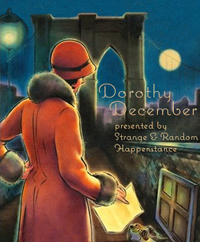

 Even if you weren't prescribed a rest cure for your postpartum depression so you can get back to your wifely duties that have nothing to do with the house when you have a spinster sister-in-law and everything to do with opening your legs, six weeks in the Bertha Mason suite with bars on the windows and a bed clamped to the floor would drive you round the bend. And that is exactly what happens here. The Yellow Wallpaper was written by Charlotte Perkins Gilman in 1892 and strongly portrays what it is to be a woman, especially a woman under the "care" of her husband. Who happens to be a doctor. And if you're a woman you know exactly how inept doctors are when it comes to women's health, more so during the Victorian era. This adaptation is Henry James meets Alice's Adventures in Wonderland with some Shirley Jackson and Angela Carter on the side. And yes, I know that only one of those predates this story, but the other authors, in particular Jackson and Carter, can be seen to be profoundly influenced by Gilman so it makes sense that in adapting the earlier work the later would influence it. There's a definite ouroboros effect going on here. What I find most fascinating about this adaptation is that someone at the BBC obviously watched The Company of Wolves and followed it up with Dreamchild and went, OK, now this is what we want to do, but without any budget, anybody have any ideas? And someone went, well, have you read Charlotte Perkins Gilman's The Yellow Wallpaper? Woman menaced by wallpaper? I think we can manage that! They transplanted the story to England and created something that really needs to be seen to be believed. I mean, more than anything it felt like an episode of A Ghost Story for Christmas. Consummate British actors in a creepy house with an ambiguous ending? Yes, very much A Ghost Story for Christmas. But sadly not one of the stellar ones, more like the ones that got the series cancelled in the late seventies. There were parts where I felt "The Ice House" was being channeled. Especially when the husband was going on about pollination. At least there weren't any plants making oddly detailed holes in widows. Overall I felt like it skipped a step in the telling of this tale. The wife has an active imagination and left to her own devices and the company of only the wallpaper she cracks. But it didn't feel gradual, it felt like instantaneous insanity. Like, the visions she was experiencing, the pent-up energy, just exploded from overstimulation. I think this needed to be longer, expanded, so that her break with reality is earned. Though where this adaptation was really let down was in the special effects. I really don't think there was any way to save this show once she's making out with her doppelganger that has emerged from the wallpaper. OK, it's more of an embrace, but it's still weird. It's not the imagery, it's the eighties music video bad special effects that ruins it. Earlier there had been a terrifying reveal of eyes in the wallpaper. Because they are a practical effect they still shock. Over time practical effects will weather technology changes more than any "special effects" of the day. So yes, this does have merit, but it is also sadly very dated. Though not in regard to women's rights.
 The Turn of the Key by Ruth Ware
 After seeing the amazing interpretation of Shirley Jackson's The Haunting of Hill House that Mike Flanagan pulled off I was beyond excited for The Haunting of Bly Manor. And this was only approximately 79% to do with Rahul Kohli being cast. OK, it was probably closer to 100% because I am not a fan of The Turn of the Screw like I am with The Haunting of Hill House, but that's why this adaptation is so perfect, it made me like The Turn of the Screw and the other stories by Henry James that were incorporated. This miniseries turned a bleak tale of possible madness into a love story. And not just a single love story either! There are many couples to ship here. In fact this show might have healed and broken my heart simultaneously. If someone were to say to me "it's you, it's me, it's us" I would probably break down sobbing right this second. Yet this phrase which comes to mean so much about the power of love started out menacing. That's what's amazing here. The way the story unfolds. What was one thing becomes another and another and everything you think you knew keeps changing. This is a miniseries that could easily be rewatched the second you finish it just to fill in the gaps you might have missed. The one thing I found odd when reading reviews of what people have dubbed the second season of Mike Flanagan's "Haunting" series is that so many people took exception to the penultimate episode shot in black and white, "The Romance of Certain Old Clothes." This episode set centuries earlier explains how Bly Manor came to be the haunted place it is with Mike Flanagan's wife, Kate Siegel, Theo from The Haunting of Hill House, taking center stage. This episode is lyrical and perfectly paced. There are phrases that come back to me again and again while thinking about this show. "She would sleep, she would wake, she would walk." And while yes, this could be a way to explain all our lives during quarantine and it's repetitive nature, it also taps into the broken record aspect of a haunting. How ghosts are just reliving the same moments over and over again which is why the penultimate episode is crucial! This show is time loops and the supernatural and true love all mashed up together and all I have to say is more!
 After the deathly dull adaptation of
  Years ago I went to the Paine Art Center and Gardens up in Oshkosh to see "Fashion in Film: Period Costumes for the Screen." I freely admit I went for one reason and one reason only, and that was to see the costumes from the Colin Firth adaptation of Pride and Prejudice. There were lovely surprises too, an amazing costume Cate Blanchett wore in Elizabeth that had a panel that was actually from the time of Queen Elizabeth I, the ballgown from Ever After, and on and on, I spent hours looking and looking again. They even had all the costumes for the 2000 Kate Beckinsale/Uma Thurman production of The Golden Bowl, AKA one of those movies I keep meaning to get to, especially as it was directed by James Ivory of Merchant and Ivory. But then I heard about the old Masterpiece Theatre adaptation, well, I figured six episodes had to delve deeper than a two hour movie! Plus it starred Gayle Hunnicutt, loved by me for being James Beaumont's mother on Dallas and the final girl in The Legend of Hell House. Another delightful surprise was Daniel Massey, brother of the amazing Anna, as Prince Amerigo, who also had a complicated love life just like the Prince, leaving his wife Penelope Wilton for Penelope's sister Lindy! So what of this Henry James story about a father and a daughter who end up caught up in the affairs of ex-lovers... I really don't know what to say. I watched six episodes and nothing happened. I'm not even sure if there was an affair. Was the dutiful daughter Maggie's husband having an affair with her father's wife Charlotte? Meh, can't be certain, and I couldn't even really bring myself to care. There is just so much verbiage and talking around the issue that nothing ever really gets said. And as for the narrator? Well, if he were still alive he would make a killing doing those little audios that help put people to sleep. I literally zoned out for whole chunks of time. I would have said I fell asleep without knowing it, but I was on a treadmill and seeing as I didn't end up in a pile on the floor I must have remained upright. I will say that the sets and costumes kept me entertained. And looking back on that long ago trip to Oshkosh, the large living room that they placed the costumes for the movie in looked very much like it could have been a room in Mr. Verver's house.
 A Backward Glance: An Autobiography by Edith Wharton
 The Woman in Black by Susan Hill
 Frankenstein by Mary Shelley
 Mrs. God by Peter Straub
 The Turn of the Screw by Henry James
 Frankenstein by Mary Shelley
 One Fifth Avenue by Candace Bushnell


