
















Book Review - R.F. Kuang's Babel
 Babel by R.F. Kuang
Published by: Harper Voyager
Publication Date: August 23rd, 2022
Format: Hardcover, 560 Pages
Rating: ★★
To Buy
Magic exists. It exists in the words etched into bars of silver and the latitude in the interpretation of a single word from one language to another. But you are always giving something up in the conversion and it's the bar that manifests what's lost in translation into being. At the Royal Institute of Translation in Oxford, commonly called Babel, they make magic with words and hoard the knowledge. The bars are used for anything from curing disease to holding up a bridge to making your carriage have a less bumpy ride. The newest most powerful bars rely on Chinese, Sanskrit, and Arabic. The romance languages have become overused and English, being such a magpie language, means that words from whole dialects soon lose their power. Therefore if you know an obscure language, you are a valuable commodity. Because the thirst for, the need for this knowledge of rare languages, is unending. Which makes the tower the epicenter of colonialism. It feeds the need for expansion because language is an infinite resource so long as you can find and control it. But silver is not. Which means that in order to keep your carriage comfy war is necessary. Because the Royal Institute of Translation doesn't help the poor, the downtrodden, those societies where they spirited their scholars from, they help the rich, the professors lining their pockets, and, above all, the Crown. Robin Swift is soon going to learn all this in his short life. Professor Lovell rescues Robin from a cholera outbreak in Canton and brings him to his home in England. There he trains Robin in all the rudiments necessary for entry into Babel. When Robin achieves this goal he thinks that his life will be perfect. When he arrives in Oxford and meets Ramy, a member of his cohort from Calcutta, the two of them spend a few blissful days until the other students arrive and they realize they are men at Oxford not Oxford men. Which makes them stick to the tower and their work and the other members of their cohort, Victoire, from Haiti, and Letty, a true Brit. They are united because of Babel and their precarious position that makes them simultaneously bold and terrified. Though the more they learn of the outside world, and the shadowy Hermes Society which Robin's brother Griffin is a part of after his ouster from Babel, life becomes about a moral compromise to survive. But translation itself is a betrayal, you are doing violence to the original by warping if for foreign ears. When what you do on a daily basis is a violent act, how long does it take until you make a real stand?
The Princess Bride. It's a classic. It's perfection. Which is why so many people try to lure you in by saying something is "like" it. It took thirty-seven years for me to agree with critics that something was worthy of that honor. The recipient is My Lady Jane which was cancelled prematurely. I'm still bitter. My love for Jonathan Strange and Mr. Norrell is close to if not equal to The Princess Bride which is why, again, when someone says "this" is a worthy successor, I look at them with confusion in my eyes, because they keep saying that word and I do not think it means what they think it means. Babel in particular should not be mentioned in the same breath as Jonathan Strange and Mr. Norrell. Just because it's set around the same time period in Regency England and there's magic doesn't make it a worthy successor. Yes, it can be in the conversation if that conversation is how to trick people into reading a book where each chapter felt longer than the whole book. And this isn't figurative, it's literal. My reading speed is about a book a week, Babel took me eighteen days to read. And it's not that it's badly written, it's just unedited spewing forth of irrelevancies. This book isn't what this book was billed as. It's not about magic and the marvels of the written language and how words grow and change and evolve and how languages have to be lived to be understood and Oxford is the opposite of real life, it's a book about colonialism and the stupidest stand in fictional history. Babel, or the Necessity of Violence is supposedly an "Arcane History" and it reads, to that extent, like a history book. A very boring history book about what you might call the translators' war. Because Robin goes nuclear and destroys Babel. Oops, sorry, spoilers, but I did warn you about the stupidest stand in fictional history and that's it. So we're supposed to be intrigued by these scholars that are able to move past the realm of ideas into the realm of action, something Oxford was wholly unprepared for? I'm sorry, but I literally did not care. Robin and his stand? Sure, it ground things to a halt for a few days and caused probably more harm than good but I just didn't care. I just couldn't get behind these characters plodding about and being too dumb to live. They literally didn't even know how to dispose of a body. Seriously!?! They were on a boat. But overall this book just left a bad taste in my mouth because it felt like it was preaching that violence is the answer and yet the violence answered nothing. Especially not why this book was written. Unless it was to show that higher education is a scam, because, yeah, it did show that.
 Dating and Dragons by Kristy Boyce
 The Dilemma of a Dead Scholar by Patricia Rice
 The Losting Fountain by Lora Senf
 Rowankind by Jacey Bedford
 Last year I read a lot of Regency themed books for my
  Nine Liars by Maureen Johnson
 The Lost Witch by Paige Crutcher
 The Marriage List by Ella Quinn
 Recipe for Treason by Andrea Penrose
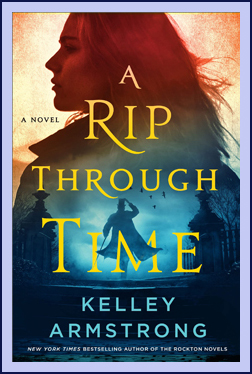 A Rip Through Time by Kelley Armstrong
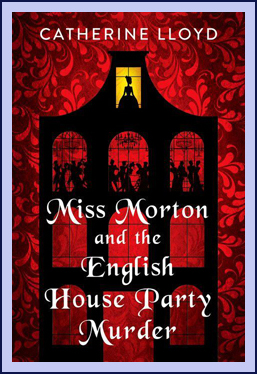 Miss Morton and the English House Party by Catherine Lloyd
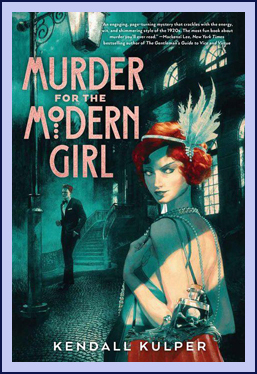 Murder for the Modern Girl by Kendall Kulper
 The French for Murder by Verity Bright
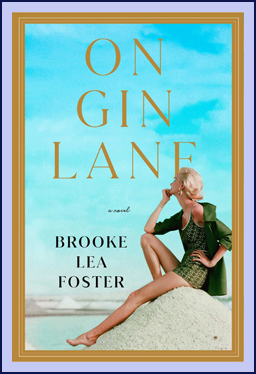 On Gin Lane by Brooke Lea Foster
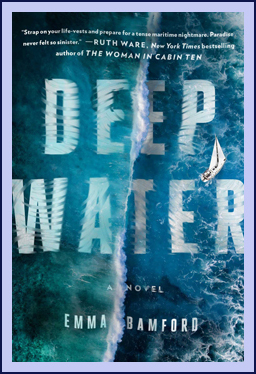 Deep Water by Emma Bamford
 The Viscount Who Loved Me by Julia Quinn
 Nine Rules to Break When Romancing a Rake by Sarah MacLean
 When season one of Bridgerton dropped on Christmas I was in the middle of specially curated holiday viewing, mainly classic episodes of The Vicar of Dibley and Emmet Otter's Jug-Band Christmas. And with how viewing has become very much about the binge because I wasn't in on that initial weekend I felt like I'd missed the Bridgerton boat. This of course gave me time to read the books, which had been my plan all along, though not necessarily six months after the show had first aired. This also means that I was slightly more pedantic about the adaptation than I might otherwise have been. Because this isn't how we've seen Regency England before. This is Austenland meets the technicolor fantasia of Mary Poppins on crack. Bridgerton is very colorful and fantastic and leans heavily into the fairy tale aspect of it all, you will literally be wondering if there was a single fake flower left in all of England once production commenced. Yet there are still very real issues being dealt with, and thankfully in a natural, not ham-fisted way. I can't help by still cringe how the 2017 adaptation of Howards End tried to shoehorn in diversity. Here it is natural. People of every race and color exist because that was how it was! And yes, Queen Charlotte, while slaying every scene she is in, is historically believed to be biracial. So yes, they got so many things right, and so much of the casting is spot on, that when it's off, well, it stands out all the more, hello thirty-one year old Eloise. Yeah, I'm not buying you're seventeen and neither is anyone else. Especially with a voice that sounds like you smoke three packs of cigarettes a day. I'm not saying I didn't enjoy Eloise, I will only buy her character if we actually do the eleven year time jump. Most of my other problems are very nitpicky. I don't like how they plotted the ending of the story of Daphne and Simon. Here's the thing. It worked in the book. It really really worked. Authors spend so much time figuring it out it has to be annoying when an adaption comes along and they're like, oh, we have a better idea. Because it is so rarely better. Here the lack of communication between the newlyweds strained credulity. So I'm pretending it happened like it did in the book. And as for how they handled Whistledown... firstly, I don't think she would be so easily tricked into a trap, but more importantly, I don't think Julie Andrews worked. Yes, hiring Mary Poppins herself was a coup, but Whistledown is Regency Gossip Girl, and you need to have more punch and authority. Oh, and don't get me started on the music, which often drowned out the narration! Stupid "modern" music.
 I don't think it's just me, but I feel like there has been a plethora of book adaptations over the last year. Not only have I not gotten around to watching them all, but of the ones I've seen I feel like I'm barely touching the tip of the iceberg! I want to binge them all! Bridgerton, The Stand, Clarice, Resident Alien, All Creatures Great and Small, and on and on. Because if there's one thing Covid has done it's to let us fully embrace the binge on a level heretofore never seen! What's Bridgerton or The Queen's Gambit in a day? That's nothing compared to not leaving your couch for months on end! In fact it gives you something to do while on your couch! But what I'm amazed at is that we're constantly getting new shows, how is it that the film industry has kind of wobbled but television and streaming have continued on so robustly? Oh, does it really matter? Not when so many beloved books were finally adapted this year. Terry Pratchett? Yes please! Alan Tudyk is a what? I'm overjoyed! Regency England is cool again? What, is this 1996 again? Because at this moment I think I'd be OK with that. So here's to all the shows I've watched, I'm watching, and I plan to watch, all emanating from my favorite medium, books! Because I want to make it abundantly clear, an adaptation doesn't legitimize a book, a book is a perfect finished product in it's own right. An adaptation just gives me joy at seeing what I envisioned on screen. And even if they get it horribly wrong... well, they tried right? Plus, I do kind of like complaining when things go wrong...
 I am delighted that this gem of a show is available on DVD, albeit as an extra on the DVD release of the far inferior The Queen's Sister, which ironically aired on a rival station to PBS, BBC America. This production in just an hour gives an insightful and oftentimes hilarious look into the marriage of George IV, AKA Prinny, and Caroline of Brunswick. To say theirs was not a love match would be understating it. But what is amazing about this little glimpse into royal life during the Regency Era is that all the vitriol spewed back and forth showing them as nothing more than children was taken from what they actually said. They seriously said this!?! I'm horrified to think of what Prinny on Twitter would be like. Note to self, I want to see the Prince Regent on Twitter as a parody account. Seriously, why isn't this a thing!?! All I had remembered of A Royal Scandal was the interesting framing device of a narrator and the brilliance of Richard E. Grant as Prinny and Susan Lynch as Caroline evilly glaring at each other while on a very nice black and white tiled floor. Obviously hinting at the combative chess-like nature of their marriage. So for your edification and mine I rewatched it. I was blown away by who they got as the supporting cast! And I didn't even remember there was a supporting cast! Michael Kitchen, Frances Barber, Denis Lawson, Oliver Ford Davies, and Ian Freakin' Richardson as the pitch perfect narrator! This cast was more than one could hope for, how did I forget them!?! The subtlety of Michael Kitchen facing the opprobrium of Prinny's rage and just replying that he was sent to set up a marriage not weigh in on the suitability of the match. Perfection! Oh, and my favorite scene by far is when Caroline arrives in England and is greeted by her husband's mistress, Lady Jersey! There's a real repressed British cat fight about Caroline's dress and in particular her hat. Caroline wins on the point of her hat! She LOVES that hat! It has been said of Lady Jersey that she possessed "a heady mix of charm, beauty, and sarcasm" and I really can't think of a better way to describe this little glimpse at royal life, come for the charming sarcasm!


