

Showing posts with label Margaret Dashwood and the Enchanted Atlas. Show all posts

Friday, May 5, 2017

Movie Review - Sense and Sensibility

Sense and Sensibility
Based on the book by Jane Austen
Release Date: December 13th, 1995
Starring: Tom Wilkinson, James Fleet, Harriet Walter, Kate Winslet, Emma Thompson, Emilie François, Gemma Jones, Hugh Grant, Robert Hardy, Elizabeth Spriggs, Alan Rickman, Greg Wise, Imelda Staunton, Hugh Laurie, Imogen Stubbs, Allan Mitchell, Richard Lumsden, Lone Vidahl, and Oliver Ford Davies
Rating: ★★★★
To Buy

John Dashwood is implored by his father while dying to care for his stepmother and three stepsisters due to inheritance law precluding them from his estate. John is quickly talked out of this necessary kindness by his unscrupulous wife Fanny who quickly descends on the mourning Dashwood women to take claim of her new home and count the silver. Elinor is trying to be practical while her younger sister Marianne is beside herself with grief while their youngest sister Margaret has opted to just hide. Their mother would quickly remove them from this toxic environment if it wasn't for the arrival of Fanny's brother Edward who helps with Margaret and forms an instant attachment to Elinor. Fanny abhors this connection and makes it clear to Mrs. Dashwood that her whole family has specific plans for dear Edward and that an unadvantageous match would lead to his being cut out of any of his prospects. Mrs. Dashwood hastily accepts the kind offer of her cousin, Sir John Middleton, to come and live at a cottage on his estate in Devonshire. There the four women are soon surrounded by a society that is very interested in them, especially a Colonel Brandon who only has eyes for Marianne. Sir John's mother-in-law makes it her sacred duty to tease the young girls and to find them advantageous matches. But both Elinor's and Marianne's hearts are irrevocably gone long before Mrs. Jennings has any say. Elinor still pines for Edward and Marianne, Marianne has met the man of her dreams in Willoughby, a romantic and lover of Shakespearean sonnets like herself. But the course of true love never runs smooth. Willoughby leaves Devonshire for London and Edward is secretly engaged to a young cousin of Mrs. Jennings, Lucy, whom his family will surely object to more than Elinor. Everything comes to a head on a trip to London. Will their hearts ever be mended or are they forever to be bruised and battered and broken?

My mom likes to say that when we went to see Sense and Sensibility in the movie theater there wasn't a dry eye in the house. While I do remember moderate sniffles, it can't compare to the copious crowd weeping of Hamilton which I recently experienced and freely admit I was a large contributor of. Of all Emma Thompson's films for some reason Sense and Sensibility is the one I return to the least, well aside from Love Actually, but we shall not go into my hatred of that film here despite how many cast similarities there are. I've never really wondered about this until I rewatched Sense and Sensibility after rereading the book and I think I've put my finger on it. While there's an intimacy to the books of Austen they are no means small, they encompass the whole of human emotion and what it is to be a woman. Yet with the way this adaptation was filmed the story feels small, almost trifling. The time constrictions coupled with what this necessitates makes the story of Elinor and Marianne somehow less. What struck me is having not seen it in a few years it's weird because despite the cast it feels like a low budget costume drama not a film up for copious academy awards. But then again on the heels of this production the Pride and Prejudice miniseries staring Colin Firth issued in a new era for the costume drama. They have exploded on television in the last twenty plus years and with advancements in cinematography and locations and costumes, this just feels limited and at times claustrophobic. There are too many close-ups and no sweeping vistas that people, like me, who regularly watch shows like Poldark expect. Instead we're just stuck with a lot of sheep.

When I was rereading the book, as I mentioned in that review, I was struck by how Colonel Brandon, while considered old, is actually younger than me. So when approaching the film again after so many years I couldn't help but think, was Emma Thompson perhaps too old to play the role of Elinor being in fact the "old" age of Colonel Brandon in real life? Did she in fact need a flannel waistcoat herself? Or flannel underthings? But the truth is I should never doubt Emma Thompson. NEVER. Having wrote the screenplay she knew exactly what to bring and when and you never once think of her age, which astounded me as she was working against my prejudice. In fact with her performance there are just rankings of what was best. What I most loved wasn't so much in her reserve and in being stalwart, what was amazing is at which points she decided to break that reserve and tap into her reservoir of emotion. Because in the book there are key scenes where Elinor loses her calm and has to regain it, times when I'm not 100% sure work for her character, therefore the changes that Thompson instigated in this instance were perfect. Elinor breaks only twice, once when she's at Marianne's sickbed and once again when she realizes that Edward is free to declare his feelings for her. Two perfect moments, because these are the two people in the world she can't life without. And as for when Edward declares himself? Just watch how Thompson turns her hysterics into tears of joy and you will be in no doubt as to why she was nominated as "Best Actress" in 1996 for this movie. Though I would request she NEVER wears that checked dress again, it looks like the bedsheets from Steve Harrington's bed on Stranger Things.

Though there are still weird omissions and rejiggering that Thompson did in her adaptation that I'm not quite sure of. Yes, there's changes necessitated by time and the narrative being streamlined to fit into a little over two hours of screen time. So therefore I can forgive Lady Middleton being sent swiftly to her grave and Lucy using the kindness of Mrs. Jennings to expedite her own journey to London, though it's entirely straining credulity to believe that Elinor and Lucy would discuss Edward on that carriage ride! Mrs. Jennings has a nose for gossip! Edward not visiting Barton until the end makes a little less since, but still works, but then there's the changes that didn't leave me scratching my head by yelling on the TV that the change made NO SENSE! My biggest problem was of Lucy not having a sister. This is a BIG hurdle. Why? Because Lucy is cunning. The ONLY reason in the book that her secret engagement to Edward is revealed is because her sister, thinking that she's fully one over the whole Ferrars family, blurts out at breakfast that Lucy and Edward are engaged. Both the film's version and the book's version have an equally dramatic reaction on Fanny's part. But there is no way that Lucy would have voluntarily told Fanny, no matter the encouragement, if Lucy wasn't 100% sure of everything. This utterly changes Lucy's character and you can't quite rectify who she is in the movie with the remnants of that cunning bitch from the book. Why would she manipulate Elinor so? Why would she swap Edward for Robert? She's made too nice. The only way she works as a character is by having her sister as the other half, much like Elinor needs Marianne!

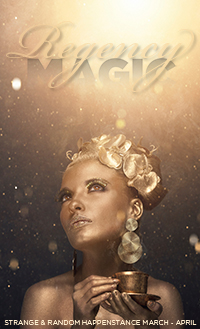
Yet I can not be so cruel as to say that all the changes were negative. The way they were able to subtly show the Dashwood's penury through them not being able to purchase new clothes for mourning or always lamenting the lack of sugar and beef perfectly sums up their plight to a modern audience, even if the savvy reader will notice that Thompson actually halved their income. But where Thompson's adaptation soars is in actually giving Margaret purpose. Margaret as the youngest Dashwood is used to affect three times in the novel, once to blurt out to Mrs. Jennings about Elinor's love of Edward, once to seek help when Marianne falls and Willoughby rescues her, and finally to see Willoughby ask for a lock of Marianne's hair. Other than these scenes she is a nonentity, she doesn't matter, and in fact once her elder sisters traipse off to London she is maybe mentioned once or twice more. Whereas Thompson makes her a fully fledged character who loves the idea of travel and pours over an atlas for hours. She is an independent young woman of spirit who wants to be a pirate. She encompasses the future of what women can be within this limited time period. In fact the expansion of Margaret's character has so inspired fans that other writers, like Beth Deitchman in her lovely Regency Magic book Margaret Dashwood and the Enchanted Atlas, has taken Thompson's infusion of Margaret with an actual personality as a jumping off point for her reinterpretation of Austen's world. What's more is that Margaret's character helps to build up the character of Edward, who, let's face it, is a little lacking as Austen wrote him. With Edward taking an interest in Margaret we can see why Elinor falls for him with all his good and laudable qualities.

But the majority of Edward's faults are fixed in the casting of Hugh Grant. In fact, the combined casting of Hugh Grant and Alan Rickman make up for any defects these characters had as they were originally written. Because really, we've forgiven Hugh Grant for far more than lack of character over the years with him just breaking out that trademark sheepish grin while that floppy lock of hair falls over his eyes. The lack of depth, the engagement to Lucy, the reticence, are all washed away because seriously people, that grin, that stammer, it's like this character was written for Hugh to bring to life because he and the character become one. And as for all those fans out there who repeatedly say that yes the Colonel is a good man but how could Marianne ever love again after Willoughby? Firstly, Willoughby is scum, he didn't even take Marianne secretly home in this version! But more that that, who wouldn't melt to have Alan Rickman look at them like that? When he first sees Marianne playing the piano, thankfully sweetly if artlessly actually sung by Kate Winslet, you are just WAITING for the two of them to get together. But the nail in the coffin of Rickman's casting? His melodious voice. Seriously, I don't think there is anyone who has that kind of liquid voice that can be seductive but also menacing when need be. How I wish Thompson had included the duel just to hear him call Willoughby out! But the reason I bring up his voice is that Marianne is very much into the spirit, the animation one brings when reading aloud, and Edward is found very lacking. How could Rickman EVER be found lacking on this score? It was a foregone conclusion, not just that he'd win the girl, but that Thompson would throw in a scene of him reading to his beloved Marianne. So while there are some things I scratch my head about I should just sit back and listen to Alan Rickman's voice.

Friday, January 20, 2017

Book Review 2016 #3 - Beth Deitchman's Margaret Dashwood and the Enchanted Atlas

Margaret Dashwood and the Enchanted Atlas (Regency Magic Book 2) by Beth Deitchman
Published by: Luminous Creatures Press
Publication Date: Ovtober 19th, 2014
Format: Paperback, 302 Pages
Rating: ★★★★
To Buy

Margaret Dashwood hasn't been back to Norland Park since her family was unceremoniously shown the door by her sister-in-law Fanny after their beloved father died. Margaret and her father had a rather large secret that they kept from the rest of the family. They were both magically inclined. Her father secretly taught her spells and when she came of age she discovered that her father had left her a legacy in his study at Norland. Hence the visit. It might be awkward, it might even be painful, seeing her beloved Norland irreparably changed by Fanny's atrocious taste, but it's the only way to secure her legacy, a legacy that is far greater than she ever imagined. The first night she sneaks into her father's study she can't believe all the secret hidey-holes and realizes it will easily take every night of her visit to secure all the hidden treasures. Though one of the treasures is greater than all the rest. She finds an enchanted atlas that her father made for her. He knew how much she loved this book and longed to travel, so he made this very powerful artifact to fulfill his youngest daughters dreams. She is touched beyond measure to learn that she mattered this much to her father. But more importantly, through his correspondence she now has the names of fellow magical practitioners whom she can contact.

Arriving in London Margaret soon receives a response to a letter she sent to one of her father's friends, a Mrs. Bristlethwaite. Though Margaret has longed for magical company, it's her other correspondent who she's more excited about. While at Norland she met a Mr. Ellsworth, an eligible young man who she instantly connected with. He was also heading to London and asked if he could keep up the connection, something Margaret was very much wanting to do. But soon romance takes a back seat to magic when Mrs. Bristlethwaite sees Margaret's atlas and shows her the power it contains and how it can transport them all over the world. The book even contains lists of famous magical artifacts you can visit. Margaret longs to immerse herself in magic, but living with her family who are unaware of her abilities is a bit risky. Luckily a compromise is reached. While Mrs. Dashwood stays in town to look after Marianne during her confinement Margaret will head home to Devonshire with Mrs. Bristlethwaite and be a guest at Barbary Hall. At Barbary Hall Margaret is allowed to revel in her abilities and meet the local coven. But soon the coven is in danger. Magical artifacts are disappearing from all over the world and Margaret and her atlas are uniquely placed to put an end to this dastardly sorcerer who is up to no good. But will a revelation destroy her chances of happiness?

While most people view Pride and Prejudice as the definitive book by Austen, it isn't necessarily mine. Yes, I adore it more than words can say, but to me Austen is Sense and Sensibility. I still remember how it all happened, my introduction to Austen. I had a gaggle of friends senior year in high school obsessed with the Pride and Prejudice miniseries. They would watch the Netherfield Ball scene over and over while giggling. Now I had always viewed these friends as serious scholarly types, we ran a literary magazine and the "free thought" club, yet here was something that made them giddy little schoolgirls. They talked endlessly about spending nights re-reading Pride and Prejudice while taking a bath instead of doing homework. Needless to say, my interest was piqued. After I graduated I bought myself this big omnibus with the tinniest type possible from B. Dalton's with Pride and Prejudice, Sense and Sensibility, and Emma promising myself to spend the summer reading all of Austen. I remember sitting on my bed in my room crying over the heartbreaks of Elinor and Marianne's story. My Austen obsession therefore began and ended with one book.

I think it was Oscar Wilde who said that reviews end up being more about the reviewer than what is being reviewed. I try not to do this too much, but this one time you will really have to indulge me. Because the truth of the matter is that reading Margaret Dashwood and the Enchanted Atlas recaptured for me that moment when I first discovered and fell in love with Austen. When Margaret and her mother returned to Norland Park for a visit I felt like I was there once again for the first time. Like getting to experience a first kiss all over again. People talk about books being time machines. And they are. But sometimes it's not just world history but personal history that you discover between the covers. I relived a moment that I have tried to recapture before and have failed to. This second book in Beth Deitchman's series seems to capture more of the spirit of Austen's own writing. While I adored Mary Bennet and the Bloomsbury Coven, there's something about having a gaggle of interesting and unique characters thrown together in the most haphazard of circumstances that screams Austen.

But it isn't the other characters that anchor this book, it's Margaret. If I'm honest with myself Emma Thompson had more to do with my picking up Jane Austen than anyone else. Because when I was in high school I wasn't so much of a book nerd as a movie nerd; and I always have to read the book before watching the adaptation, that is an inviolable law. So yeah, book nerd in the making I guess. As fate would have it that Emma Thompson adaptation of Sense and Sensibility figures quite prominently in Margaret Dashwood and the Enchanted Atlas in an interesting way. The truth is Margaret Dashwood is a very interesting character in that she actually doesn't really have any character. She is a blank. I like how on the Wikipedia page for Sense and Sensibility that they refer to one of John Middleton's sons as just "nameless." She is barely above this, being basically a cypher. To Emma Thompson this wouldn't fly. So she gave Margaret a personality in her adaptation. Margaret has a love of travel and wants to be a pirate and has a great love of a large atlas that Hugh Grant later gifts to her on his visit to Barton Cottage. It's not just in writing this book that Beth Deitchman has inexorably entwined Margaret with this atlas, she is just tapping into what all true fans of Austen know. With just a few lines Emma Thompson was forever to change the image of that little girl that Janeites the world over then embraced.

Emma Thompson gave Margaret a personality trait, imbuing her with something we can relate to and Beth Deitchman has expanded on that framework. Being the youngest of two very different siblings, I was interested to see who she would take after, the romantic Marianne, or the pragmatic Elinor. While Margaret does have the drive and levelheadedness of Elinor when it comes to studying her magic, I would say overall that she takes more after Marianne. It's not JUST the love of poetry and her losing her heart so quickly to Mr. Ellsworth, or even the pining for him hour after hour, it's the way she does her spells. This is a purely brilliant idea on the part of Beth Deitchman. Margaret does all her spells in French. If you remember what was previously said in Mary Bennet and the Bloomsbury Coven, simplicity and intent are the most important aspects of getting a spell to work. Therefore Margaret translating her spells into French, no matter how perfect her pronunciation, is a poetic affectation. She thinks they sound more magical. I literally snorted at this. It's just SUCH a Marianne thing to say! While yes, I can agree with some of Margaret's theories as to magic and poetry, I think her revelation at the end to Mrs. Bristlethwaite is perfect. Oh, and totally Elinor.

A big difference between Mary Bennet and the Bloomsbury Coven and Margaret Dashwood and the Enchanted Atlas is that in the prior we followed a novice, someone just introduced to the world of magic, while in the later we have a heroine who has been practicing magic under the guidance of her father all her life. While both heroines encounter magical communities on their adventures, Mary still stands separate, while Margaret becomes enmeshed in hers. Both are looking for their place in the world, but Margaret very much wants her place to include those like her, those who can help her on her journey. As I mentioned earlier, it's these unique and interesting characters that help make this book more Austen. The Devonshire Coven is just chock-a-block with characters I fell in love with. From the forthright and indomitable Mrs. Bristlethwaite, to the ever hungry Mr. James, to the kind and gentle Mr. Barrington, each one of these characters is so well rounded, so memorable, you can easily see them finding a permanent place in your heart, just like Mrs. Jennings somehow contrived to do. In fact the only real fault in this book is that it has now come to an end. I could literally spend hours just sitting with these characters in Barbary Hall sipping tea and playing cards while a fire glowed in the hearth.

Wednesday, April 6, 2016

Book Review - Beth Deitchman's Margaret Dashwood and the Enchanted Atlas

Margaret Dashwood and the Enchanted Atlas (Regency Magic Book 2) by Beth Deitchman
Published by: Luminous Creatures Press
Publication Date: Ovtober 19th, 2014
Format: Paperback, 302 Pages
Rating: ★★★★
To Buy

Margaret Dashwood hasn't been back to Norland Park since her family was unceremoniously shown the door by her sister-in-law Fanny after their beloved father died. Margaret and her father had a rather large secret that they kept from the rest of the family. They were both magically inclined. Her father secretly taught her spells and when she came of age she discovered that her father had left her a legacy in his study at Norland. Hence the visit. It might be awkward, it might even be painful, seeing her beloved Norland irreparably changed by Fanny's atrocious taste, but it's the only way to secure her legacy, a legacy that is far greater than she ever imagined. The first night she sneaks into her father's study she can't believe all the secret hidey-holes and realizes it will easily take every night of her visit to secure all the hidden treasures. Though one of the treasures is greater than all the rest. She finds an enchanted atlas that her father made for her. He knew how much she loved this book and longed to travel, so he made this very powerful artifact to fulfill his youngest daughters dreams. She is touched beyond measure to learn that she mattered this much to her father. But more importantly, through his correspondence she now has the names of fellow magical practitioners whom she can contact.

Arriving in London Margaret soon receives a response to a letter she sent to one of her father's friends, a Mrs. Bristlethwaite. Though Margaret has longed for magical company, it's her other correspondent who she's more excited about. While at Norland she met a Mr. Ellsworth, an eligible young man who she instantly connected with. He was also heading to London and asked if he could keep up the connection, something Margaret was very much wanting to do. But soon romance takes a back seat to magic when Mrs. Bristlethwaite sees Margaret's atlas and shows her the power it contains and how it can transport them all over the world. The book even contains lists of famous magical artifacts you can visit. Margaret longs to immerse herself in magic, but living with her family who are unaware of her abilities is a bit risky. Luckily a compromise is reached. While Mrs. Dashwood stays in town to look after Marianne during her confinement Margaret will head home to Devonshire with Mrs. Bristlethwaite and be a guest at Barbary Hall. At Barbary Hall Margaret is allowed to revel in her abilities and meet the local coven. But soon the coven is in danger. Magical artifacts are disappearing from all over the world and Margaret and her atlas are uniquely placed to put an end to this dastardly sorcerer who is up to no good. But will a revelation destroy her chances of happiness?

While most people view Pride and Prejudice as the definitive book by Austen, it isn't necessarily mine. Yes, I adore it more than words can say, but to me Austen is Sense and Sensibility. I still remember how it all happened, my introduction to Austen. I had a gaggle of friends senior year in high school obsessed with the Pride and Prejudice miniseries. They would watch the Netherfield Ball scene over and over while giggling. Now I had always viewed these friends as serious scholarly types, we ran a literary magazine and the "free thought" club, yet here was something that made them giddy little schoolgirls. They talked endlessly about spending nights re-reading Pride and Prejudice while taking a bath instead of doing homework. Needless to say, my interest was piqued. After I graduated I bought myself this big omnibus with the tinniest type possible from B. Dalton's with Pride and Prejudice, Sense and Sensibility, and Emma promising myself to spend the summer reading all of Austen. I remember sitting on my bed in my room crying over the heartbreaks of Elinor and Marianne's story. My Austen obsession therefore began and ended with one book.

I think it was Oscar Wilde who said that reviews end up being more about the reviewer than what is being reviewed. I try not to do this too much, but this one time you will really have to indulge me. Because the truth of the matter is that reading Margaret Dashwood and the Enchanted Atlas recaptured for me that moment when I first discovered and fell in love with Austen. When Margaret and her mother returned to Norland Park for a visit I felt like I was there once again for the first time. Like getting to experience a first kiss all over again. People talk about books being time machines. And they are. But sometimes it's not just world history but personal history that you discover between the covers. I relived a moment that I have tried to recapture before and have failed to. This second book in Beth Deitchman's series seems to capture more of the spirit of Austen's own writing. While I adored Mary Bennet and the Bloomsbury Coven, there's something about having a gaggle of interesting and unique characters thrown together in the most haphazard of circumstances that screams Austen.

But it isn't the other characters that anchor this book, it's Margaret. If I'm honest with myself Emma Thompson had more to do with my picking up Jane Austen than anyone else. Because when I was in high school I wasn't so much of a book nerd as a movie nerd; and I always have to read the book before watching the adaptation, that is an inviolable law. So yeah, book nerd in the making I guess. As fate would have it that Emma Thompson adaptation of Sense and Sensibility figures quite prominently in Margaret Dashwood and the Enchanted Atlas in an interesting way. The truth is Margaret Dashwood is a very interesting character in that she actually doesn't really have any character. She is a blank. I like how on the Wikipedia page for Sense and Sensibility that they refer to one of John Middleton's sons as just "nameless." She is barely above this, being basically a cypher. To Emma Thompson this wouldn't fly. So she gave Margaret a personality in her adaptation. Margaret has a love of travel and wants to be a pirate and has a great love of a large atlas that Hugh Grant later gifts to her on his visit to Barton Cottage. It's not just in writing this book that Beth Deitchman has inexorably entwined Margaret with this atlas, she is just tapping into what all true fans of Austen know. With just a few lines Emma Thompson was forever to change the image of that little girl that Janeites the world over then embraced.

Emma Thompson gave Margaret a personality trait, imbuing her with something we can relate to and Beth Deitchman has expanded on that framework. Being the youngest of two very different siblings, I was interested to see who she would take after, the romantic Marianne, or the pragmatic Elinor. While Margaret does have the drive and levelheadedness of Elinor when it comes to studying her magic, I would say overall that she takes more after Marianne. It's not JUST the love of poetry and her losing her heart so quickly to Mr. Ellsworth, or even the pining for him hour after hour, it's the way she does her spells. This is a purely brilliant idea on the part of Beth Deitchman. Margaret does all her spells in French. If you remember what was previously said in Mary Bennet and the Bloomsbury Coven, simplicity and intent are the most important aspects of getting a spell to work. Therefore Margaret translating her spells into French, no matter how perfect her pronunciation, is a poetic affectation. She thinks they sound more magical. I literally snorted at this. It's just SUCH a Marianne thing to say! While yes, I can agree with some of Margaret's theories as to magic and poetry, I think her revelation at the end to Mrs. Bristlethwaite is perfect. Oh, and totally Elinor.

A big difference between Mary Bennet and the Bloomsbury Coven and Margaret Dashwood and the Enchanted Atlas is that in the prior we followed a novice, someone just introduced to the world of magic, while in the later we have a heroine who has been practicing magic under the guidance of her father all her life. While both heroines encounter magical communities on their adventures, Mary still stands separate, while Margaret becomes enmeshed in hers. Both are looking for their place in the world, but Margaret very much wants her place to include those like her, those who can help her on her journey. As I mentioned earlier, it's these unique and interesting characters that help make this book more Austen. The Devonshire Coven is just chock-a-block with characters I fell in love with. From the forthright and indomitable Mrs. Bristlethwaite, to the ever hungry Mr. James, to the kind and gentle Mr. Barrington, each one of these characters is so well rounded, so memorable, you can easily see them finding a permanent place in your heart, just like Mrs. Jennings somehow contrived to do. In fact the only real fault in this book is that it has now come to an end. I could literally spend hours just sitting with these characters in Barbary Hall sipping tea and playing cards while a fire glowed in the hearth.

Wednesday, March 30, 2016

Beth Deitchman

Beth Deitchman wrote her first book in third grade, so you'd think she was always meant to be an author, yet she was diverted for some time by dreams of being a ballerina as well as the the manager of the Pittsburgh Pirates. She "entertained visions of wearing a black and yellow tutu with one black and one yellow pointe shoe while coaching." This dichotomy could be one of the reasons she was drawn to Jane Austen, heroines who embrace their girly side with balls and bonnets, yet have a will of steel underneath. Just think of Lizzy turning down Mr. Darcy and you know the will I'm talking about. Or even a ballerina dancing en pointe! Though I think we could also draw parallels to Buffy the Vampire Slayer, because Beth is a wannabe Slayer who is ALWAYS the first to like my odd musings from the Whedonverse on twitter. Beth went to college at UCONN and afterwards danced in a few modern companies in Boston until the desire for a "normal life" set in. Of course her new normal was graduate school at UMASS Boston. After receiving her MA in English she went on to get her M. Phil in English and Drama from Queen Mary College, University of London.

Following that (seriously, did Beth do anything but school for a decade?) she finished her higher learning with a PhD in English at UC Davis to promptly give it all up two years later to be an actress in the Bay Area. Yet during all that time she was writing, "short stories about women trying to figure out their lives, endless examinations of my life and everything I felt was wrong with it, an undergraduate honors thesis, two Masters theses, a dissertation, and too many conference papers." But at least all that book learning has served her in good stead as she not only writes wonderfully magical Jane Austen continuations, Mary Bennet and the Bloomsbury Coven and Margaret Dashwood and the Enchanted Atlas, but is the founder of Luminous Creatures Press which she started in 2013 with Emily June Street. Additionally, Beth has co-authored two collections of short stories. Her story, "La Voshnikaya," will appear in SQ Magazine's November 2016 issue. These days when she's not knitting or reading she's teaching Pilates at Flow Studio in Northern California where she lives with her husband Dave and dog Ralphie.

Question: When did you first discover Jane Austen?

Answer: I'm sure that I must have encountered Jane Austen's books as an undergraduate English major at the University of Connecticut, but I began loving them when I was a graduate student in London. I found Pride and Prejudice on sale in a bookstore and subsequently devoured it. After that, I re-read her books every few years—usually in the summer.

Question: What do you think Jane Austen would think of her impact with so many literary offshoots, from parody to pastiche?

Answer: I think she would be astonished and amused—possibly secretly pleased. Certainly she would write to her sister commenting on the phenomenon with her usual wit.

Question: Where do you get your inspiration from?

The short answer: Anywhere I can find it!

The longer answer: When I wrote the short story that became my first Regency Magic book, Mary Bennet and the Bloomsbury Coven, I had no idea just how much Jane Austen-based fiction existed. I simply wanted to give Mary Bennet an adventure. I had developed a real fondness for Mary when I played her in a community theatre production of Pride and Prejudice. The poor girl was forever in her sisters' shadows. As I was working on Mary's story, I decided that it would be lovely to give a minor character from each of Austen's books a similar adventure and so the Regency Magic series was born.

Some of the characters are based on people I know. The woman who played Mrs. Bennet did such a beautiful job that I couldn't help but hear her voice as I wrote that character.

I have to admit that I got the idea for the Enchanted Atlas in my second Regency Magic book (Margaret Dashwood and the Enchanted Atlas) from Emma Thompson's 1995 film version of Sense and Sensibility. In a few scenes Margaret looks through an impressive atlas, although the one in my book is based more on the Baedeker travel guides from the nineteenth and early twentieth centuries—those famous books with the red covers.

Question: What makes the early 19th century mesh so well with magic?

Answer: For me there are two things that make the nineteenth century a great setting for magic: one, the notion that "the past is a different country: they do things differently there," L. P. Hartley wrote. Other fantasy authors invent their own worlds for working their magic. We have the past with all its differences from the world we know.

The nineteenth century also saw so much change with the Industrial Revolution, including so many technological innovations that could almost seem like magic. It's a time period ripe with potential for the fantasy writer.

Question: The world building and system of magic varies greatly in the regency fantasy genre, how did you go about creating yours?

Answer: I view my books as Jane Austen meets Harry Potter, so I took JK Rowling's world as a starting point for the magic system, and given that she is an avid Jane Austen reader, it makes a certain sense. There's a lovely whimsy to her magic alongside the darkness of her wizarding world. I've tried to achieve a similar balance. I've also taken the idea that you either have magic or you don’t, though I've not gone so far as to steal the word Muggle.

Much of my Regency Magic world came from a need to adhere to Regency customs. For example, I devised the Corridor of Doors (which allows sorcerers and sorceresses to travel quickly through London) because I wanted to get Mary from one part of London to another without drawing too much attention to her as a young woman wandering about alone. A few of the spells I've devised involve the word "please" for politeness. I'm also conscious of the strict boundaries between social classes in the Regency period, so there are rules about servants performing magic—although some of my characters with servants rightly believe that it's ridiculous to legislate who can and cannot perform magic.

Question: If you had to choose between writing only period literature or only fantasy literature, which would win?

Answer: Goodness. That is a difficult choice. I suppose it depends on the day. Then again, most of my writing is actually not fantasy, and I tend to set my stories in the past, although only about thirty or forty years ago. I've set a lot of recent stories in the 1970s. I miss certain aspects of that period—especially the pace of life and the heaviness of certain objects, like telephones. Remember twirling the phone cord around your finger as you talked to your best friend? Or the brief satisfaction of slamming down the receiver? It's hard to get that with an iPhone. And without an iPhone, if you were lost, you had to consult a map (or atlas) or ask directions from an actual person. Perhaps I'm romanticizing the past, but I miss things like that.

Question: Be honest, have you ever dressed up in Regency clothes just to pretend for a moment you are in the past?

Answer: As I mentioned above, I played Mary Bennet a few years ago, so I got to dress up in Regency clothes several times a week. As far as costumes go, it was really comfortable. I've also worn costumes for plays based later in the nineteenth century, which is less comfortable. The corset and the underskirt make things a bit difficult for a twenty-first century woman. But, to tell the truth, while I enjoy visiting the past from time to time, I would not want to live there.

Older Posts Home