




Wednesday, April 6, 2016

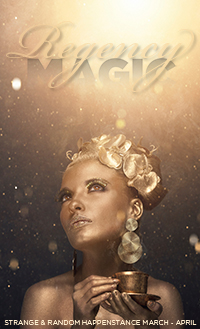
Book Review - Beth Deitchman's Margaret Dashwood and the Enchanted Atlas

Margaret Dashwood and the Enchanted Atlas (Regency Magic Book 2) by Beth Deitchman
Published by: Luminous Creatures Press
Publication Date: Ovtober 19th, 2014
Format: Paperback, 302 Pages
Rating: ★★★★
To Buy

Margaret Dashwood hasn't been back to Norland Park since her family was unceremoniously shown the door by her sister-in-law Fanny after their beloved father died. Margaret and her father had a rather large secret that they kept from the rest of the family. They were both magically inclined. Her father secretly taught her spells and when she came of age she discovered that her father had left her a legacy in his study at Norland. Hence the visit. It might be awkward, it might even be painful, seeing her beloved Norland irreparably changed by Fanny's atrocious taste, but it's the only way to secure her legacy, a legacy that is far greater than she ever imagined. The first night she sneaks into her father's study she can't believe all the secret hidey-holes and realizes it will easily take every night of her visit to secure all the hidden treasures. Though one of the treasures is greater than all the rest. She finds an enchanted atlas that her father made for her. He knew how much she loved this book and longed to travel, so he made this very powerful artifact to fulfill his youngest daughters dreams. She is touched beyond measure to learn that she mattered this much to her father. But more importantly, through his correspondence she now has the names of fellow magical practitioners whom she can contact.

Arriving in London Margaret soon receives a response to a letter she sent to one of her father's friends, a Mrs. Bristlethwaite. Though Margaret has longed for magical company, it's her other correspondent who she's more excited about. While at Norland she met a Mr. Ellsworth, an eligible young man who she instantly connected with. He was also heading to London and asked if he could keep up the connection, something Margaret was very much wanting to do. But soon romance takes a back seat to magic when Mrs. Bristlethwaite sees Margaret's atlas and shows her the power it contains and how it can transport them all over the world. The book even contains lists of famous magical artifacts you can visit. Margaret longs to immerse herself in magic, but living with her family who are unaware of her abilities is a bit risky. Luckily a compromise is reached. While Mrs. Dashwood stays in town to look after Marianne during her confinement Margaret will head home to Devonshire with Mrs. Bristlethwaite and be a guest at Barbary Hall. At Barbary Hall Margaret is allowed to revel in her abilities and meet the local coven. But soon the coven is in danger. Magical artifacts are disappearing from all over the world and Margaret and her atlas are uniquely placed to put an end to this dastardly sorcerer who is up to no good. But will a revelation destroy her chances of happiness?

While most people view Pride and Prejudice as the definitive book by Austen, it isn't necessarily mine. Yes, I adore it more than words can say, but to me Austen is Sense and Sensibility. I still remember how it all happened, my introduction to Austen. I had a gaggle of friends senior year in high school obsessed with the Pride and Prejudice miniseries. They would watch the Netherfield Ball scene over and over while giggling. Now I had always viewed these friends as serious scholarly types, we ran a literary magazine and the "free thought" club, yet here was something that made them giddy little schoolgirls. They talked endlessly about spending nights re-reading Pride and Prejudice while taking a bath instead of doing homework. Needless to say, my interest was piqued. After I graduated I bought myself this big omnibus with the tinniest type possible from B. Dalton's with Pride and Prejudice, Sense and Sensibility, and Emma promising myself to spend the summer reading all of Austen. I remember sitting on my bed in my room crying over the heartbreaks of Elinor and Marianne's story. My Austen obsession therefore began and ended with one book.

I think it was Oscar Wilde who said that reviews end up being more about the reviewer than what is being reviewed. I try not to do this too much, but this one time you will really have to indulge me. Because the truth of the matter is that reading Margaret Dashwood and the Enchanted Atlas recaptured for me that moment when I first discovered and fell in love with Austen. When Margaret and her mother returned to Norland Park for a visit I felt like I was there once again for the first time. Like getting to experience a first kiss all over again. People talk about books being time machines. And they are. But sometimes it's not just world history but personal history that you discover between the covers. I relived a moment that I have tried to recapture before and have failed to. This second book in Beth Deitchman's series seems to capture more of the spirit of Austen's own writing. While I adored Mary Bennet and the Bloomsbury Coven, there's something about having a gaggle of interesting and unique characters thrown together in the most haphazard of circumstances that screams Austen.

But it isn't the other characters that anchor this book, it's Margaret. If I'm honest with myself Emma Thompson had more to do with my picking up Jane Austen than anyone else. Because when I was in high school I wasn't so much of a book nerd as a movie nerd; and I always have to read the book before watching the adaptation, that is an inviolable law. So yeah, book nerd in the making I guess. As fate would have it that Emma Thompson adaptation of Sense and Sensibility figures quite prominently in Margaret Dashwood and the Enchanted Atlas in an interesting way. The truth is Margaret Dashwood is a very interesting character in that she actually doesn't really have any character. She is a blank. I like how on the Wikipedia page for Sense and Sensibility that they refer to one of John Middleton's sons as just "nameless." She is barely above this, being basically a cypher. To Emma Thompson this wouldn't fly. So she gave Margaret a personality in her adaptation. Margaret has a love of travel and wants to be a pirate and has a great love of a large atlas that Hugh Grant later gifts to her on his visit to Barton Cottage. It's not just in writing this book that Beth Deitchman has inexorably entwined Margaret with this atlas, she is just tapping into what all true fans of Austen know. With just a few lines Emma Thompson was forever to change the image of that little girl that Janeites the world over then embraced.

Emma Thompson gave Margaret a personality trait, imbuing her with something we can relate to and Beth Deitchman has expanded on that framework. Being the youngest of two very different siblings, I was interested to see who she would take after, the romantic Marianne, or the pragmatic Elinor. While Margaret does have the drive and levelheadedness of Elinor when it comes to studying her magic, I would say overall that she takes more after Marianne. It's not JUST the love of poetry and her losing her heart so quickly to Mr. Ellsworth, or even the pining for him hour after hour, it's the way she does her spells. This is a purely brilliant idea on the part of Beth Deitchman. Margaret does all her spells in French. If you remember what was previously said in Mary Bennet and the Bloomsbury Coven, simplicity and intent are the most important aspects of getting a spell to work. Therefore Margaret translating her spells into French, no matter how perfect her pronunciation, is a poetic affectation. She thinks they sound more magical. I literally snorted at this. It's just SUCH a Marianne thing to say! While yes, I can agree with some of Margaret's theories as to magic and poetry, I think her revelation at the end to Mrs. Bristlethwaite is perfect. Oh, and totally Elinor.

A big difference between Mary Bennet and the Bloomsbury Coven and Margaret Dashwood and the Enchanted Atlas is that in the prior we followed a novice, someone just introduced to the world of magic, while in the later we have a heroine who has been practicing magic under the guidance of her father all her life. While both heroines encounter magical communities on their adventures, Mary still stands separate, while Margaret becomes enmeshed in hers. Both are looking for their place in the world, but Margaret very much wants her place to include those like her, those who can help her on her journey. As I mentioned earlier, it's these unique and interesting characters that help make this book more Austen. The Devonshire Coven is just chock-a-block with characters I fell in love with. From the forthright and indomitable Mrs. Bristlethwaite, to the ever hungry Mr. James, to the kind and gentle Mr. Barrington, each one of these characters is so well rounded, so memorable, you can easily see them finding a permanent place in your heart, just like Mrs. Jennings somehow contrived to do. In fact the only real fault in this book is that it has now come to an end. I could literally spend hours just sitting with these characters in Barbary Hall sipping tea and playing cards while a fire glowed in the hearth.

Monday, April 4, 2016

Tuesday Tomorrow

The Glittering Court by Richelle Mead
Published by: Razorbill
Publication Date: April 5th, 2016
Format: Hardcover, 416 Pages
To Buy

The official patter:
"A dazzling, romantic fantasy series set in a mix of Elizabethan and frontier worlds from Richelle Mead, #1 internationally bestselling author of Vampire Academy.

Big and sweeping, spanning the refined palaces of Osfrid to the gold dust and untamed forests of Adoria, The Glittering Court tells the story of Adelaide, an Osfridian countess who poses as her servant to escape an arranged marriage and start a new life in Adoria, the New World. But to do that, she must join the Glittering Court.

Both a school and a business venture, the Glittering Court is designed to transform impoverished girls into upper-class ladies who appear destined for powerful and wealthy marriages in the New World. Adelaide naturally excels in her training and even makes a few friends: the fiery former laundress Tamsin and the beautiful Sirminican refugee Mira. She manages to keep her true identity hidden from all but one: the intriguing Cedric Thorn, son of the wealthy proprietor of the Glittering Court.

When Adelaide discovers that Cedric is hiding a dangerous secret of his own, together, they hatch a scheme to make the best of Adelaide’s deception. Complications soon arise—first, as they cross the treacherous seas from Osfrid to Adoria, and later, when Adelaide catches the attention of a powerful governor.

But no complication will prove quite as daunting as the potent attraction simmering between Adelaide and Cedric. An attraction that, if acted on, would scandalize the Glittering Court and make them both outcasts in wild, vastly uncharted lands..."

THE most anticipated YA book of the spring... seriously people, all I hear is how much everyone wants to read this! Including myself!

In the Labyrinth of Drakes by Marie Brennan
Published by: Tor Books
Publication Date: April 5th, 2016
Format: Hardcover, 352 Pages
To Buy

The official patter:
"In the Labyrinth of Drakes: the thrilling new book in the acclaimed fantasy series from Marie Brennan, as the glamorous Lady Trent takes her adventurous explorations to the deserts of Akhia.

Even those who take no interest in the field of dragon naturalism have heard of Lady Trent's expedition to the inhospitable deserts of Akhia. Her discoveries there are the stuff of romantic legend, catapulting her from scholarly obscurity to worldwide fame. The details of her personal life during that time are hardly less private, having provided fodder for gossips in several countries.

As is so often the case in the career of this illustrious woman, the public story is far from complete. In this, the fourth volume of her memoirs, Lady Trent relates how she acquired her position with the Royal Scirling Army; how foreign saboteurs imperiled both her work and her well-being; and how her determined pursuit of knowledge took her into the deepest reaches of the Labyrinth of Drakes, where the chance action of a dragon set the stage for her greatest achievement yet."

I should be all, awesome author alert, she's totally cool, instead I'm just really happy I can now spell Labyrinth... yeah. It's the small goals in life. 

The Reluctant Duchess by Roseanna M. White
Published by: Bethany House Publishers
Publication Date: April 5th, 2016
Format: Paperback, 400 Pages
To Buy

The official patter:
"A Riveting Edwardian Series Set among Britain's High Society.

Lady Rowena Kinnaird may be the heiress to a Highland earldom, but she has never felt good enough--not for her father, not for the man she thought she'd marry, not for God. But after a shocking attack, she's willing to be forever an outcast if it means escaping Loch Morar.

Brice Myerston, the Duke of Nottingham, has found himself in possession of a rare treasure his enemies are prepared to kill for. While Brice has never been one to shy away from manor-born ladies, the last thing he needs is the distraction of Lady Rowena, who finds herself in a desperate situation. But when Rowena's father tries to trap Brice into marrying his daughter, Brice makes a surprising decision.

Rowena wanted to escape the Highlands, but she's reluctant to marry a notorious flirt. And when she learns that Brice is mixed up in questionable business with a stolen treasure, she fears she's about to end up directly in the path of everything she was trying to avoid."

I might be on a Downtonesque hiatus at the moment, but as soon as that ends, this book is at the top of the pile!

Lost Among the Living by Simone St. James
Published by: NAL
Publication Date: April 5th, 2016
Format: Paperback, 352 Pages
To Buy

The official patter:
"England, 1921. Three years after her husband, Alex, disappeared, shot down over Germany, Jo Manders still mourns his loss. Working as a paid companion to Alex's wealthy, condescending aunt, Dottie Forsyth, Jo travels to the family’s estate in the Sussex countryside. But there is much she never knew about her husband’s origins…and the revelation of a mysterious death in the Forsyths’ past is just the beginning…

All is not well at Wych Elm House. Dottie's husband is distant, and her son was grievously injured in the war. Footsteps follow Jo down empty halls, and items in her bedroom are eerily rearranged. The locals say the family is cursed, and that a ghost in the woods has never rested. And when Jo discovers her husband’s darkest secrets, she wonders if she ever really knew him. Isolated in a place of deception and grief, she must find the truth or lose herself forever.

And then a familiar stranger arrives at Wych Elm House…"

Anybody else recognize the stock photography? Perhaps from a book that was released just last week?

Friday, April 1, 2016

Book Review - Beth Deitchman's Mary Bennet and the Bloomsbury Coven

Mary Bennet and the Bloomsbury Coven (Regency Magic Book 1) by Beth Deitchman
Published by: Luminous Creatures Press
Publication Date: August 13th, 2013
Format: Paperback, 224 Pages
Rating: ★★★★★
To Buy

Mary Bennet never thought that she would be the type of girl to pick up The Mysteries of Udolpho instead of Fordyce's Sermons, yet here she is spending another night in with her parents secretly following the adventures of Emily St. Aubert. It all happened innocently enough; Wickham, in an attempt to ingratiate himself with his new family bought the racy book for Mary. Mary thought it would be churlish not to read the book, it was a present after all. The last remaining Bennet sister at Longbourn had her heart and her eyes opened for the first time and even fancied herself a bit in love with the man who changed the world for her. Though Mary knew she didn't really love her brother-in-law, she was just lonely and grateful. Her ravenous appetite for literature was easy enough to disguise from her parents, they never looked at what she was reading so they assumed that the content hadn't changed from "improving" texts. But Mary was changing, becoming quieter, more introspective. Though the arrival of another book is about to change her world for a second time. One night Mary receives a package, she expects it to be her long awaited copy of A Sicilian Romance, instead it is An Introductory Guide to the Sorcerer's Craft: a Brief History and Simple Spells for the Novice, written by Mr. A.H..

Could magic be real? If this book is any indication then it is! That night Mary secrets herself in her room and starts to read this book she received by mistake. It isn't long before she's devoured the book and actually mastered all it's spells. Her previous longing for books is now turned to a longing for magic books. If this book showed her how to move objects, what else could she learn? Though how to go about finding such books... There are stores mentioned in her book and even famous covens, like the Bloomsbury Coven, but they are nowhere near Hertfordshire. Luckily Mary is soon to spend time in London with her sister Lizzy and her husband Mr. Darcy. Sneaking away one day to a market she meets Mr. Hartbustle of Hartbustle and Son, purveyors if books large and small. Purveyors of magic books! She is soon invited to a meeting of the famous Bloomsbury Coven and learns that magic isn't just about amusing herself at balls but about stopping bad people, like the Glastonbury Sorcerer. Though could the coven be using her and hiding the truth about the Glastonbury Sorcerer? She will find out soon enough when she comes face to face with the enemy of the coven and learns who her true allies are.

Mary Bennet and the Bloomsbury Coven is unique in the Regency Magic books that I have read, and not just in the fact that it's felicitously part of a series called "Regency Magic." This book is unique in that unlike the other authors who took their inspiration from Jane Austen this book actually deals with characters from Austen. Now I'm not one to like continuations of Austen generally. She had such a unique voice that to try and mimic her tone is welcoming failure. Plus each of her six books ends perfectly, why should we want or need more? But that is human nature, we can't get enough of a good thing, hence the massively successful industry of just cranking out more and more continuations and prequels and what have you. I'm fine with read-alikes, but seriously, this is a pastiche subgenre that I avoid. Which brings me to Mary Bennet and the Bloomsbury Coven. While this book could fit the loose definition of this subgenre because it's a continuation, it systematically breaks all the conventions that make me dislike those other books. And it's not just the magic, it's that Beth Deitchman writes smart. She stays clear of those characters most loved in the canon and gives us new and startling insight into Mary Bennet, that most maligned of characters after Mr. Collins.

Which brings me to the Mary Bennet factor. The truth is we have all at some time or other sadly related to Mary Bennet. Yes, in reading Pride and Prejudice we like to imagine ourselves as Jane or Lizzy, in fact when watching the Colin Firth miniseries I like to shut my eyes and pretend he's talking to me, but deep down, we fear we are really Mary. Therefore, despite initial appearances, Mary is the most relatable of characters. She's awkward and outspoken at the most inopportune moments. In fact, doesn't she, just secretly between you and me, remind yourself of how you were in high school? You haven't quite found your footing and you're totally committed to your opinions no matter how many times people tell you you're wrong and you're just totally awkward. Mary Bennet and the Bloomsbury Coven gives us some insight as to why exactly she was this way, how she was no one's favorite and all her opinions and readings from Fordyce's Sermons and her pianoforte playing was just a cry for help. I mean how teenage is that? But it's Mary's growth that is where this book shines. Through her reading she has developed self-reflection and depth. Look to how she's improved in playing the pianoforte. Before she had technical ability, but technical ability can only get you so far. You need emotion to give your music passion. That is what reading has given her, empathy and drive. 

What struck me about these initial changes in Mary is that she started to become a little like one of Jane Austen's other heroines, Catherine Morland from Northanger Abbey. Yes, it is a bit because of the love of the lurid Gothic novel, but more than that there's an initial silliness to how Mary uses her magic before she learns of the greater dangers and ramifications in the world and is forced to grow up. The scene at the Darcy's ball in London wherein she entertains herself by causing a calamity is pure silliness. She loves her magic just for the fun of it all. There's this joyous air that Mary has that is similar to what you feel when you finally find something that is so right, that's so you, that you are overwhelmed by actually finding your place in the world and the joy comes burbling out. This changes as time goes on, but Mary still retains that feeling of finally getting it. The joy that Beth Deitchman brings forth in her manipulating the original text reminds me of when I recently saw Pride and Prejudice and Zombies. I of course tried to read the book being a true Janeite, but just couldn't stand it. The movie though wasn't into self-reflection, it was just pure fun and the genius that is Matt Smith. While Mary Bennet and the Bloomsbury Coven does have depth, it has that same entertainment value that I found unexpectedly at the movies and was so happy to find again between the covers of this book.

As for the worldbuilding, that magic that's overlaid onto the work of Austen, it's handled wonderfully. While Beth Deitchman claims inspiration from the world of Harry Potter, I actually found it very much refreshingly her own. I loved the concept that spells could eschew the ancient and long dead languages and it was simplicity and intent that make spells work. Think how much trouble Ash would have avoided in the Evil Dead franchise if this had been the case! Or how fast Giles could have gotten work done banishing demons on Buffy the Vampire Slayer if clarity was what mattered. Though what really peaked my interest was the extracts from the magical texts peppered throughout the book. Going back to Harry Potter, yes, J.K. Rowling did write two of the Hogwarts textbooks and release them for charity, but being taken out of context they just didn't quite work. They fell horribly flat in fact. By incorporating extracts in this book there's a symbiotic relationship that happens wherein they make each other better, stronger, more real. You feel the joy Mary feels each time she finds a new spell or a new section of a book catches her interest. Not only does it add depth and reality to this world, but it makes you a part of Mary's journey, and what could be better than that?

In the end what really grounded and polished the text were the parallels to Pride and Prejudice that through Mary's journey were just as shocking and surprising as the first time you read Austen. I am of course talking about the duplicity of man and how they are two-faced and power hungry. Could anyone reading Pride and Prejudice the first time think Wickham as such a scoundrel? No! Yes, he might be too good to be true, but you still believe him, you still think that Darcy is the villain of the tale until you know better. While Mary doesn't suffer an exactly similar fate, between the Bloomsbury Coven and the Glastonbury Sorcerer she is placed in a situation of who to believe. Does she trust appearances, stories, feelings? When you are being manipulated where do you turn? But much like her sister Lizzy, she stumbles through and accepts the truth, the real truth. And if she just happens to find a little happiness at the end of a long fought battle between appearance and truth? Well, wouldn't Jane Austen herself be pleased?

Wednesday, March 30, 2016

Beth Deitchman

Beth Deitchman wrote her first book in third grade, so you'd think she was always meant to be an author, yet she was diverted for some time by dreams of being a ballerina as well as the the manager of the Pittsburgh Pirates. She "entertained visions of wearing a black and yellow tutu with one black and one yellow pointe shoe while coaching." This dichotomy could be one of the reasons she was drawn to Jane Austen, heroines who embrace their girly side with balls and bonnets, yet have a will of steel underneath. Just think of Lizzy turning down Mr. Darcy and you know the will I'm talking about. Or even a ballerina dancing en pointe! Though I think we could also draw parallels to Buffy the Vampire Slayer, because Beth is a wannabe Slayer who is ALWAYS the first to like my odd musings from the Whedonverse on twitter. Beth went to college at UCONN and afterwards danced in a few modern companies in Boston until the desire for a "normal life" set in. Of course her new normal was graduate school at UMASS Boston. After receiving her MA in English she went on to get her M. Phil in English and Drama from Queen Mary College, University of London.

Following that (seriously, did Beth do anything but school for a decade?) she finished her higher learning with a PhD in English at UC Davis to promptly give it all up two years later to be an actress in the Bay Area. Yet during all that time she was writing, "short stories about women trying to figure out their lives, endless examinations of my life and everything I felt was wrong with it, an undergraduate honors thesis, two Masters theses, a dissertation, and too many conference papers." But at least all that book learning has served her in good stead as she not only writes wonderfully magical Jane Austen continuations, Mary Bennet and the Bloomsbury Coven and Margaret Dashwood and the Enchanted Atlas, but is the founder of Luminous Creatures Press which she started in 2013 with Emily June Street. Additionally, Beth has co-authored two collections of short stories. Her story, "La Voshnikaya," will appear in SQ Magazine's November 2016 issue. These days when she's not knitting or reading she's teaching Pilates at Flow Studio in Northern California where she lives with her husband Dave and dog Ralphie.

Question: When did you first discover Jane Austen?

Answer: I'm sure that I must have encountered Jane Austen's books as an undergraduate English major at the University of Connecticut, but I began loving them when I was a graduate student in London. I found Pride and Prejudice on sale in a bookstore and subsequently devoured it. After that, I re-read her books every few years—usually in the summer.

Question: What do you think Jane Austen would think of her impact with so many literary offshoots, from parody to pastiche?

Answer: I think she would be astonished and amused—possibly secretly pleased. Certainly she would write to her sister commenting on the phenomenon with her usual wit.

Question: Where do you get your inspiration from?

The short answer: Anywhere I can find it!

The longer answer: When I wrote the short story that became my first Regency Magic book, Mary Bennet and the Bloomsbury Coven, I had no idea just how much Jane Austen-based fiction existed. I simply wanted to give Mary Bennet an adventure. I had developed a real fondness for Mary when I played her in a community theatre production of Pride and Prejudice. The poor girl was forever in her sisters' shadows. As I was working on Mary's story, I decided that it would be lovely to give a minor character from each of Austen's books a similar adventure and so the Regency Magic series was born.

Some of the characters are based on people I know. The woman who played Mrs. Bennet did such a beautiful job that I couldn't help but hear her voice as I wrote that character.

I have to admit that I got the idea for the Enchanted Atlas in my second Regency Magic book (Margaret Dashwood and the Enchanted Atlas) from Emma Thompson's 1995 film version of Sense and Sensibility. In a few scenes Margaret looks through an impressive atlas, although the one in my book is based more on the Baedeker travel guides from the nineteenth and early twentieth centuries—those famous books with the red covers.

Question: What makes the early 19th century mesh so well with magic?

Answer: For me there are two things that make the nineteenth century a great setting for magic: one, the notion that "the past is a different country: they do things differently there," L. P. Hartley wrote. Other fantasy authors invent their own worlds for working their magic. We have the past with all its differences from the world we know.

The nineteenth century also saw so much change with the Industrial Revolution, including so many technological innovations that could almost seem like magic. It's a time period ripe with potential for the fantasy writer.

Question: The world building and system of magic varies greatly in the regency fantasy genre, how did you go about creating yours?

Answer: I view my books as Jane Austen meets Harry Potter, so I took JK Rowling's world as a starting point for the magic system, and given that she is an avid Jane Austen reader, it makes a certain sense. There's a lovely whimsy to her magic alongside the darkness of her wizarding world. I've tried to achieve a similar balance. I've also taken the idea that you either have magic or you don’t, though I've not gone so far as to steal the word Muggle.

Much of my Regency Magic world came from a need to adhere to Regency customs. For example, I devised the Corridor of Doors (which allows sorcerers and sorceresses to travel quickly through London) because I wanted to get Mary from one part of London to another without drawing too much attention to her as a young woman wandering about alone. A few of the spells I've devised involve the word "please" for politeness. I'm also conscious of the strict boundaries between social classes in the Regency period, so there are rules about servants performing magic—although some of my characters with servants rightly believe that it's ridiculous to legislate who can and cannot perform magic.

Question: If you had to choose between writing only period literature or only fantasy literature, which would win?

Answer: Goodness. That is a difficult choice. I suppose it depends on the day. Then again, most of my writing is actually not fantasy, and I tend to set my stories in the past, although only about thirty or forty years ago. I've set a lot of recent stories in the 1970s. I miss certain aspects of that period—especially the pace of life and the heaviness of certain objects, like telephones. Remember twirling the phone cord around your finger as you talked to your best friend? Or the brief satisfaction of slamming down the receiver? It's hard to get that with an iPhone. And without an iPhone, if you were lost, you had to consult a map (or atlas) or ask directions from an actual person. Perhaps I'm romanticizing the past, but I miss things like that.

Question: Be honest, have you ever dressed up in Regency clothes just to pretend for a moment you are in the past?

Answer: As I mentioned above, I played Mary Bennet a few years ago, so I got to dress up in Regency clothes several times a week. As far as costumes go, it was really comfortable. I've also worn costumes for plays based later in the nineteenth century, which is less comfortable. The corset and the underskirt make things a bit difficult for a twenty-first century woman. But, to tell the truth, while I enjoy visiting the past from time to time, I would not want to live there.

Monday, March 28, 2016

Tuesday Tomorrow

Journey to Munich by Jaqueline Winspear
Published by: Harper
Publication Date: March 29th, 2016
Format: Hardcover, 304 Pages
To Buy

The official patter:
"Working with the British Secret Service on an undercover mission, Maisie Dobbs is sent to Hitler’s Germany in this thrilling tale of danger and intrigue—the twelfth novel in Jacqueline Winspear’s New York Times bestselling “series that seems to get better with each entry” (Wall Street Journal).

It’s early 1938, and Maisie Dobbs is back in England. On a fine yet chilly morning, as she walks towards Fitzroy Square—a place of many memories—she is intercepted by Brian Huntley and Robert MacFarlane of the Secret Service. The German government has agreed to release a British subject from prison, but only if he is handed over to a family member. Because the man’s wife is bedridden and his daughter has been killed in an accident, the Secret Service wants Maisie—who bears a striking resemblance to the daughter—to retrieve the man from Dachau, on the outskirts of Munich.

The British government is not alone in its interest in Maisie’s travel plans. Her nemesis—the man she holds responsible for her husband’s death—has learned of her journey, and is also desperate for her help.

Traveling into the heart of Nazi Germany, Maisie encounters unexpected dangers—and finds herself questioning whether it’s time to return to the work she loved. But the Secret Service may have other ideas. . . ."

Ohhh, new Maisie Dobbs, can not wait. 

Britghton Belle by Sara Sheridan
Published by: Kensington
Publication Date: March 29th, 2016
Format: Hardcover, 256 Pages
To Buy

The official patter:
""Great fun. The world needs Mirabelle's feistiness, intelligence, and charm." --James Runcie, author of the Grantchester mysteries

In post-World War II England, former Secret Service operative Mirabelle Bevan becomes embroiled in a new kind of intrigue…

1951: In the popular seaside town of Brighton, it's time for Mirabelle Bevan to move beyond her tumultuous wartime years and start anew. Accepting a job at a debt collection agency seems a step toward a more tranquil life.

But as she follows up on a routine loan to Romana Laszlo, a pregnant Hungarian refugee who's recently come off the train from London, Mirabelle's instincts for spotting deception are stirred when the woman is reported dead, along with her unborn child.

After encountering a social-climbing doctor with a sudden influx of wealth and Romana's sister, who seems far from bereaved and doesn't sound Hungarian, Mirabelle decides to dig deeper into the suspicious circumstances surrounding the death. Aided by her feisty sidekick--a fellow office worker named Vesta Churchill ("no relation to Winston," as she explains)--Mirabelle unravels a web of evil that stretches from the Brighton beachfront to the darkest corners of Europe. Putting her own life at risk, she must navigate a lethal labyrinth of lies and danger to expose the truth."

Um, what doesn't scream me about this book?

London Rain by Nicola Upson
Published by: Harper Paperbacks
Publication Date: March 29th, 2016
Format: Paperback, 336 Pages
To Buy

The official patter:
"Intrepid writer and amateur sleuth Josephine Tey returns in this sixth installment of Nicola Upson’s popular series—perfect for fans of Agatha Christie’s Hercule Poirot and Jaqueline Winspear’s Maisie Dobbs—that unfolds in 1930s London as England prepares to crown a new king.

London, 1937. Following the gloomy days of the abdication of King Edward VIII, the entire city is elated to welcome King George. Just one of the many planned festivities for the historic coronation is a BBC radio adaptation of Queen of Scots, and the original playwright, Josephine Tey, has been invited to sit in on rehearsals.

Soon, however, Josephine gets wrapped up in another sort of drama. The lead actress has been sleeping with Britain’s most venerable newsman, Anthony Beresford—and his humiliated wife happens to work in the building. The sordid affair seems to reach its bloody climax when Beresford is shot to death in his broadcasting booth at the deafening height of the coronation ceremony.

Josephine’s dear friend, Detective Chief Inspector Archie Penrose, has the case wrapped up before long. But when a second, seemingly related murder throws Penrose for a loop, it falls to Josephine to unravel a web of betrayal, jealousy, and long-held secrets… caught all the while in a love triangle of her own making.

Charming and provocative, thick with the atmosphere of prewar England, London Rain is a captivating portrait of a city on the edge—and an unforgettable woman always one step ahead of her time."

I would be lying if I said that Mick Wiggins artwork didn't draw me to both Winspear and Upson... so glad his amazing artwork helped find some great books. Also two new covers in one week, graphic designer swoon!

The Lost Cases of Bryant and May: London's Glory by Christopher Fowloer
Published by: Random House LLC
Publication Date: March 29th, 2016
Format: Kindle
To Buy

The official patter:Arthur Bryant and John May of the Peculiar Crimes Unit are London’s craftiest and bravest detectives—and there’s no better pair to solve the city’s most confounding crimes. In this riveting eBook collection of mystery short stories, available together for the first time, Christopher Fowler takes Bryant and May on a series of twisting adventures and brings readers behind the scenes of his beloved novels.

Includes a preview of Christopher Fowler’s new Peculiar Crimes Unit mystery, Bryant & May and the Burning Man!

In “Bryant & May in the Field,” a woman is found with her throat slashed in a snowy park, yet the killer managed to escape without leaving any footprints. In “Bryant & May and the Nameless Woman,” a businessman drowns in the pool of a posh club, and the only suspect is a young woman who remains almost too calm during questioning. And in “Bryant & May Ahoy!” the pair go on holiday on a friend’s yacht in Turkey, but Bryant realizes there’s something fishy about their fellow passengers. From London’s grandest mansions to its darkest corners, from the Christmas department of Selfridges to a sinister traveling sideshow, there’s no scene too strange for the Peculiar Crimes Unit and the indefatigable detectives at its helm."

I would comment on the book if I wasn't soo obsessed with figuring out where I've seen that type before... grumble grumble... must figure it out. 

Friday, March 25, 2016

Book Review - Marissa Doyle's Courtship and Curses

Courtship and Curses (Leland Sisters Book 3) by Marissa Doyle
Published by: Square Fish
Publication Date: August 7th, 2012
Format: Paperback, 368 Pages
Rating: ★★★★★
To Buy

Sophie spent years dreaming of what it would be like to have her first season in London. Needless to say her daydreams were nothing like the reality her life has become. When the illness came no one could have guessed the toll it would take on the Rosier family. Sophie lost her mother, her sister, and the assurance of two strong limbs holding her up. She is now crippled and must rely on a cane to support her. Therefore spending months in ballrooms unable to dance escorted by her aunts isn't exactly what she hoped for. That doesn't even take the rumors into account. The fact that the ton has somehow gotten it into it's collective consciousness that she is some kind of malformed freak that can't string two words together, let alone form a sentence, is galling. At least if they see her their misconceptions should be fixed, shouldn't they? But for all that Sophie has endured nothing has cut her to the quick more than the loss of her magic. The illness that ravaged her body also took away what was most precious and secret to her. What's worse is that she has no one to turn to. Her mother taught her in secret, and with her mother gone who can she trust?

Soon Sophie's lack of magic is a major worry. Her father, Lord Lansell, is almost the victim of a tragic accident. The almost had nothing to do with Sophie but with the dashing Lord Woodbridge. In fact Sophie only made matters worse. But soon another "accident" leads Sophie to a startling discovery, many members of the War Office have been "attacked" in these seemingly random ways. Could a French Spy be using magic in order to undermine the British war effort against Napoleon? If this is the case Sophie needs her magic back more then ever! But protecting her father isn't the only thing occupying her time. Lord Woodbridge won't leave her alone. Sure she could see herself prior to her deformity falling for such a man, but that was before. What could he see in her now? As for his cousin Parthenope and her parakeet Hester, they have quickly become Sophie's trusted allies. So why can she trust Parthenope but can't trust her feelings for Lord Woodbridge? It is all too confusing and she really needs her mother. But perhaps Sophie will realize that even with a cane she can stand on her own two feet and make a contribution to the world.

This is THE Regency Magic book you've been waiting for in Marissa Doyle's series. While the first two books were lovely, being set during the time of Victoria they weren't so much Regency and therefore had a different, if still magical, writing style. Courtship and Curses though is all Regency all the time! Tangentially relating to the previous Leland sisters book by following Pen and Persy's mother, Parthenope, and her first season, there's a moral formal, more Jane Austen air to the writing that some people might find too stylized but which I reveled in. There's just something magical about books set during the Regency, whether they contain magic or not. Personally I would never want to do "the season" and as for paying house calls everyday? Spare me now. It's a world that I wouldn't ever necessarily want to live in, yet somehow these books about bygone days of balls and manners just draw me in. Now I don't want you thinking I'm not a connoisseur of this style, because I am. It takes a special kind of author and story to whisk me away and Marissa Doyle did an admirable job of providing me with the cheapest kind of time travel around.

Being fully back in the Regency means that we get war and Wellington. I kid you not that Wellington is one of my favorite characters to be portrayed fictionally. He was such a symbol of the time and such a lightning rod for the war with France that I seriously just want him at every ball being boisterous and opinionated. Of course I always picture Wellington as Stephen Fry from Blackadder and that doesn't hurt. But Marissa Doyle doesn't just use Wellington as a signifier for the war with France or even for comedic purposes, she uses him to show the actual danger that the war represents and also as a sort of catalyst for Sophie to embrace herself and her magic. This entire volume actually serves to remind us of the dangers of life during wartime. In the previous volumes everything that occurred was building to one great and dangerous event that would change everything. Here there is constant peril for members of the War Office. Attack after attack after attack. It's not that it just ups the suspense, it's that you feel the danger more. This isn't your typical Jane Austen with balls and courting, with officers only entering to show off their lovely uniforms. I would say that Marissa Doyle captures more of what Thackeray did with Vanity Fair. The harsh reality versus the rose-tinted glasses.

One of the harsh realities of war is prejudice. Of course this is something our heroine Sophie has had to face with her deformity. But during a war prejudice is pretty much universally shifted to the country that you are fighting, in this instance France. There are two prominent French characters in Courtship and Curses, Madame Carswell, the widow of Lord Lansell's oldest and dearest friend, and a confidant to Sophie, and the Comte de Carmouche-Ponthieux, a lost love of Sophie's Aunt Molly. Madame Carswell more than the Comte is the subject of much gossip, not just because she's French, but because she's a threat to those older women who want to get their claws into Lord Lansell. Sophie is wonderful in that she stands by her friends. She has known the evil glares of others and tries to protect those who protect her. Yet what I find most interesting is that in one of these two instances her trust actually isn't justified. Prejudices form for a reason, no matter how stupid, and while we should always fight it, sometimes, just sometimes the reason for them rears it's ugly head. And I like that Marissa Doyle doesn't make it so clear cut, because that isn't the way of the world. Not everyone we prejudge is deserving of exoneration, just as we should try to be less prejudiced. Life is full of these contradictions and to have both innocence and guilt shown goes to the heart of life's messiness. Plus, manipulating our prejudices does keep a story going.

Yet the heart of this book is Sophie. What really struck me about this book is that Sophie is a very different type of heroine. With her deformity she has a very different vantage point from anyone else. It's not just that she's more passive in society being relegated to the sidelines of the ballrooms and therefore sees more, it's that the way people viewed deformities during this time was so different that it would be so easy to think badly of yourself. Because deformities were thought to outwardly show an inner malignancy. That obviously Sophie's foot was because she had something very wrong with her, not that she was the victim of a serious illness she couldn't control, despite being a witch. Now most authors would use this set up to give us a "teaching moment" on what it means to be broken and to willingly accept our limitations, or how to overcome this, but thankfully that isn't what Marissa Doyle does at all. Instead we are shown Sophie's very real struggle and her inner turmoil that asks how can we be strong when we think ourselves crippled in mind or in body? Because it isn't the affliction it's the attitude that is important. So while we are "taught" that a positive attitude can overcome anything, we aren't "taught" it with a stick.

This goes even deeper when you look at the "good" and the "bad" people that surround Sophie. Being brought out in society by her Aunts, Sophie's Aunt Isobel is always telling her how lucky she'll be to get a second son with no prospects because of what she is. It's never about WHO she is, but WHAT. I can't help thinking about the analogy of being overweight. I was told my entire life that I was overweight. Looking back at pictures when I was younger I wasn't overweight in the least, yet I believed it. I believed it so much that I developed the mindset that this was something that would never change and therefore what I ate and how I took care of myself didn't matter and I did become overweight as a result. But I don't think that way anymore, or at least I try not to, and it's because of my friends. It's about surrounding yourself with good people, people who see who you are. People who boost you up and not drag you down. That is what Madame Carswell, Parthenope, and Lord Woodbridge do for Sophie. They make her realize that she is special. That she isn't defined by some outward feature that people can point at and laugh. That is why her magic returns. That and a stern talking to by Wellington. Sophie's magic is basically her self-esteem. She learns to love herself and therefore she is powerful. Now that is something we all need to remember!

Wednesday, March 23, 2016

Book Review - Marissa Doyle's Betraying Season

Betraying Season (Leland Sisters Book 2) by Marissa Doyle
Published by: Henry Holt and Co
Publication Date: September 29th, 2009
Format: Hardcover, 330 Pages
Rating: ★★★★★
To Buy (different edition than one reviewed)

Penelope feels that she not only let her twin sister down but her heroine Queen Victoria as well. Sure, she was there when Victoria was saved, but the special commendation belongs to her twin Persy and Persy alone. Pen feels like a fraud. And that is why she's in Ireland. It wasn't just that she felt like a third wheel at home with her sister in a constant state of connubial bliss with her new husband. It's that Pen has neglected her magical studies and now is the time to fix this shortfall. If she had tried harder before perhaps she could have actually helped Persy when she needed her help and deserved the commendation bestowed on her by Victoria. So Pen has followed her governess Ally to Ireland and Ally's new home in Cork with her husband. Only Ally is experiencing a common result of getting married and her horrific morning sickness, which seems to last all day, has led to Ally's father-in-law, Doctor Carrighar, taking over Pen's education. Despite how much she wants to better herself, being locked up all day studying, at times with four male students of Doctor Carrighar's who don't appreciate the presence of a female, can be tiring.

But Cork isn't London and Pen convinces Ally to let her run errands. Alone. When she's out one day she fatefully and almost fatally runs into Lady Keating. Lady Keating takes Pen under her wing and soon becomes the female role model Pen is so desperately missing with Ally being laid up and Persy a country away. It doesn't hurt that Lady Keating's son, Niall, isn't hard on the eyes. But then again, Niall is rumored to be the illegitimate son of Queen Victoria's uncle, the Duke of Cumberland. The Duke might not be liked, but he does have the looks, the looks of Niall. The Duke is also at the heart of a plan being concocted by Lady Keating, who just happens to be a sorceress. Due to unforeseen circumstances Lady Keating's plan to get ride of Queen Victoria and install the Duke on the throne has a hitch. She needs a third witch, preferably family, to help invoke the power of the Triple Goddess to get her spell to work. To this end Lady Keating orders Niall to court Pen, whose magical abilities she has recognized. But when does duty to his mother become true love for Penelope? With secrets upon secrets and broken allegiances can anyone get a happy ending? And more importantly, can Pen earn the commendation Queen Victoria gave her?

In Marissa Doyle's first book in this series, Bewitching Season, I felt such a strong connection to Persy and her bookish ways that I quite honestly didn't think I would be able to connect to Pen. Through the filter of Persy's story Pen seemed the epitome of the girly girl of the time, more concerned with couture and a debutante's lifestyle than education and books. Cutting Pen off from her delightful family, and in particular her little brother Charles, seemed a sure way to get me to tune out. Of course I was totally wrong. Pen didn't so much change throughout her sister's adventure as had her eyes opened and Betraying Season is the result of this new knowledge. Yes, I could say that it's because the sisters did a "Parent Trap" and switched situations, with Pen becoming the bookish one, but that isn't it at all. What it is is that we get to see Pen's struggle as she tries to change, as she tries to do better, to be better, and this is a struggle which we can all relate to. And her change isn't overnight, while she does buckle down and commit to studying, she still longs for and misses society and the season she gave up to improve herself. This is what works so well, we constantly see Pen struggling to balance this new life of the mind with her old life of leisure that Lady Keating seems to initially represent; and it's in this struggle that we finally relate to Pen.

The love story is also of a different ilk. Persy quite literally fell for the boy next door in Lochinvar. Their romance was sweet and destined and full of misunderstandings, but was always a given. We, as the readers, weren't there on this journey from the beginning, we came in once it was already set in stone. Bewitching Season was more about the consummation than the journey. Which is where Pen and Niall come in. We get to follow their budding romance every step of the way, from initial attraction to happily ever after. There's a different kind of magic finding someone when you least expect it and connecting and building a bond and overcoming obstacles. By seeing their entire romance unfold we can never be certain that the HEA is guaranteed. There's more fluidity to the outcome by not having it so fated as Persy and Lochinvar were. Plus, there's wonderful misunderstandings that crop up because these two people haven't known each other their whole life. I think this is best exemplified by Niall's hair-brained scheme to "save" Pen from his mother's machinations. The entire time you're thinking, why didn't Niall just tell Pen what was going on? But that's the fun of this book. They're new to each other so they will misstep, and sometimes those missteps are hilarious in their absurdity.

As for Lady Keating being the big bad... I kind of seriously adored her. Persy was facing a foe who was all about his power hungry machinations, whereas Lady Keating is actually far more complex. She's not just evil, but she's definitely not good. She seriously wants what is best for her son, but doesn't bother to ask him. She assumes that her desires for power and fame are aligned with her sons. But Niall isn't that way inclined. In this way I view her as a very Norma Bates character, because she's trying to do what's best for her son but in the only way she knows how. And of course that way is entirely the wrong way to do it. But underneath this veneer she has created she's far more complex than you'd think. She is obviously a woman who is looking for someone to connect to. She doesn't care about her husband or her daughter, because one was a convenience, the other wasn't skilled enough in magic to provide any interest. She "loves" Niall because he is a link to the one person she did connect with, the Duke of Cumberland. But it is in her relationship with Pen that we see all her different layers. She obviously has longed for someone magical to connect with and one wonders, if she had had this in her life earlier, would she be the villain? I honestly don't think she would be, and that human side is what makes her so deliciously complicated.

What I really sunk my teeth into here was the expansion of the magical system that Marissa Doyle had previously set up. Ireland has an entirely different feel, magically speaking, and this contrast helps Pen become as adept as her sister, but in a unique way. There are many methods of teaching these varying magics, and I think it really shows how people, even twins, learn differently and connect to subjects in distinctive ways. This "Other" magic very much ties into the very fiber of what it is to be Irish and their myths and legends. The Fairy realm, the Triple Goddess, all of it ties into what makes Ireland so distinctive. I can't help but think of the Irish Fest I used to attend every summer in Milwaukee. Even though it was many many miles away from the homeland, there was a magic to the storytelling and the music and the community. There's just something inherent to the culture of Ireland that encourages this belief in the possibility of magic and Marissa Doyle has tapped into it in this volume. She has made magic even more believable and that's why I, and perhaps even Pen, were able to make this connection that we didn't think was possible.

The magic just doesn't stop at enchantments, but goes further into the bestiary, the "creatures" of Ireland and the magical world. Adding magical creatures into a series that previously had no mention of them is a tricky thing. The main problem that us readers face is the suspension of disbelief. This suspension is often hampered by making the creatures too comical. A funny creature doesn't lend itself to credulity, most of the time. Yet once again Marissa Doyle comes out on top. She introduces the creatures, in particular Corkwobble the clurichaun, which for some reason my spell check actually recognizes as a form of leprechaun, in a very matter of fact way. And this is what makes it work. My paternal grandmother was 100% Irish, though not born there, and she talked about ghosts and creatures, in particular Pookas, as totally existing. I grew up believing in these creatures and nothing will ever shake my belief because when a little old lady sits you down and says it's just the way of the world and sure, you'll see ghosts, there's something so matter of fact that you just accept it. And that is what this book does, it's the way of the world for Pen and Pen just goes with it. And what better way to have an adventure then to be at Pen's side?

Monday, March 21, 2016

Tuesday Tomorrow

Wink Poppy Midnight by April Genevieve Tucholke
Published by: Dial Books
Publication Date: March 22nd, 2016
Format: Hardcover, 256 Pages
To Buy

The official patter:
"The intrigue of The Raven Boys and the "supernatural or not" question of The Unbecoming of Mara Dyer coalesce in this young adult mystery, where nothing is quite as it seems, no one is quite who you think, and everything can change on a dime.

Every story needs a hero.

Every story needs a villain.

Every story needs a secret.

Wink is the odd, mysterious neighbor girl, wild red hair and freckles. Poppy is the blond bully and the beautiful, manipulative high school queen bee. Midnight is the sweet, uncertain boy caught between them. Wink. Poppy. Midnight. Two girls. One boy. Three voices that burst onto the page in short, sharp, bewitching chapters, and spiral swiftly and inexorably toward something terrible or tricky or tremendous.

What really happened?

Someone knows.

Someone is lying.

For fans of Holly Black, We Were Liars, and The Virgin Suicides, this mysterious tale full of intrigue, dread, beauty, and a whiff of something strange will leave you utterly entranced."

Yes, picking a book because it's booked "like" others we like might not be wise... but look at that cover! I want!

Newer Posts Older Posts Home